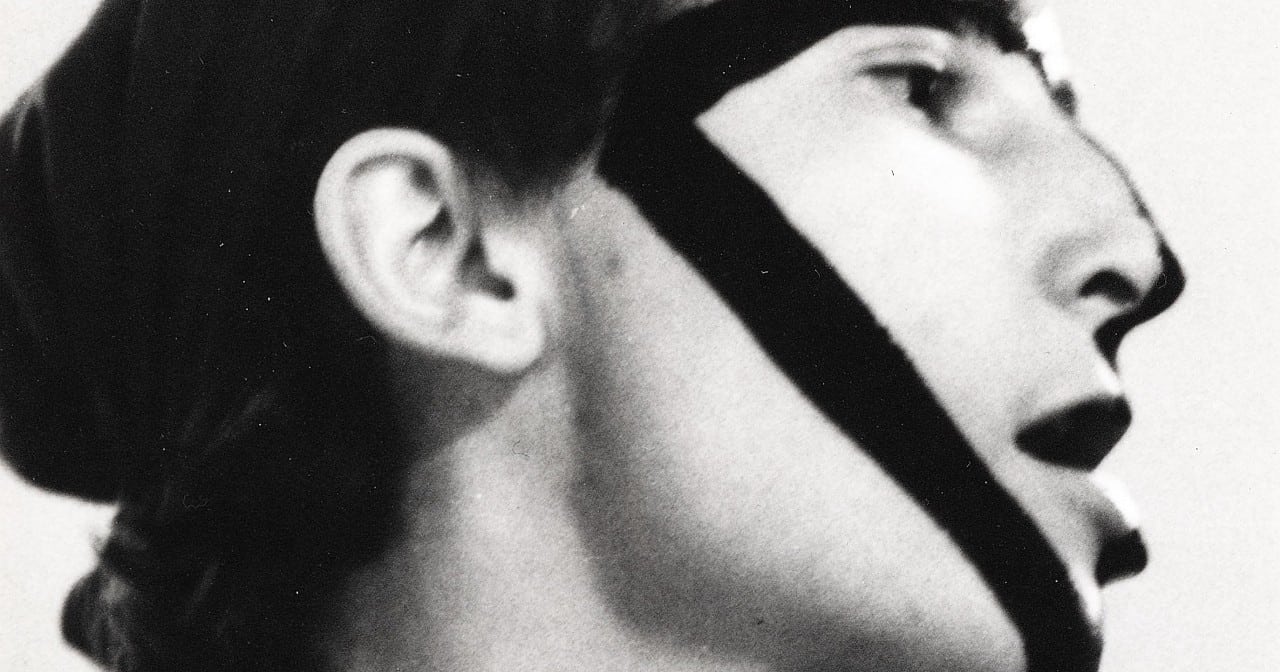
Gabriele Stötzer — many readers may be wondering now: who is she? She was and remains many things — above all, an artist with a vast palette of experimental means of expression. She embodies, in her person, the alternative, unofficial history of East Germany (the GDR), a history written underground as a story of subversion and resistance. Stötzer, through her artistic practice, foreshadowed queer feminism long before there was a term for it. And she also knew that feminism, to a significant extent, has to do with pleasure and with freedom, too.
Stötzer, in that real-existing socialism of East Germany, knew almost no fear at the time — and not afterward either — when she wound up in an East German jail for her courage, charged with “state defamation.” It was 1977, during her participation in protests against Wolf Biermann’s expatriation. She was born in 1953 in Emleben — a small village to the west of Erfurt. Erfurt would become her creative epicenter from 1973 onward. There she began studying art education and was soon expelled for her political defiance.
From the start, a versatile all-rounder
The Martin-Gropius-Bau in Berlin now devotes a retrospective to her body of work under the title “Gabriele Stötzer: Being There and Not Staying Silent.” Artistically, she was from the outset a true all-rounder — she wrote, painted, photographed, filmed, and eventually moved into performance, even crafting eccentric clothing from soda cans. An almost organic progression, she emphasizes, this path from the surface to movement and into space. She later taught performance at the University of Erfurt between 2010 and 2020. And indeed, recognition and acknowledgment after the turn of the era finally began to arrive.
When, after two years behind bars, she returned to a choked-off “freedom,” she began occupying empty houses in Erfurt from the late 1970s, initiating sites of art production, running a private gallery, and organizing so-called pleinairs (artists’ gatherings). Yet the State Security (Stasi) kept intervening, liquidating and forbidding what was taking shape.
Still, Stötzer’s energy simply could not be stopped. Again and again she conjured something new from nothing. “We have lost everything; now we can win everything,” this was her motto. And when 1989 came and the Wall fell, with the GDR in dissolution, she—as a co-initiator alongside other women artists—visited the Stasi district administration in Erfurt and, in a bold move, occupied it. That was the very organization whose plan had long called for Stötzer’s destruction. For, as she notes, she always stood with one foot in prison or in a psychiatric ward.
Für sie ist die DDR die Erinnerung an Widerstand
You cannot discuss Stötzer’s art without taking into account the conditions under which it was produced. In her biography, the fusion of art and life was not merely a claim, as is all too common in a complacent art world, but rather an aesthetically charged political constant.
When she speaks of the GDR today, it understandably isn’t a celebration of the past, for the prison experience and the Stasi-supervised lack of freedom are not romantic. For her, the GDR is the memory of resistance, and the results are today visible in a magnificent exhibition and in an impressive abundance of diverse aesthetic means.
“Entweder du kaufst eine Wurst oder einen Film”
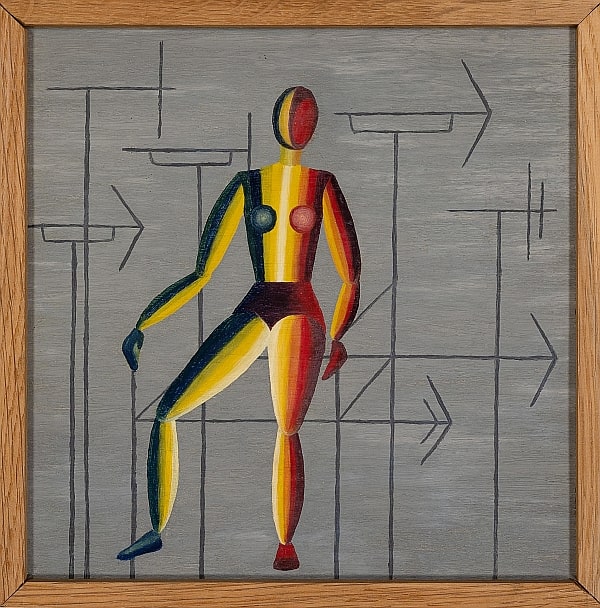
Her first Super-8 film was shot with two gay men — Kai and Karsten. The idea came from a photo session. She was drawn to these two handsome men, who stood out from the usual macho types with their toxic masculinity, only to later learn that they had also worked for the Stasi as informants. “That’s the double character of everything,” she commented, “that you end up feeling betrayed later on.”
The decision to make a film, when viewed in hindsight, carried an existential weight in the truest sense. A three-minute Super-8 film cost 15 marks. The choice was always: “Either you buy a sausage or a film.” And if it was the film, then mashed potatoes with fried onions could serve as an adequate substitute.
Körpererfahrung als Normalität
As her first feminist work, she describes a photo series about “all the holes of the woman.” “It was about the question of how close we can come to ourselves and to each other.” Nudity features prominently in many of her works. Stötzer emphasizes that nudity has always belonged to art — figure drawing, after all, is a required discipline. Therefore, shedding clothes was not a special act of liberation; it was body experience as normality.
At some point she realized that in the GDR there was no pornography — except secretly under the counter. That initially led her to a philosophical inquiry: “Why was there no pornography in the GDR?” When she produced porn photos herself and sent them to a filmmaker friend in Munich, the friend replied that these weren’t porn photos, “because the women are laughing; this is female pleasure.”
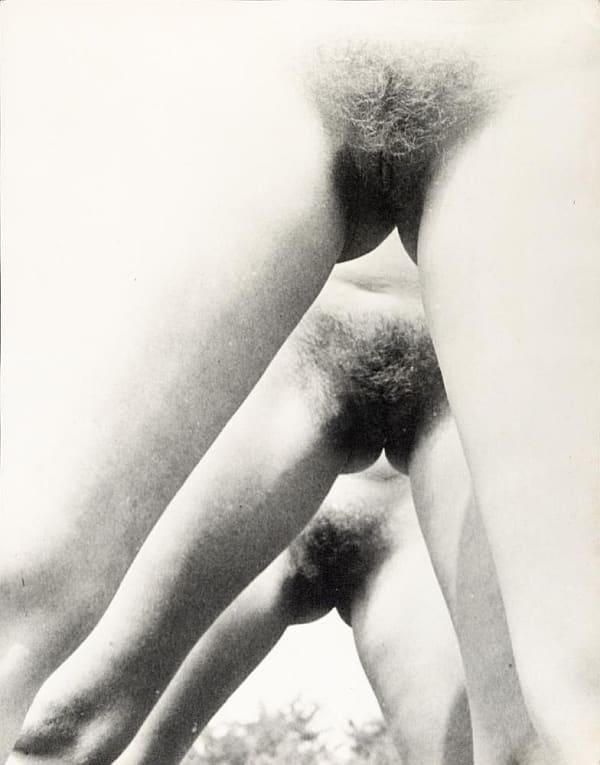
Probably not a bad result for an experiment. That, in essence, was Stötzer’s aim in everything she tried: “My path is audacity, crossing boundaries, trying what doesn’t exist in the East.” And if one says she practiced queer feminism before there was a label for it, that’s also true.
Queerer Striptease
In one of the exhibition spaces, a photo series engages with the topic of gender: in two photo sequences we see a person who, in back-lit shots, is initially perceived only as a dark silhouette. The contours clearly describe a female figure who gradually sheds clothing from one image to the next. In the lower sequence we finally see the now-lit person, whose striptease continues for a while, yet—with the effect that, by the end, the woman has become a man.
As part of the retrospective, a small volume was produced, published by the Martin-Gropius-Bau and released by Bierke Verlag — “Gabriele Stötzer on the Flight into the Public.” A must-read. At the end of the book lies this poem:
my dear female friends
one day I will have to
forbid you
from intruding into my life
the theatre of identification is out
the thief’s spit with
an eye-blink is old
the ears that, without restraint,
hear everything from words
what the will whispers to them
is out
the nose that smells and
tells the other you stink
is closed
The exhibition at the Berlin Martin-Gropius-Bau runs until December 6, 2026.