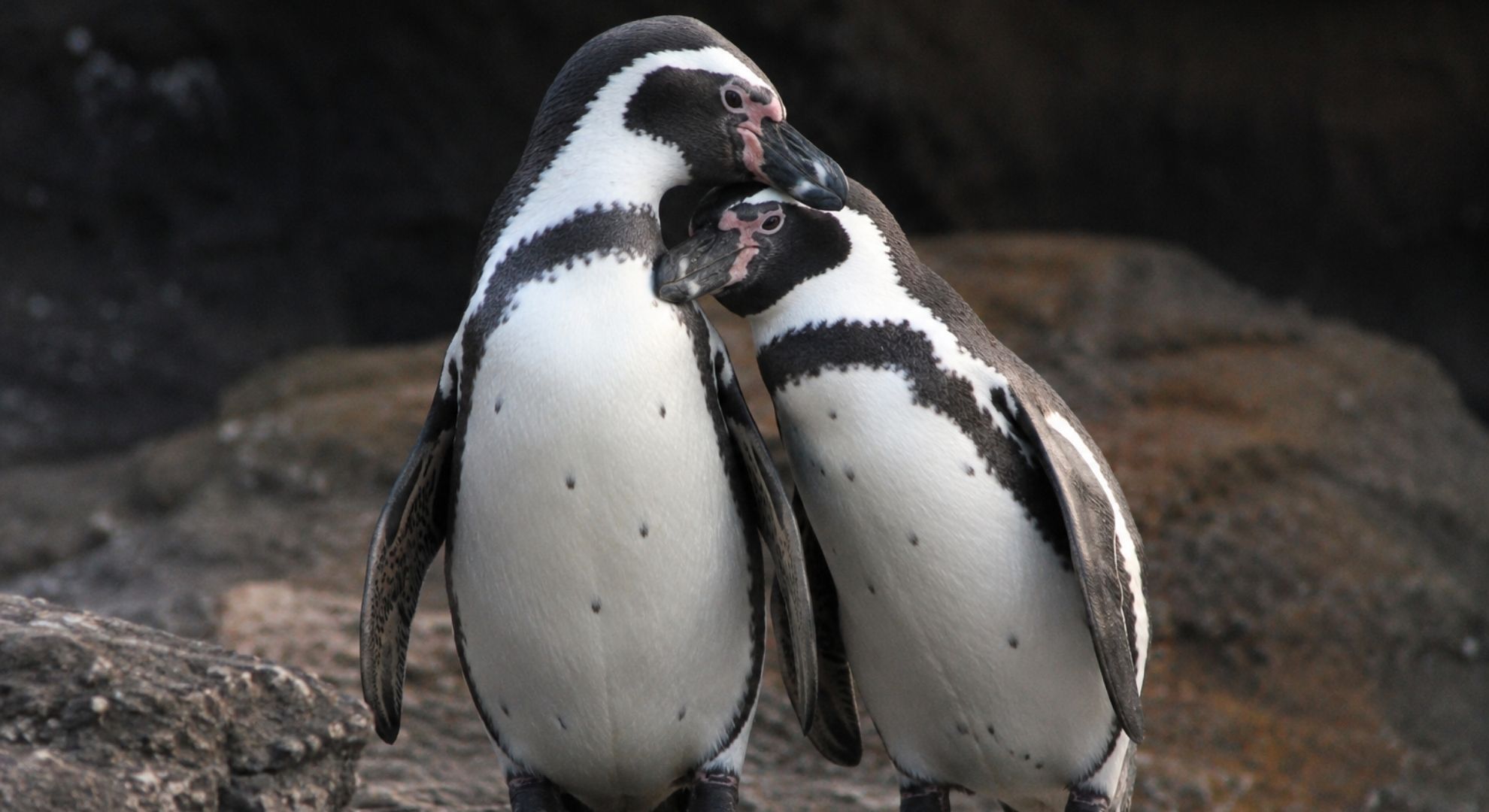
For decades, same-sex sexual behavior in animals was often treated as a biological curiosity, an anomaly, or even a problem for evolutionary theory. If evolution favors reproduction, why would so many animals engage in behavior that does not directly produce offspring?
Biologists are now looking at the question differently. Far from being rare or meaningless, same-sex sexual behavior has been documented in more than 1,500 animal species, from birds and mammals to insects, reptiles and marine animals. Researchers increasingly argue that these behaviors may play important social and evolutionary roles.
A behavior found across the animal kingdom
The examples are wide-ranging. Same-sex behavior has been observed in bonobos, dolphins, penguins, macaques, lions, bison, giraffes and many other species. In some cases, it appears occasionally. In others, it is a regular part of social life.
For a long time, scientists tried to explain the behavior as a mistake, a substitute for heterosexual mating or a by-product of captivity. But newer research suggests that explanation is too narrow.
A 2023 study published in Nature Communications found that same-sex sexual behavior in mammals is not randomly distributed. It appears especially common in some groups, particularly primates, and may have evolved multiple times across mammalian lineages.
“The question is no longer simply why these behaviors exist,” says one evolutionary biologist. “The question is what they do inside animal societies.”
Why it may help animals survive
The most important idea is that sex in animals is not always only about reproduction. In many social species, sexual behavior can also reduce tension, build alliances, strengthen bonds or help individuals navigate complex group hierarchies.
Biologists point to several possible functions:
- reducing aggression after conflict;
- forming social bonds between individuals;
- reinforcing alliances within a group;
- easing tension in competitive environments;
- increasing cooperation in complex societies;
- helping animals adapt to environmental stress.
This is particularly clear in primates. A 2026 study in Nature Ecology & Evolution found that same-sex sexual behavior among non-human primates is more common in species facing harsher ecological conditions and more complex social pressures. The study suggests these interactions may help animals manage conflict, maintain cohesion and survive in difficult environments.
A challenge to old assumptions
The discovery matters because it challenges a simplistic view of evolution. Reproduction is central, but survival, cooperation and group stability also shape which behaviors persist.
If same-sex behavior helps an animal avoid conflict, remain integrated in a group or build alliances, it can indirectly support survival and, over time, reproductive success. That does not mean every instance has the same function. The behavior can have different roles depending on the species, the sex of the animals, the social structure and the environment.
Scientists also warn against directly applying animal behavior to human sexuality. Human identity, culture and relationships are far more complex. But the animal data still show one important thing: sexual diversity is not unnatural in the biological world.
A major shift in biology
The new research does not claim that same-sex behavior has one single evolutionary explanation. Instead, it shows that the behavior is widespread, varied and often socially meaningful.
For biologists, this represents a shift from seeing same-sex behavior as an evolutionary puzzle to studying it as part of the normal fabric of animal life.
What was once dismissed as marginal may, in fact, help explain how some species build stable groups, reduce conflict and adapt to difficult environments. Far from being a biological exception, same-sex behavior could be one of the many strategies animals use to survive together.