“Nobody’s normal — it just looks that way from across the street.” This line from a gay supporting character is basically the motto of “DTF St. Louis,” a blend of relationship drama and crime. In truth, nearly every aspect of the show’s varied relationship configurations feels offbeat in its own way.
But perhaps the title needs a bit of explaining: “DTF” stands for “down to fuck,” roughly translating to “willing to have sex,” and it’s the name of a casual-sex dating platform operating in the St. Louis area, a mid-sized city in the more conservative part of the United States. The platform plays a small but important role in the series. All six episodes of the first season have been available in Germany on HBO Max since March.
Friendship, Affair, Role-Playing
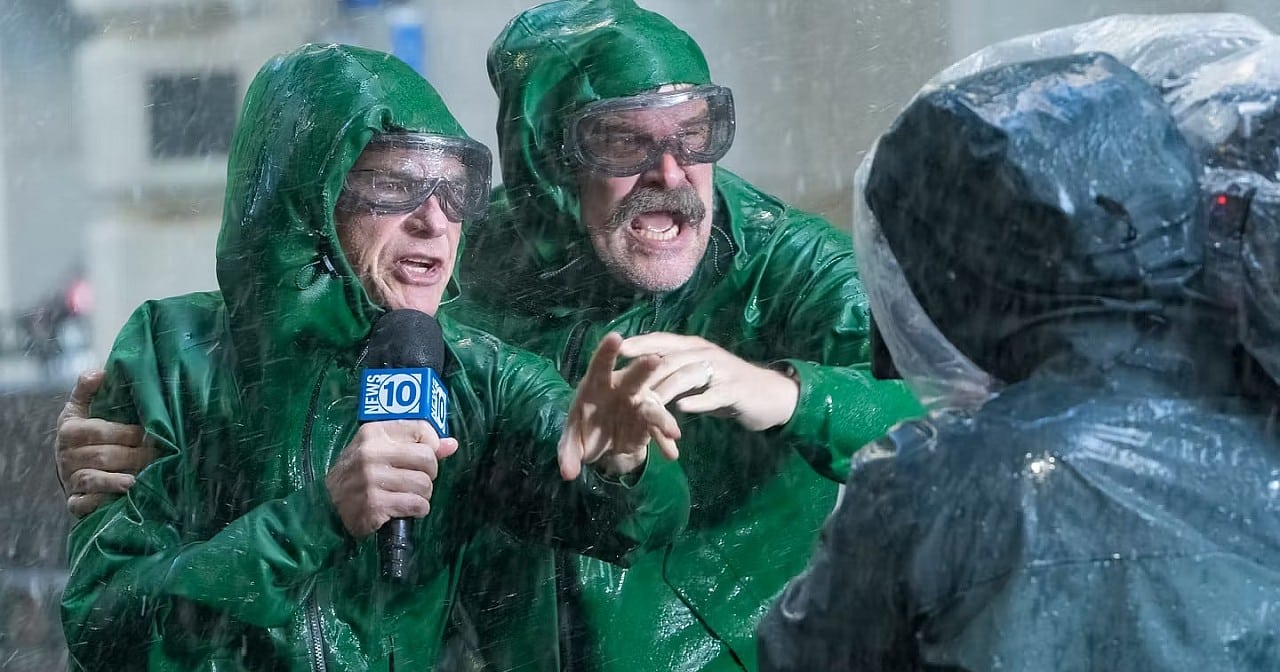
At the center of “DTF St. Louis” are the weatherman Clark (Jason Bateman), his new sign-language interpreter Floyd (David Harbour), and Floyd’s wife Carol (Linda Cardellini). Clark and Floyd meet during a joint broadcast outdoors amid a fierce storm and quickly become friends. Both are married and soon start swapping visits to each other’s families. Clark also gets to know Carol. It doesn’t take long before the two begin an affair, while Clark and Floyd’s friendship continues to deepen in parallel.
Carol gives Clark what he’s missing at home: he enjoys role-playing and has a whole slate of kinks that Carol happily indulges. At the same time, he learns a lot about Floyd—his worries and insecurities—which helps him connect with Floyd, who is not only sexually frustrated but also financially anxious. One day Clark suggests that Floyd open a profile on the DTF platform, and after some hesitation—and with Clark’s support—Floyd agrees. The first match comes from the profile name “Modern Love”—but when they first meet, Floyd ends up facing a man (Peter Sarsgaard, the mentioned supporting character from above).
More Than Just a Simple Kiss?
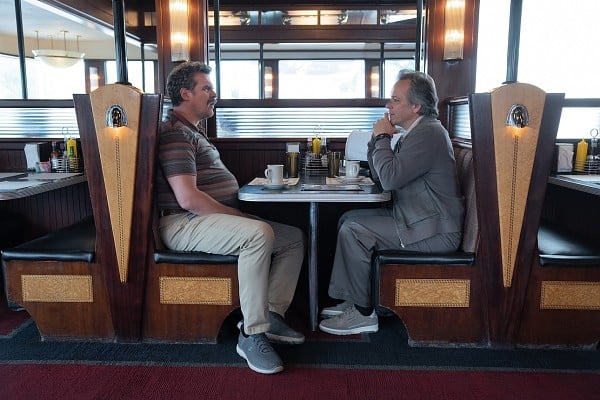
Rather than resolving the misunderstanding and letting the moment fade, Floyd agrees to the date, they go out for drinks, and their conversation veers into unexpectedly deep territory. At parting, “Modern Love” asks Floyd for a kiss; Floyd hesitates briefly, then consents. And although he appears fairly restrained, it feels afterward as if he has just undergone a revelation of some sort.
When he later tells Clark about the encounter with the man, Clark isn’t shocked in the slightest; instead, he listens with understanding and interest. Floyd explains that he kissed him because he didn’t want to leave “Modern Love” with bad feelings, but the impression lingers that there was more to it than a single moment.
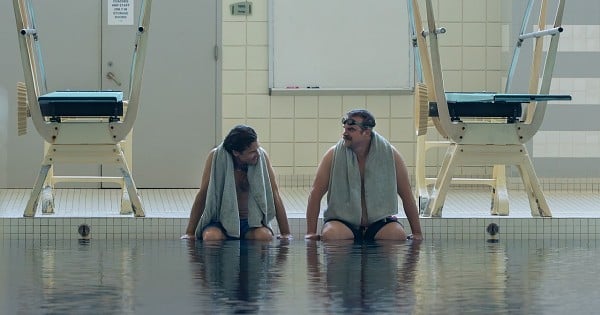
All of this gradually comes into focus through flashbacks that unfold with each episode. Floyd is found dead, in the first episode, half-naked in the locker room of a local swimming pool, with a copy of “Playgirl” lying nearby. As two detectives—a seasoned older white man (Richard Jenkins) and a young Black woman (Joy Sunday)—investigate, we learn more and more about the odd, triadic relationship at the center of the story.
Direct link | Official German trailer |
But was Floyd really secretly gay or at least bi? Was there more behind the intense friendship between Clark and Floyd? After all, Clark tells the detectives that he loved Floyd—”loved him like the sun when you’re cold, or water when you’re thirsty.”
A Wonderful Modern Take on Manhood
The friendship between these two ostensibly heterosexual middle-aged men is what makes the show so striking: they don’t shy away from showing their feelings, they are open, generous, understanding, and they allow a surprising level of physical closeness. Floyd is especially depicted as a man with a big heart who routinely puts others’ needs before his own, doing everything he can to make his socially challenged teenage stepson’s life easier.

They stand in stark contrast to the hard, traditional macho ideal that the so-called Manosphere is currently trying to lure many young men with. Moreover, the queer elements in “DTF St. Louis” feel organic and natural within the plot, even though the show isn’t primarily aimed at a queer audience. Still, it offers an extra pleasure to that audience, and you can’t help but think how much better the world might be if more men were like Floyd and Clark.