Film students in the USA apparently no longer manage to watch a feature-length film from start to finish, according to a recent article in The Atlantic. So not students in general, but those who say they love films or want to work later in the film industry. The behavior of students differs little from that of others their age. The average duration of a TikTok video is 46 seconds, then the next clip starts. What these shifts in attention culture through social networks mean for a society — a new form of illiteracy or perhaps a different kind of media literacy? — is currently hotly debated. For filmmaking, this already means that with longer stories there are now more insertions that recap the plot, because nobody watches properly anymore, while they have a few other devices running at the same time.
Last year, when I offered a seminar titled “Queer Media Studies” at the University of Cincinnati, where I have been working for three years as a DAAD professor of German / Media / Queer Studies, my impression was similar. There are still one or two students who are willing to spend a certain amount of time with a film, but it’s hard to say exactly. The films are streamed at home rather than watched together in a screening room. What else happens while watching a movie on the sofa—whether half of it is skipped, who knows. The occasionally somewhat sluggish class discussions, however, suggested that the film experience often wasn’t very intense.
The fixation on images is now more fleeting
Of course, new media and formats belong in film and media studies discussions—including video clips, self-presentations on dating sites, and the all-pervasive pornography—these are part of my research area—but is it still possible to talk with twenty-year-olds about queer classics from the 1980s and 1990s? With an attention span of less than a minute, discussions shrink to questions such as: Are these representations of queerness positive or negative? Do we feel comfortable or uncomfortable watching them?
It’s paradoxical: on the one hand we are surrounded by more queer imagery than ever — HBO recently released the series “Heated Rivalry” about two gay hockey players (which apparently is primarily watched by heterosexual young women) — on the other hand, no one really pays close attention anymore; our relationship to moving images has fundamentally changed. Film studies has responded to this shift in part by focusing more on affects, and not on the big topics of psychoanalysis — identification, desire, fantasy — that shaped film theory since the 1970s. The fixation on images is now more fleeting, so the assumption goes.
The Beginning of Queer Studies
In the late 1980s, when I began studying German Studies with a focus on media at the University of Hamburg, film and media studies as an independent discipline did not yet exist; the situation was different. Cultural studies and pop-cultural topics were not yet established in teaching and research; a humanities canon of 20th-century theoretical texts — Freud, Benjamin, Adorno — determined the discussion, or the French discourses of post-structuralism and deconstruction, of which today little is spoken (exceptions: Foucault, Deleuze).
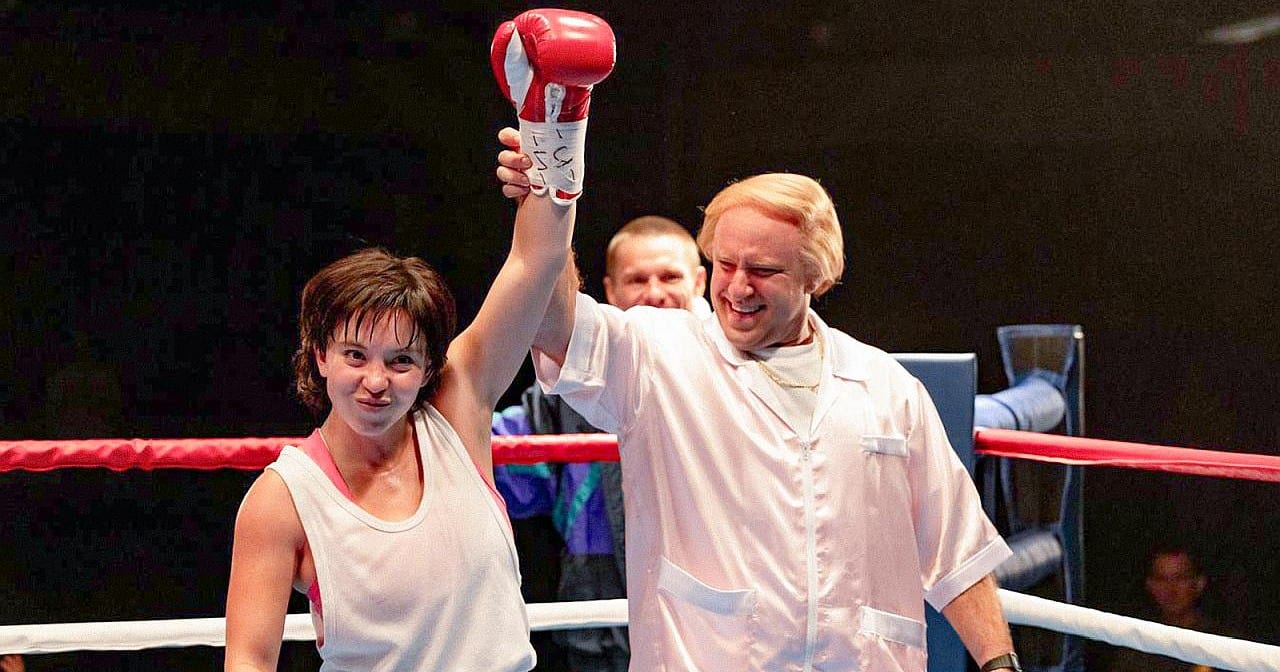
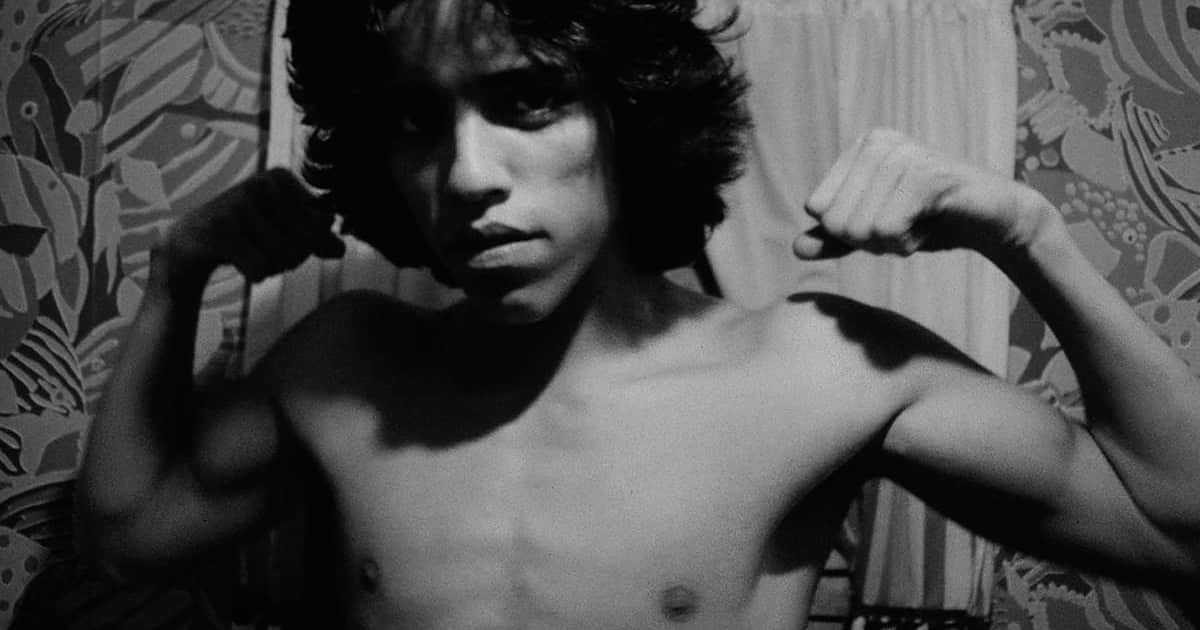
What you hardly found back then were Gay and Lesbian Studies (the University of Siegen, where Wolfgang Popp and Gerhard Härle worked, was an exception), which from the 1990s onward were called “Queer Studies” in the USA and later also in Germany. This also affected lesbian and gay film and media studies. Pioneers for this in Germany were feminist film scholars Heide Schlüpmann and Gertrud Koch. Of course there was already a wonderful German-language queer cinema with Rosa von Praunheim, Werner Schröter, Frank Ripploh, Monika Treut and Elfi Mikesch (“Verführung: Die grausame Frau”, 1985). But in the USA too a new lesbian and gay film culture was forming: Lizzy Borden’s “Born in Flames” (1983), Donna Deitch’s “Desert Hearts” (1985), Gus Van Sant’s “Mala Noche” (1986), and Todd Haynes’ “Superstar: The Karen Carpenter Story” (1987). A little later these 1980s and 1990s films were later dubbed “New Queer Cinema” by B. Ruby Rich.
The Autonomous Seminar “Homosexuality and Film”
At the University of Hamburg there were no professors who cared much. But then something exciting happened: Because the working conditions with 60 or 80 participants in the seminars, and professors you never saw, were so miserable, starting in the winter term 1988 the University of Hamburg went on strike. Many students were also unhappy with the teaching content. At the parties that accompanied the strike, lesbian and gay students came together. In the emergency, new friendships, romantic relationships and alliances formed. I met my then-boyfriend there and many friends who would accompany me for a lifetime. We were still dependent on real meetings; social media and dating apps did not exist yet.
In these connections it wasn’t just about friendship, love, or sex; that too, but after all we were at the university. Someone had the idea that, instead of the courses that were canceled due to the strike, we should run our own seminars with content we chose. We called it “Autonomous Seminar”, and if one of the university’s instructors took on a sponsor, you could also earn certificates that counted toward studies. Marianne Schuller, openly lesbian and revered by many (including me) professors, and Hartmut Böhme, not gay himself but queer-friendly, as his research on the Hamburg author Hubert Fichte showed, supported us. Thus the autonomous seminar “Homosexuality and Film” came into being, running for several semesters. Ten to twenty students participated.
With New Queer Cinema, the focus was on liberating identities
Actually we worked our way through Vito Russo’s “The Celluloid Closet” (1981) from start to finish, the standard work on Hollywood’s not-so-benign portrayal of lesbians, gays, and trans people. Usually we were seen as monsters or suicide cases. Queer film culture drew two very different consequences from this that remain effective today: either negative representations are countered with a positive one — finally a gay love story with a happy ending! — or the negative attributions to queer characters are played with, they are parodied, and the power of critique in them is asked about. The second trend can be linked to many New Queer Cinema films, Todd Haynes’ “Poison” (1991) or Tom Kalin’s “Swoon” (1992), for example. In contrast to today’s culture of identity politics, New Queer Cinema was about the liberation of identities.
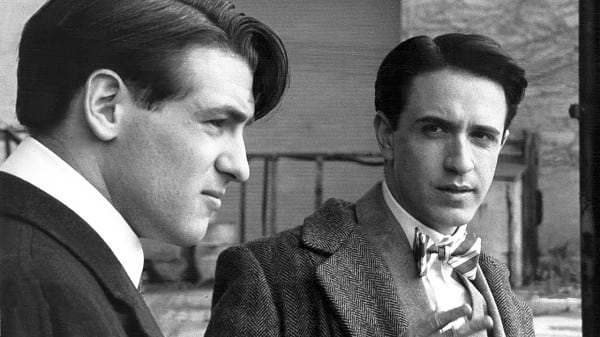
Also AIDS provided the backdrop for the film experiments of the late 1980s and early 1990s. With life-or-death urgency, new storytelling forms for gay and queer characters were sought. Among gay and lesbian students in Hamburg, AIDS, by today’s standards, played a surprisingly small role. We are talking about the first decade of the epidemic, before the introduction of combination therapy. What happened then was a generational othering: AIDS affected the generation before us, we thought, meaning men who were five years older, with whom we had little contact in our youthful arrogance as twenty-somethings. Additionally, in a city like Hamburg — up to today — slut-shaming plays a much bigger role. What one did at night in the park or at the porn cinema on St. Pauli, one did not necessarily tell about as openly as in Berlin. The Hanseatic wish for respectability also touched gay men. But on screen AIDS was a theme. Haynes’ and Kalin’s films approached AIDS more symbolically, Bill Sherwood’s “Parting Glances” (1986) and Peter Friedman and Tom Joslin’s “Silverlake Life: The View From Here” (1993) more directly.
Queer students took their history writing into their own hands
To the new queer films there were theoretical readings in our autonomous seminars: 1970s feminist film theory by Laura Mulvey, early texts by the British film scholar Richard Dyer, and Freud again and again. Many of us came from German studies. How a specifically queer, lesbian, trans, and gay reading could be developed with these texts and images was something we were trying to figure out. Before the Internet, U.S. research that was happening at the same time was still quite distant. Judith Butler’s “Gender Trouble” (1990), which had a lot to say about queer gender performances, had already been translated in the same year, but in Germany it did not immediately receive the overwhelming attention that the work would later receive. I only heard of Leo Bersani, the most important queer theorist for me to this day, when I later went to the USA myself.
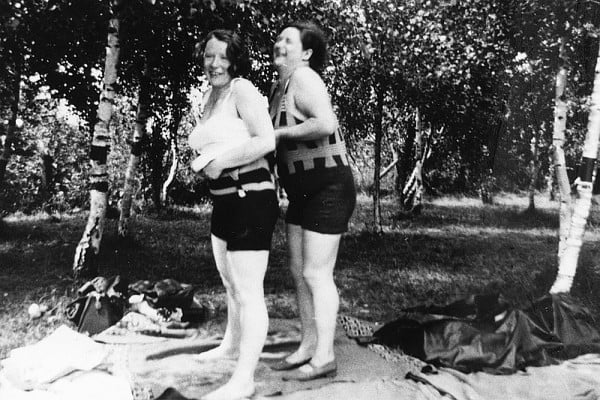
Soon it became clear that the interests in our Autonomous Seminar “Homosexuality and Film” ran in two directions. Some wanted to make films themselves. The documentary “Enchanted” is produced (1993, directed by Jörg Fockele, Dorothee von Diepenbroick and others). A pioneering work in which older lesbians and gays were interviewed about their lives. Queer students took their history writing into their own hands because there was no institution that felt responsible. The others preferred to think about films and write about them. I eventually belonged to the second group and later wrote my master’s thesis on Jean Genet’s film “A Love Song” (1950).
We needed our own film festival
The problem wasn’t only that there weren’t enough representations on screen, there were also no cinemas willing to show these films. The answer was: our own festival! The Metropolis Cinema in Hamburg expressed interest and believed that a lesbian-gay film festival could attract enough audiences to fill the cinema halls. In 1990, the first Lesbian-Gay Film Days Hamburg took place. To this day, 35 years later, alongside the queer program at the Berlinale with the Teddy Award, it is the most important queer film festival in Germany (now called Hamburg International Queer Film Festival).
Watching the films in the cinema was just as crucial for me as the conversations before or after in the foyer or later at the nightclub, usually somewhere in St. Pauli. Not only for the Pride events, but also at the film days Hamburg suddenly became a queer space of possibility that changed my relationship to my hometown. What happened then, between seminar room, cinema and nightclub, was a “queer worldmaking,” as the queer theorist José Muñoz would call it. Despite my heterosexual-normative socialization in one of Hamburg’s outer districts, there was suddenly a sense of freedom here. I didn’t have to move to Berlin, at least not yet.
Gay life as an ongoing experiment
Two wishes formed in these years around 1990 that became important for my life. One was to understand gay life and gay sex as an ongoing experiment—far from fixed scripts, following one’s impulses in encounters with others. To live a life that aims at the new, about which we did not yet know what it would look like. Just as the films of New Queer Cinema had shown us. In my favorite song from that era, “Being Boring” by the Pet Shop Boys, it goes, “I never dreamt that I would get to be / The creature that I always meant to be.”
The second wish that emerged then for me was to go to the United States. In the 1980s and 1990s, the USA was still a place of gay longing. After all, historically the second queer civil rights movement began with Stonewall in New York in 1969 (the first around 1900 in Berlin). With the gay infrastructure of San Francisco or New York, Berlin and Cologne couldn’t compare, even though that all changed with AIDS. The USA, before the total grasp of neoliberal gentrification programs, was also the backdrop of New Queer Cinema. Today, in Trump-era America, queer longing is crossing the ocean in the opposite direction, toward Europe.
Do films still have the power of a dream?
When I told my partner Lars, whom I met over 35 years ago in the autonomous seminar “Homosexuality and Film” in Hamburg, that I was writing this piece, he said, “these films had a personality-forming function for us.” I might not have said it that way myself, but he was right. “Our engagement with them was directed toward the future.”
Können Filme, wenn sie nicht mehr richtig geguckt werden, für 20-Jährige heute noch diese Wirkung haben? Welche Eindrücke hinterlassen 46-Sekunden-lange Videos? Prägen TikTok-Clips noch die Lebensentwürfe von jungen Schwulen? Haben Filme noch die Macht eines Traums, dem wir folgen und nach dem wir unser Leben entwerfen? Lars findet, bei TikTok gehe es nur noch um Moden und Trends, die nichts wirklich Neues mehr hervorbringen. Das ist das Prinzip des Kapitalismus und keine queere Kultur.
Der britische Musikjournalist Simon Reynolds hatte schon vor einiger Zeit eine “Retromania” in unserer Popkultur diagnostiziert, die nur noch im Recyclen alter Moden besteht. Daher die nostalgische Anhänglichkeit an die Stile der Vergangenheit. Gilt das für queere Bilder genauso? Gibt es keine neuen queeren Bilder mehr, die uns zeigen, wie die Zukunft aussieht? Darüber muss ich nochmal mit meinen Studierenden reden.
 The article series “Queer Cinema Classics” is funded by the Magnus Hirschfeld Foundation. It appears in parallel at sissy and TheColu.mn.