Between glittering nightclubs, political debates, and the shadows of the rising National Socialism, Lotte Hahm and Käthe Fleischmann fell in love. The wild, romantic, and moving story is what the musical “Burning Berlin” aims to tell, premiering on August 24 at Berlin’s SO36.
Berlin was once the undisputed queer capital of Europe. By the late 1920s there were around 170 queer gathering spots here, including more than 30 lesbian bars, ballrooms, cabarets, and clubs. At Magnus Hirschfeld’s Institute for Sexual Science, trans people lived and worked, received gender-affirming treatments, and could publicly move in accordance with their gender identity with a so-called “Transvestite Permit.”
What followed is dark history. Only a few years later, SA men and members of the German Student Union destroyed Hirschfeld’s institute and burned its library. With tens of thousands of books and scientific documents, the stories of countless queer people were lost.
Bars, Balls, and Political Resistance
In the midst of these unsettled times, Lotte Hahm and Käthe Fleischmann fell in love. The piece opens in 1929 in Schöneberg, as the newly out Käthe enters the legendary ladies’ club “Violett.” From their first meeting unfolds a love story, a shared political mission, and an effort to preserve queer life in an increasingly hostile society. Their journey is told over nearly four decades, up to 1967, when Käthe looks back and asks how Lotte Hahm should be remembered.
“We burn for the many untold stories of queer people who came before us and fought so hard for us,” says the musical’s co-producer Giuseppina Lettieri. Many of these biographies were destroyed and erased from the collective memory. They are recovered only by those who actively research them in the papers of Berlin’s lesbian archive “Spinnboden.” The team behind the musical pulls them from the file folders onto the stage, making them accessible to a broader audience.
Activists of the Early Lesbian Movement
Lotte Hahm and Käthe Fleischmann were far more than a romantic couple. Together they ran bars and venues, organized raucous women’s balls, and created safe spaces where lesbian women could meet one another. Hahm engaged politically, campaigned for queer self-organization, fought against Paragraph 175, and in 1929 founded her own “Transvestites” group. After persecution, war, and exile, she worked with Kati Reinhardt to help rebuild the Berlin community.
View this post on Instagram
Instagram | Audio Preview
|
The musical emphasizes that their achievements were never performed in isolation, and it also honors the collective work of many other people like Charlotte Charlaque, Toni Ebel, Hilde Radusch, Claire Waldoff, and Kathi Reinhardt. While Lotte Hahm and Käthe Fleischmann are at the center of the narrative, the team is keen to present a mosaic of diverse personalities who helped shape this era.
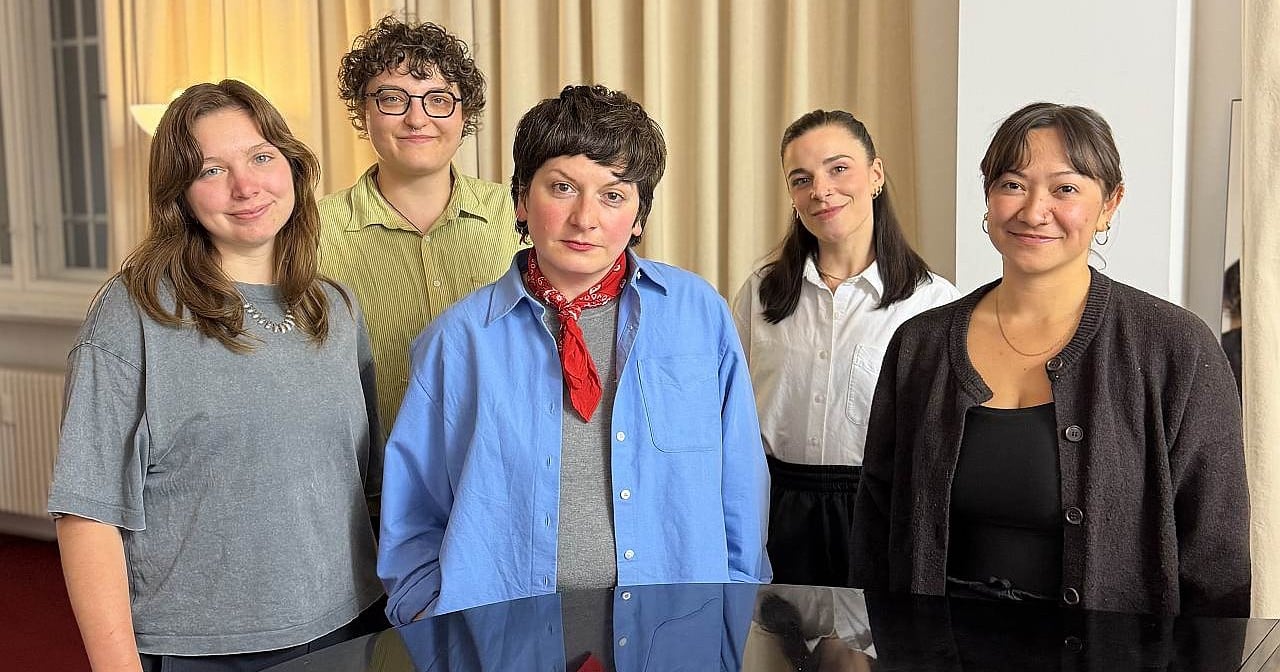
Behind the musical lies a passionate Berlin-based creative team. Direction is led by Mel Suan-Baum, who, together with Fani Suan-Baum, also co-wrote the screenplay. Theresa “Terry” Zanon, founder of the FLINTA*-choir D-Dur Dykes*, wrote the music and is responsible for composition, lyrics, and musical direction. The project is produced by Giuseppina Lettieri, a political scientist and curator of Berlin’s Queer History Month at the Spinnboden Lesbian Archive. Graphic design and social media are handled by Lena Link and Jennifer Berning.
Parallels to the Present
The piece explicitly does not present itself as a nostalgic look back at the “golden” Berlin of the 1920s. Rather, the team wants to show how fragile social freedoms can be.
“There are many alarming parallels between the 1920s and the 2020s,” says Lettieri. Almost a century after the destruction of the queer scene by the Nazis, Europe is once again experiencing a rightward shift and rising anti-queer hostility. The musical is thus meant not only to remember but also to empower and make resistance visible.
Direct link | Video about the musical project
|
On August 24, “Burning Berlin” is set to premiere at Berlin’s SO36. The screenplay is finished, rehearsals are underway, and the ensemble is ready. The production is not yet fully funded, so the team has launched a crowdfunding campaign. Ticket prices are meant to stay as low as possible, while four performances with a seven-member ensemble must be mounted.
“We are giving everything to tell the story of Lotte Hahm and Käthe Fleischmann,” says Lettieri. “Lesbian history lives on.”