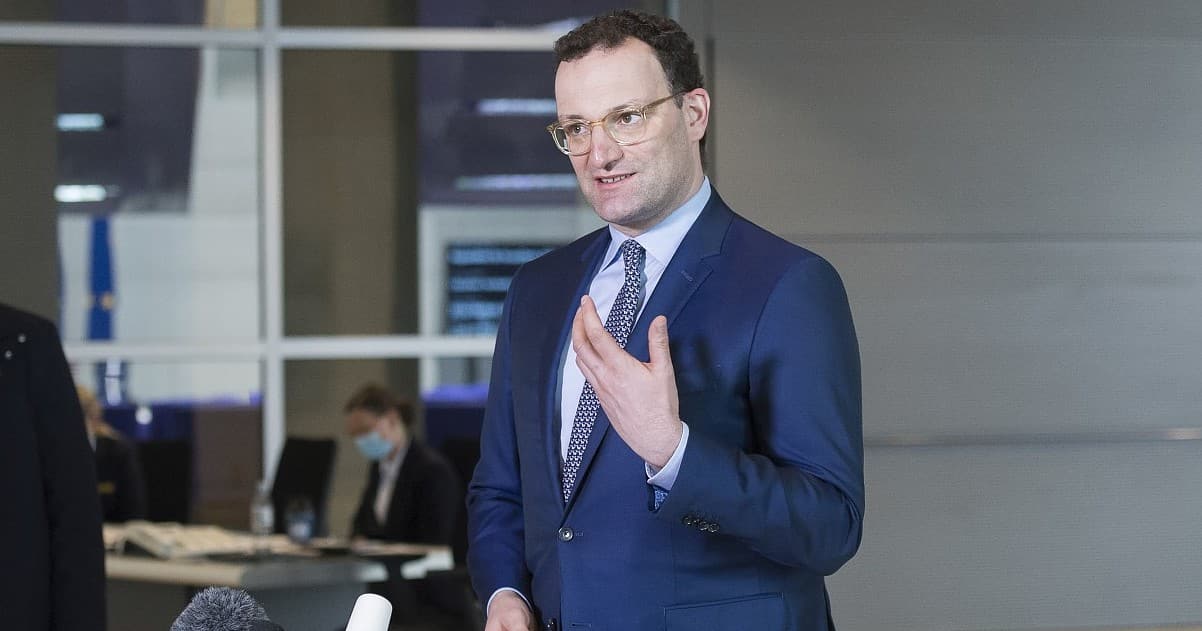
Union faction leader Jens Spahn (CDU) has once again stressed that he does not see himself as queer but as gay. In a Tuesday interview with Zeit, a paywalled piece, conducted jointly with Matthias Miersch, who is also openly gay and serves as the SPD parliamentary group leader, the Christian Democrat delved more into his identity and argued that the term “queer” represents a political ideology.
Alongside Miersch, Spahn agreed that they rejected the term “homosexuality” as too clinical for their sense of self. Spahn added: “That is why I can’t get with the term ‘queer’ either. I am gay, not queer. This is identity politics—a concept as if it were a political program. If you had asked me when I was 16, would you rather be straight, the answer would have certainly been yes.” That would have made life in the village easier.
Spahn: “It is possible for anyone to call themselves queer”
Miersch expressed puzzlement that Spahn has trouble with the term “queer.” Spahn responded: “I have no problem with society being open; anyone can call themselves queer. On the contrary, I am very liberal about private life. But I oppose connecting it to political ideology.”
He continued by criticizing the Self-Determination Act without naming it directly: “If you turn everything into a matter of self-definition, even gender, you call into question the emancipation narrative. Then all the progress made would disappear, including for women’s emancipation. Who sits in the restroom—or in a women’s prison? Transgender people, by the way, say that this also levels their situation.” He did not specify which transgender people he had in mind.
His SPD colleague summarized his remarks: “So you’re saying: privately you don’t care about anything, but as soon as the state offers modern services for different life realities, you call that ideology?”
Miersch: “A modern rule-of-law state protects the rights of minorities, including transgender people”
Miersch defended his party’s policy: “Politics must set the framework to recognize individual identities. That does not take anything away from anyone. A modern rule-of-law state protects the rights of minorities, including transgender people, without questioning the rights of women.”
The term “queer” today is used as an umbrella for people who are not heterosexual and/or not cisgender. Unlike LGBTQ+, it does not prescribe fixed identities—it’s a more open term that counters pigeonholing. It is popular especially among younger people, while many older gay men who did not grow up with the term are uneasy—fearing it will dilute their identity. Many conservatives also reject the term because it signals a social shift they oppose.
Spahn had already, in 2023, told the right-wing site “Nius” that he is gay and not queer (as TheColu.mn reported). He copied the statement from AfD chair Alice Weidel two months earlier (TheColu.mn reported).