Words are never neutral. They carry attitudes, and some words are so charged that they trigger reflexive defenses. Sex work is one of those terms. Coined by activists, it stands as a positive counter-design to prostitution, meant to foreground the work element. That the Bundeskunsthalle in Bonn titles its new exhibition “Sex Work” is a stance with a clear viewpoint.
That stance, like the exhibition itself—which runs until October 25, 2026—has sparked fierce controversy. At the opening, a handful of activists gathered outside the museum to protest the show. “Sex is not for sale” read one of their signs. They likely did not venture up to the expansive upper floors of the Bundeskunsthalle.
Also, Julia Klöckner weighs in
There, the very first artwork makes the direction unmistakable: “Sex Work is Honest Work” is painted in large, dark red letters on the wall, a work by the Nigerian‑American artist Olu Oguibe. But, as the first exhibition wall text almost dutifully notes, labeling sex work as labor “does not mean that it is ‘good’ work.” The goal is not to promote or romanticize sex work.
Even the very naming of the phenomenon seems to require justification, and you can sense how thorny the debate is. After all, the discussion around sex work is intensely polarized. Just last November, Bundestag President Julia Klöckner described Germany as the “Puff Europas” and advocated for the Nordic Model (TheColu.mn reported). Under that framework, not sex workers but clients are criminalized.
“Nothing About Us Without Us!”
The discourse is complicated in part because there are no clear dividing lines: sex work polarizes even within feminist currents, seen sometimes as a sex-positive, self-determined approach to one’s body, and at other times as patriarchal exploitation. Moreover, and this stems from stigma and criminalization, there is rarely conversation with people working in sex work—instead, there’s conversation about them.
The exhibition “Sex Work. A Cultural History of Sex Work” does not shy away from this. “Nothing About Us Without Us!” is the central motto of the show, whose creation involved a collective of researching sex workers. It is a continuation of “With Legs Wide Open — A Prostitute’s Ride Through History,” which was shown two years ago at the Schwules Museum Berlin.
Blue-Tinted Stripper Bars
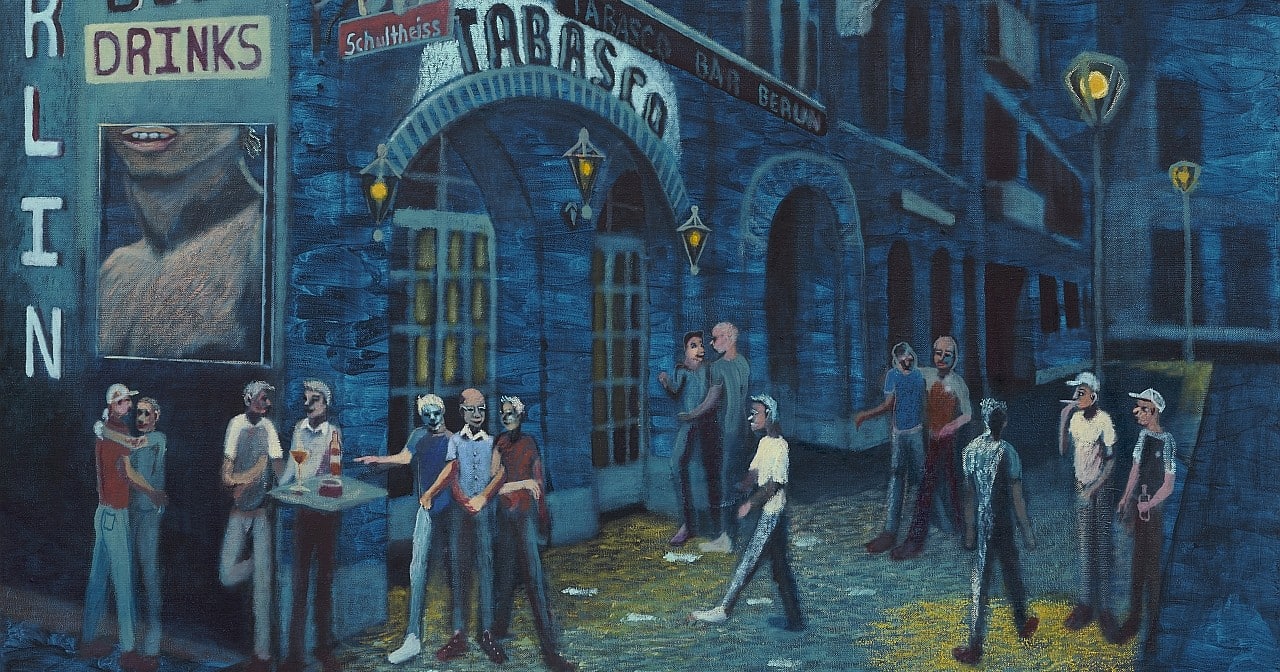
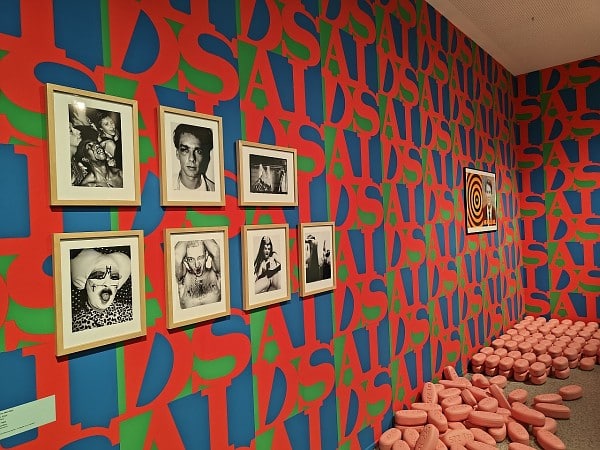
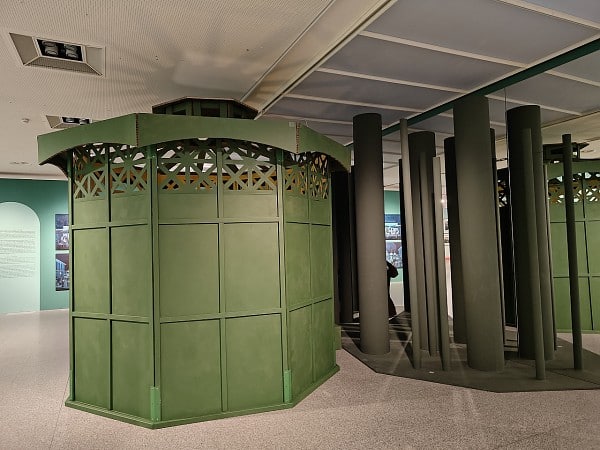
What sets the Bonn exhibition apart from the Berlin one are the many high-caliber artworks on display. For instance, pieces by Otto Dix or Jeane Mammen allow for divergent perspectives on Berlin’s sex work of the 1920s. Yet contemporary works broaden the understanding as well: Ryan Huggins’s blue-toned paintings depict well-known male-sex-work bars in Berlin and Düsseldorf as complex spaces of community and connection. A standout is Pauli Schlipf’s paper reconstruction of Berlin’s green urinal known as the “Café Achteck,” which many men used as a public yet protected cruising site for paid and unpaid sex. Vincent Wechselberger’s photographs from the “Ready” series depict queer sex workers and their routines—self-determined, not framed as victims.
What About the Victims?
That question lingers, and the exhibition leans into it. Indeed, the exhibit directly documents social stigma, moral judgments, and political persecution—from antiquity through the Middle Ages to Germany’s colonial history and Nazi concentration camps. Yet what about those who are actually victims? The ongoing violence of human trafficking is given only scant attention and is even downplayed. The organized-crime exploitation of coerced prostitution is almost entirely left out.
Voices Are Missing
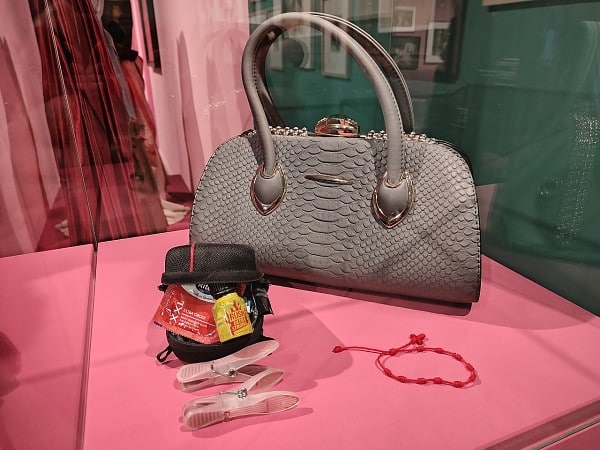
That is a reality that should be part of the full picture. “One should not ignore the dark sides,” said Sven Lehmann, a Green member of the Bundestag, chair of the Culture Committee, and former Queer Commissioner, at the exhibition’s opening. “That’s exactly why a nuanced gaze is so important—a gaze that looks rather than passes judgment.” The Bonn show, however, leans too strongly in a particular direction. The voices and personal artifacts from the sex workers’ archive “Objects of Desire” offer an urgently needed authentic portrayal of self-determined sex work. Yet destigmatization, self-determination, and safety for sex workers can only be achieved when victims of coercive prostitution also have a voice—and they are not present. It’s a glaring gap that also bolsters radical anti-sex-work movements. It’s also unfortunate that there are no texts in plain language to make the otherwise truly worthwhile exhibition more accessible.
The queer community needs a strong journalistic voice — especially now. Do your part to support TheColu.mn’s work.
Relations Between the Queer Community and Sex Work
“Sex Work” is informative, deeply considered, and otherwise comprehensive. Queer perspectives are not treated as a standalone phenomenon but are woven into the broader narrative. The relationships between the queer community and sex workers have grown historically; they have always been close, overlapping in many ways. The demands converge, as does the experience of discrimination and moral panic.
From a social climate in which self-determined sex work is safely possible, queer people ultimately benefit as well. That is what the exhibition seeks to convey, and it is notable that the Federal Republic’s museum and cultural institutions are dedicating attention to this topic—even if they don’t solve every controversy in the room.