Berlin, 1990: The wall has fallen, the houses are occupied, the clubs are pumping freedom. Berlin, 2026: At the Theater des Westens rehearsals for “Wir sind am Leben” are in full swing. The new musical from Peter Plate and Ulf Leo Sommer is meant to be a monument to a city and a generation. “Not on stone, but made of music, history and feeling,” as the press release explains.
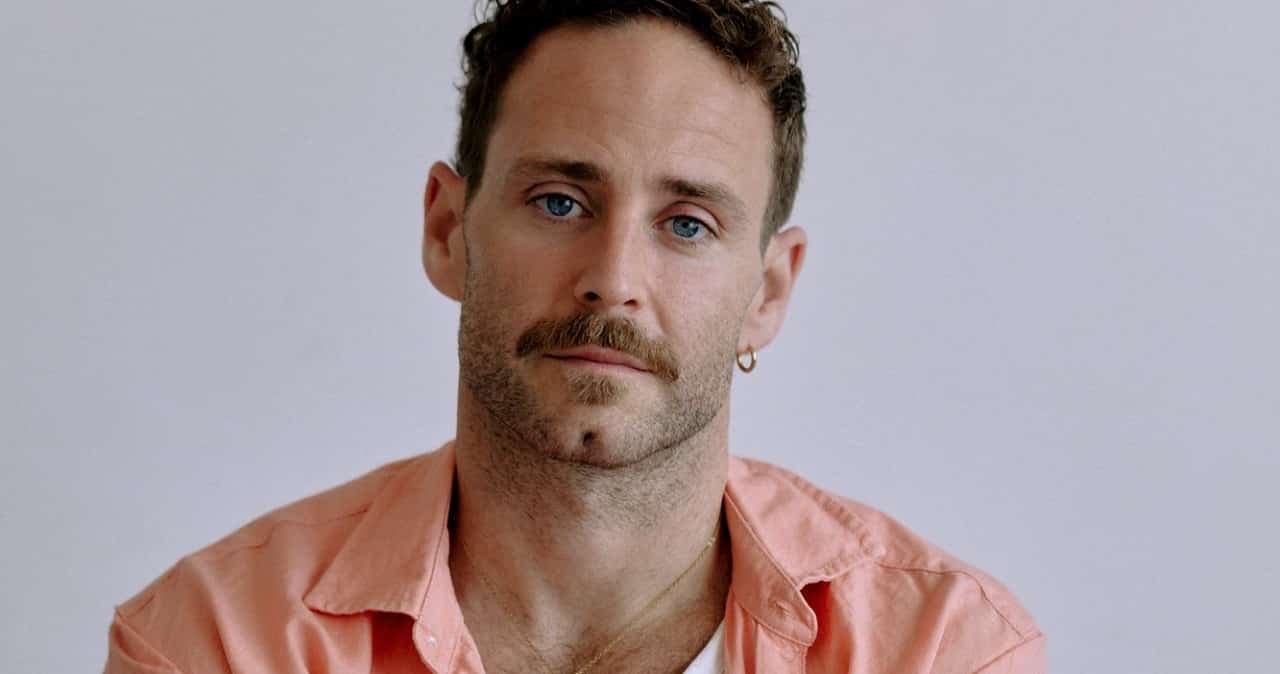
On the edge of rehearsals, we spoke with Jörn-Felix Alt, who plays the central queer character in the piece: Bruno, a young drag performer who performs as Marlene Dietrich and refuses to let his HIV diagnosis define him. We talked about vulnerability, humor, and the responsibility of bringing queer characters to a big stage.
First off, thanks for giving us such insights into the rehearsals. About your role: Bruno receives an HIV diagnosis and then consciously chooses life. What was your first entry point into this character?
When I got the call that I might be Bruno, I found it immediately incredibly intriguing. It’s such an important story—one that exists in Germany in a very particular way. After the fall of the Wall, a sense of freedom swept over everyone. Right into that euphoria came this terrible disease with such force. I see it as a major and wonderful task to bring such a fate to a musical stage.
What would you want audiences to notice first in Bruno before his infection?
His courage and his strength. Bruno is a vitality-filled person who wants to change things and has a vision.
Now, there isn’t only Bruno; there’s also an alter ego, Marlene or “the Dietrich.” What exactly is she? Pure drag performance? A safe space? Empowerment?
Bruno is fascinated by Marlene — by her power, her clear sense of purpose, and her determination. He seeks those traits in himself. That’s why he allows himself to be inspired by her for his drag performance. A homage to Dietrich.
The song “Ich werd’ nicht weinen,” which has already been released, is Bruno’s reaction to his HIV diagnosis. A clear rejection of self-pity. Where is the vulnerability of this character?
I see this as my mission to give her that vulnerability. Bruno doesn’t want to pity himself, nor to receive pity from others around him. He tries to come to terms with everything on his own and tends to push his friends away in difficult moments. It’s precisely in that loneliness that a deep vulnerability resides. I think it’s crucial to present Bruno’s character as multifaceted and nuanced as possible on stage.
Direct link | Video for “Ich werd’ nicht weinen”
|
The other big number that’s already known is “Supernovadiscoslut.” This one goes in a very different direction. It’s about desire and freedom. How does that come across on stage?
“Supernovadiscoslut” is Bruno’s nightclub performance as “the Dietrich.” A blend of protest and party. He wants to change things and has a lot of fun doing it. It was a pleasure to craft a distinct sound for this song, which marks an important difference from the other numbers and helps separate drag performance from Bruno’s private life.
Direct link | Video for “Supernovadiscoslut”
|
Was there a moment in rehearsals when you felt, now I’ve really got Bruno?
Probably in the scene just before the song “Ich werd’ nicht weinen.” Right before that Bruno receives his HIV diagnosis. He then reunites with his friends. He actually wants to speak with his partner right away, but ends up pulled into an argument. In the heat of the moment, something slips out that surprises him. A moment that feels like a key in shaping Bruno’s character.
You say this diagnosis just hangs in the air. HIV and AIDS are historically loaded topics. They still shape the entire community today. What responsibility do you feel as an actor, as a representative?
We’ll perform this show eight times a week, for a long time, to a broad and mixed audience. Many people won’t have this topic on their radar day to day. I see it as both a responsibility and a major opportunity to bring this story to life on stage with all its nuances and subtleties. It’s important to me that we don’t forget what happened to our scene, to an entire generation back then.
But it’s not all heavy material; the piece is also supposed to be very funny, as the title suggests. How do you balance these two poles?
I always look for humor within tragedy and the tragedy within comedy. If we stand on stage for three hours and everyone starts sobbing, the moment won’t really hit. As an actor, I’m drawn to finding the counterpoint in the emotional moments — a bit of laughter in the sadness, a few tears in the laughter. We tackle many serious topics in this show, so it’s crucial to weave in enough humor to maintain a healthy balance.
If you had to describe Bruno in one sentence, without using the word “sick,” what would that sentence be?
A brave man who wants to move something.
And finally, you mentioned you’ll be performing the show for a long time, for a wide audience. But specifically for TheColu.mn: what do you hope queer audiences will recognize in Bruno as a character, and in the show as a whole?
I hope we can capture the essence of that era on stage. The 1990s are a while ago, yet they still feel quite present and somehow close. The musical tackles so many topics: homosexuality, AIDS, family and friendships, the reunification of East and West Germany. I think everyone will find something to identify with. At the same time, I hope the queer community sees themselves reflected—not by staging clichés, but through real people and their stories.
The musical “Wir sind am Leben” (We Are Alive) premieres on March 21, 2026 at Theater des Westens in Berlin. Tickets are on sale now.