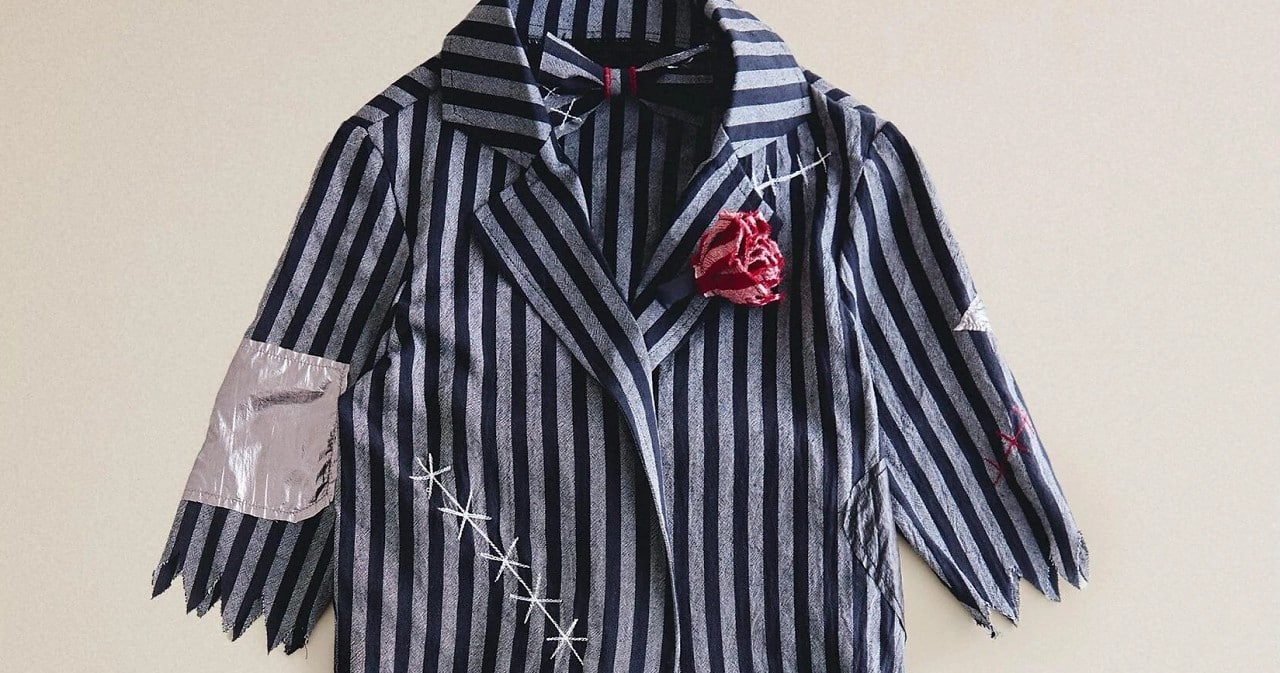
The Spanish fashion retailer Zara pulled a children’s Halloween costume from sale after critics flagged its resemblance to the striped uniforms worn by concentration camp prisoners under the Nazi regime.
The costume, featuring blue and white vertical stripes, consisted of a jacket and pants that were intentionally made to look worn. In addition, prints that could evoke barbed wire were visible. Patches on the sleeves gave the impression of prisoner numbers. A pink fabric flower was attached to the left chest.
The costume is no longer available
“The Spanish fashion chain Zara horrifies its customers in Europe with yet another nightmare idea — a costume in the style of Nazi concentration camps,” wrote Israeli journalist Dov Gil-Har on the platform X.
. , . pic.twitter.com/Db0y55VDIl
Dov Gil-Har (@DovGilHar) September 30, 2026
In Zara’s online catalog the costume is no longer available. “Zara Home regrets any misunderstanding this Halloween costume for children may have caused. It is no longer available in our stores or online,” Zara’s press office said in response to a request. The question of why the resemblance to concentration camp clothing wasn’t noticed during internal checks was left unanswered by the company.
Zara also sold a children’s shirt with a Star of David
It isn’t the first time Zara has drawn attention for products associated with the Nazi era. In 2014, Zara had to pull a blue-and-white striped children’s shirt that bore a yellow six-pointed star on the left chest. It recalled the so-called Star of David that the Nazis forced Jewish people in Germany to wear to publicly stigmatize them. In 2007, a fabric tote bag was offered in Zara stores that featured floral patterns along with swastikas.
Other fashion chains have also faced similar missteps: in 2015 Urban Outfitters sold a wall hanging that resembled the clothing that gay men were forced to wear in concentration camps (TheColu.mn reported).
Gay concentration camp inmates were marked by the Nazis with a pink triangle. The fabric patches were to be worn on the left chest of prisoner clothing. According to the German Historical Museum, Nazi justice convicted more than 50,000 men under Paragraph 175; 10,000 to 15,000 were sent to concentration camps. Many did not survive imprisonment. In the 1970s, the pink triangle became a symbol of the queer emancipation movement.