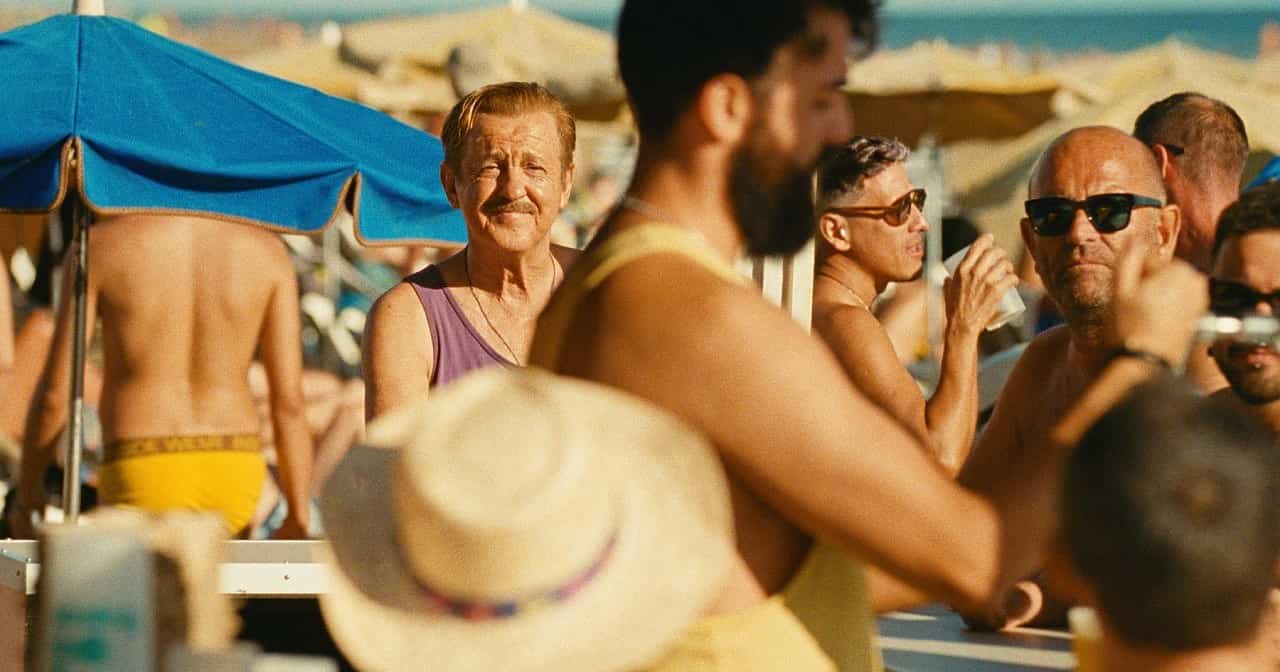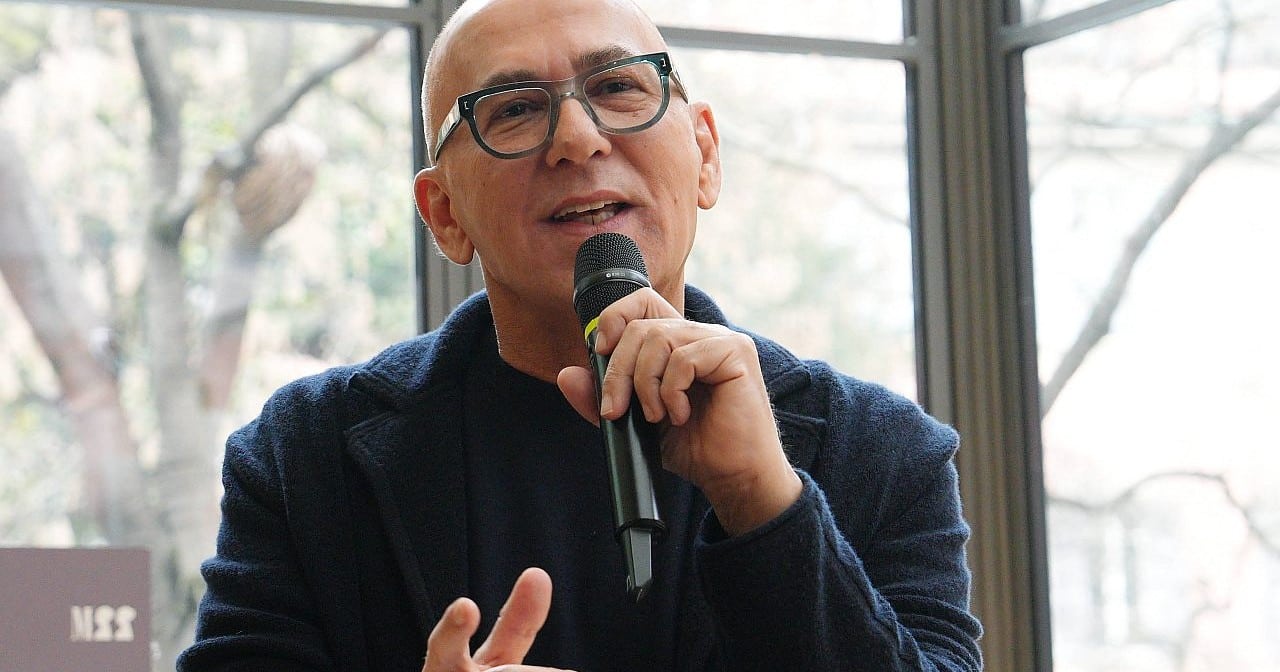
With Diamanti, the openly gay director Ferzan Özpetek (Hamam: The Turkish Bath, The Ignorants, Männder al dente) brings to the cinema for the first time in a long while a film that does not center on an explicitly queer theme. At its heart is a director who wants to make a film about his favorite actresses—and in doing so drifts into a past where women shaped the sewing rooms of the costume department and men played only supporting roles. Reality and fiction, the lives of the actresses and their characters, blur into one another. An extended review will follow.
In an interview with TheColu.mn, Özpetek discusses the ateliers of his own past, the loss of a colleague who was supposed to be part of the film, and why a German title continues to gnaw at him.
Dear Ferzan Özpetek, what motivated you to bring this film, “Diamanti,” to life?
For ten years now I have wanted to make a film with all of my favorite actresses—those I have worked with for years and with whom I share a close bond. I wanted to put the world of women at the center of my film, because the world of women is rich and fascinating. Exactly like the women who star in this film. In deciding to realize this project, I followed my instinct, my heart.
When you look at Diamanti, it seems like all of your talents and directions converge in this film. The opulence of opera, you co-wrote the screenplay, the theme of the importance of costumes, the directing. Is this coincidence, or did you deliberately aim to craft a film where all these aspects of your life come together?
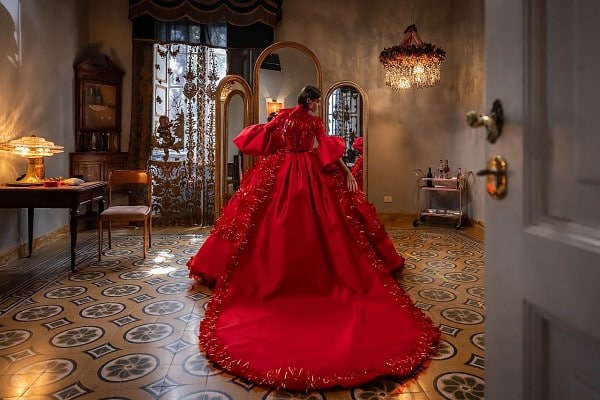
My life has always been the wellspring of my inspiration for making films. I spent 16 years working as a assistant director, and during that time I accompanied many actresses, directors, and costume designers in ateliers, often at the renowned Tirelli workshop. This world of ateliers is very familiar to me, and it also embodies a universe largely made up of the women who work there. Today, this world exists in this form only in memory; it has faded away. The level of detail in the production, right down to the extra roles—these days a lot of costumes are rented. It was important to me to preserve that memory and revive it.
Growing up, I was surrounded by women, and that was a tremendous fortune for me. I really see women as a kind of higher beings who naturally possess the strength to overcome even great difficulties. Those childhood and youth experiences made it easy for me to tell these stories in Diamanti. The challenge was more about finding a balance so that all the characters could appear on equal footing in the film.
Your film carries its audience through the power of emotion and imagery. It contains so many intense scenes that you’ve surely poured a lot of yourself into it. How difficult was it in the end to let go, to declare: it’s finished and good?
I actually never truly let my films go, because they’re a part of my life. What’s difficult for me is acting in front of the camera myself. Particularly the close-ups toward the end—I spent a long time wondering whether I should change anything about them. But those scenes are crucial to me, because they reveal my thoughts on death and life, how I feel. So I ultimately decided to leave those scenes exactly as they are. It isn’t always easy to decide what the final cut should be. There are films—such as La Dea Fortuna, La fate ignoranti, or Saturno contro—in which I’ve poured a great deal of my personal experiences. That makes it hard to present them on screen. Yet when those films please the audience, I am doubly and triply grateful.
In the film there is a scene where Alberta undresses and the audience essentially experiences the moment her mask falls. Are the ending sequences with you at the center, the moment your mask comes off, in a sense your “undressing”?
Yes, absolutely—that’s right. Those are precisely the scenes in which I didn’t have to act at all. They happened in a totally authentic way. The location of the atelier set had been emptied, and a deep sadness swept over me. In that moment I saw a part of my own past drift away irretrievably.
As if a child is leaving the parental home?
Yes, that’s a fair comparison. In those final scenes there is also an inner dialogue with a actress whom I had hoped to work with on this film, but who fell gravely ill and passed away. It was very moving to see Elena Sofia Ricci, who plays the ill colleague, fill that connection with life. In that moment I stood emotionally naked on screen. In Italy, where the film opened in December 2024, audiences were deeply moved by these closing scenes.
In contrast to many of your previous films, Diamanti does not revolve around a clearly queer theme. Is it important to you that people can connect with the emotions, the humanity on screen, and let themselves be carried by it—whether they are men, women, queer or not?
Thank you! Exactly—that was my aim. Homosexuality or heterosexuality are not the defining categories for me when making a film. I make my films with heart and mind, for everyone.
Direct link | Official German trailer for the film
|
A final question. For many of our readers, Mine Vaganti is an almost iconic film they deeply love. This original title (translated as a “ticking mine, walking powder keg”) describes the perpetual dance on the volcano that the protagonists perform in the film. What do you think about the German title “Männer al dente”?
I did not agree at all with the German title!
That’s easy to imagine…
I suffered a lot because of it! But this was not the only instance of that kind. Le fate ignoranti (The Ignorants) for example opened in France under the title The Family Portrait, complete with a movie poster showing a picture frame full of chili peppers, as if it were a bad comedy. Mine Vaganti was also released in Germany under the title Männer al dente and did very well with audiences. In the end I didn’t have the strength to push back enough against that title. This happens from time to time with translations. For Diamanti (Diamonds) I played it safe this time. (laughs)
Diamanti. Drama. Italy 2024. Director: Ferzan Özpetek. Cast: Luisa Ranieri, Jasmine Trinca, Stefano Accorsi, Luca Barbarossa, Sara Bosi, Loredana Cannata, Geppi Cucciari, Anna Ferzetti, Aurora Giovinazzo, Nicole Grimaudo, Milena Mancini, Vinicio Marchioni, Paola Minaccioni, Edoardo Purgatori, Carmine Recano, Elena Sofia Ricci, Lunetta Savino, Vanessa Scalera, Carla Signoris, Kasia Smutniak, Mara Venier, Giselda Volodi, Milena Vukotic. Running time: 135 minutes. Language: German dubbed. Rating: 12. Distributor: missingFILMs. Theatrical release: September 3, 2026