
How much freedom can commitment tolerate, and how much security does love require? These questions arise in every relationship, and they become especially salient when people maintain multiple romantic ties.
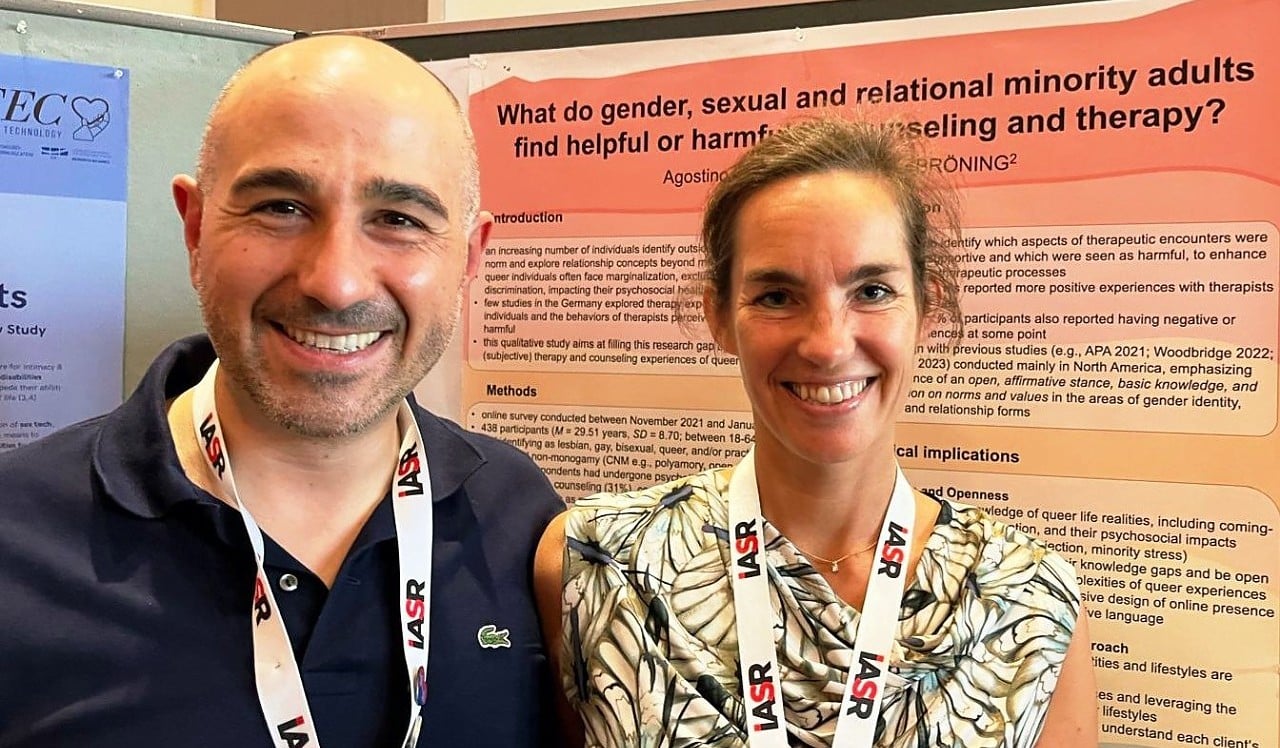
In “Diverse Love — Shaping Polyamory,” Sonja Bröning and Agostino Mazziotta explore whether, and how, several romantic relationships can be thoughtfully cultivated with the knowledge and consent of all involved. To do so, they fuse scientific insights with experiences drawn from counseling and therapy.
The book does not advocate for polyamory or for monogamy. What matters is not which relationship model people choose, but how they treat each other within it. After all, any form of relationship can be practiced with care and consideration—or with disregard, with nurturing or with harm.
Between Autonomy and Security
Sonja Bröning is a developmental psychologist, therapist for couples, families, and sexuality, and a professor at the MSH Medical School Hamburg. Her research spans diverse love, sexuality, and relationship dynamics. Agostino Mazziotta is a certified psychologist, couples and sex therapist, and a professor of diversity and community work at the University of Münster of Applied Sciences. He focuses on queerness, varied relationship forms, and belonging. In their therapeutic work, both accompany individuals, couples, and polycules.
The book treats the wish for autonomy with equal seriousness as the need for security, reliability, and belonging. Jealousy and fear of loss are not depicted as signs of immaturity but as feelings that can be understood and worked through together.
As a compass, the book offers a “North Star of Diverse Love.” Values such as equality, care, independence, and flexibility are meant to help readers identify their own priorities and negotiate differing visions with one another.
An eight-step model guides readers from clarifying personal motives, through agreements and initial experiences, to shaping everyday life in relationships. Case studies illustrate a variety of life designs and typical dynamics. Exercises and reflection questions are included to help readers explore their values, desires, and boundaries, whether alone or with their partners.
A Free Yes Requires a Possible No
Bröning and Mazziotta devote particular attention to power and consent. Consent alone is not enough. The conditions under which consent is given matter just as much.
Can someone reject the opening of a relationship without losing the partnership, the shared home, or financial security? What role do unequal incomes, caregiving responsibilities, and emotional dependence play? These questions apply not only to polyamorous setups.
A genuine yes requires the possibility of a free no. This holds true for polyamory as well as for monogamous relationships.
The book also addresses the social and legal conditions surrounding diverse relationships. Marriage law, paternity law, custody, and inheritance continue to be largely anchored in a two-person model.
This raises the question of which forms of love may be visible, socially recognized, and legally protected as a family. The personal shaping of relationships cannot be separated from political and social frameworks.
“Diverse Love — Shaping Polyamory” (Amazon Affiliate Link) speaks to people who live polyamorously, are considering opening their relationship, or want to better understand diverse relationship forms. It also targets professionals in counseling, psychotherapy, pastoral care, and social work. Rather than prescribing a universal way of loving, the book gathers scientific perspectives, therapeutic experiences, and prompts for informed, self-determined decisions. (dd/pm)
Sonja Bröning and Agostino Mazziotta: “Diverse Love — Shaping Polyamory”. Springer Fachmedien. Wiesbaden 2026. 611 pages. Paperback: $29.99 (ISBN 978-3-658-48371-5). E-book: $22.99 (ISBN 978-3-658-48372-2).