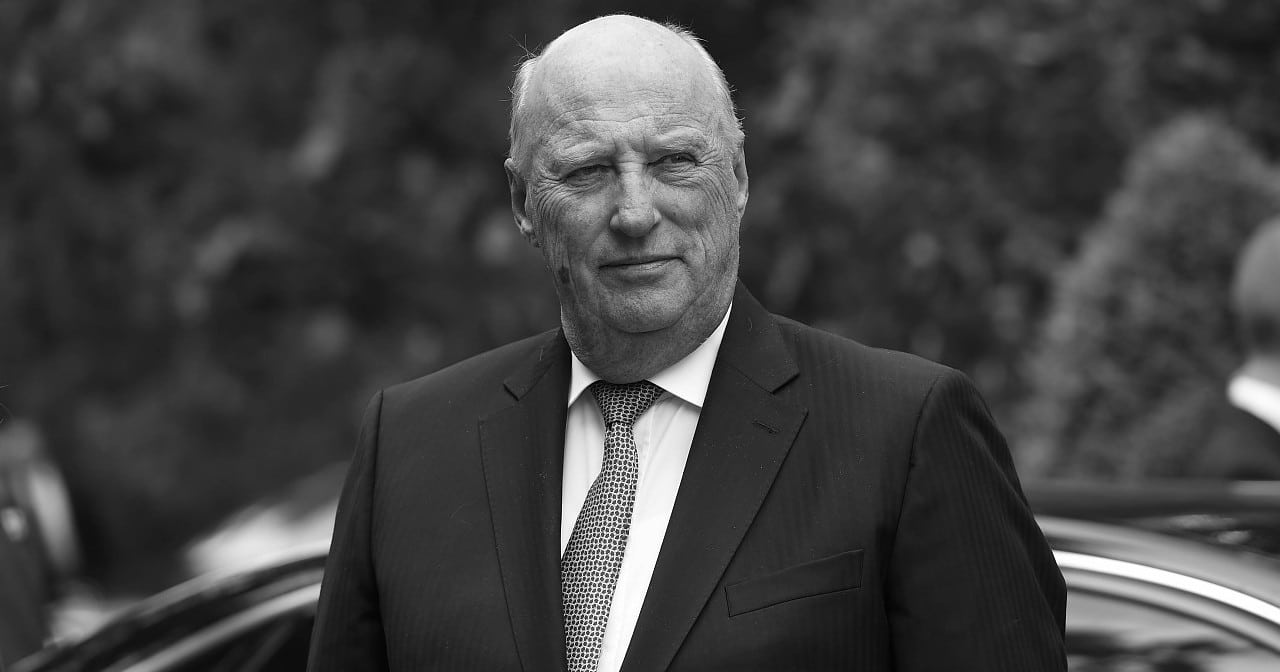
He was the oldest reigning monarch in Europe—and in recent years had repeatedly battled illnesses. Now, the 89-year-old Norwegian king, Harald V, has died at Oslo’s National Hospital. He passed away peacefully on Friday morning at 6:35 a.m., the Norwegian royal household announced. With his passing, the country loses a monarch who, for decades, impressed largely with his quiet demeanor—and who was also popular in the LGBTQ+ community. After his death, his son Haakon will inherit the throne.
Harald had already been in hospital since the start of last week. Because of a hemolytic anemia—a form of blood disorder—he had been treated with steroids, which led to fluid buildup throughout the body. He subsequently developed a bloodstream infection caused by bacteria.
Health had long been a concern for the Norwegian king. Since 2024 he had been permanently reliant on a pacemaker. He also frequently battled respiratory illnesses. In February, while on vacation in Tenerife with his wife, Queen Sonja, he was hospitalized for an infection.
Walking had long been difficult for him. Yet handing the throne early to his son Haakon was not an option Harald considered. He continued to fulfill his royal duties up to the end.
His compatriots valued King Harald V for his restrained manner—and for his ability to draw a firm line when necessary. His speeches were often marked by empathy and tact. He comforted Norwegians after the terrorist attacks in Oslo and on Utøya in 2011. Following the refugee crisis, he positioned himself as a measured voice advocating for diversity and tolerance. He was also known for his wry humor. He was an avid sailor and a winter sports enthusiast.
Harald V. Gave the Queer Community Courage
In the queer community, two moments stand out in memory. On September 1, 2016, at a garden party in the Oslo Royal Palace marking his 25th anniversary on the throne, Harald delivered a keynote address on identity, tolerance, and diversity. In it, he defined what it means to be Norwegian—and he explicitly included queer people: “Norway is you. Norway is us. Norwegians are girls who love girls, boys who love boys, and girls and boys who love one another. Norwegians believe in God, in Allah, in everything and in nothing.” That a sitting European monarch would speak so clearly and poetically for sexual diversity, queer rights, and religious pluralism was historic.
Even after the homophobic attack in June 2022 on the queer club “London Pub” in Oslo, King Harald V stood with the victims immediately and decisively. He condemned the assault and emphasized: “We must stand together to defend our values: freedom, diversity, and respect for one another. We must continue to ensure that all people can feel safe.”
The throne had Harald since 1991, following his father Olav V’s death. He married his great love Sonja in 1968—though his father had long wrestled with the idea of his son’s relationship with a civilian. But with his own children, Harald showed more tolerance: His son, Crown Prince Haakon, also married Mette-Marit, a normal Norwegian woman. His daughter Märtha Louise is now in a second marriage to the self-styled shaman Durek Verrett, an openly bisexual man.
Uncertain Future for the Norwegian Monarchy
Without Harald V, it remains unclear where the Norwegian monarchy is headed. While the king enjoyed enormous support at home, a string of scandals recently shook trust in the royal family. Crown Princess Mette-Marit faced criticism for her close friendship with the convicted sex offender Jeffrey Epstein. After the king’s death, the 53-year-old is not automatically guaranteed the title of queen—the decision about her role rests with the new king Haakon.
Mette-Marit’s eldest son Marius Borg Høiby from a previous relationship was in June sentenced to four years in prison for two rapes under Norwegian law. The verdict is not yet final. Many Norwegians are left uneasy about whether Mette-Marit has what it takes to be queen.