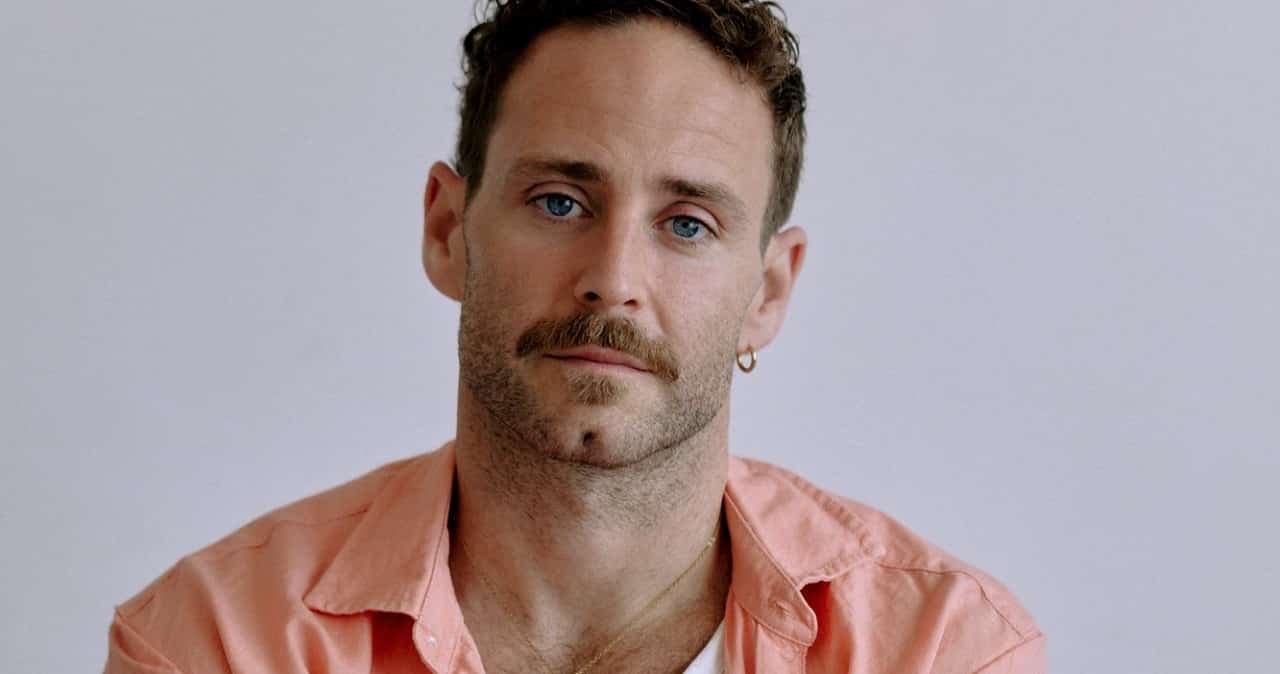
When Sophie Herrndorf, who lives in Cologne, was thirteen, she told herself: “Either I’ll become a nun or a lesbian.” She chose the latter. Today she has a partner and a daughter. In her new novel “Wanting to Go, Staying Put” (Amazon Affiliate Link) it tackles topics like lesbian motherhood, queer life paths, and the dilemma between duty and personal freedom.
The book follows two women caught in a fierce internal conflict. In one thread, Toni, who has a daughter with her partner, wrestles with motherhood. She wants to leave. She longs for her former job as a war photographer. But is she allowed to pursue it? Is she a bad mother if she spends long periods abroad to pursue self-fulfillment? Such a question is one many fathers probably never have to face.
Why are men offering their sperm?
In the novel, the difficult journey of two lesbian women in Germany to have a child is also described. Toni and Mona search for a sperm donor on an online platform. It’s striking to read how the men “advertise their IQ, their physical fitness, and the good health of their entire lineage,” the book notes. The women wonder: “Why do men offer their sperm? Some of them don’t even want contact with the child, yet they go to the trouble of creating a profile.”
Some men even prefer natural insemination. Toni and Mona reject that option. Eventually they find a donor in Patrick, a gay man. After Henni is born, Patrick pulls back: “The time with a baby was marked by fatigue and effort, and a father could have relieved us and given us time as a couple,” Toni explains in the novel. Yet Patrick falls for a younger man and moves to another city. Twice a year he sends a package of gifts, give-or-take, to his daughter.
But even within Toni and Mona’s relationship, things aren’t smooth. Toni meets Franzi. “I thought a one-night stand with Franzi might inject some freshness into my relationship with Mona. A wild night would give me what I’d been missing, and I would return to the relationship more balanced,” the book says. Things don’t go as planned. Toni and Mona separate. Before that, they even try a polyamorous arrangement.
Toda: What are lesbians?
Eventually Toni and Mona take turns caring for their daughter Henni, separately. At one point Henni asks, “What are lesbians?” In that moment Toni realizes that their daughter has absorbed their lesbian life so naturally that the word “lesbian” hasn’t needed explaining. To help her, Toni and Mona present Henni with Köln’s own motto, the local saying “Jeder Jeck ist anders” (Everybody’s a little different) and add, “The main thing is happiness.”
Unlike Mona, Toni finds motherhood challenging. “The truth is: as much as I love Henni, I don’t love being a mother. It’s a job I can’t quit,” she confesses. The conditions for mothers, she argues, are dismal: “No wages, no praise, no support, no way to call in sick.” The motherhood job has no breaks. For many women motherhood is a fulfillment; for Toni it is something else. While nursing, she never felt a deep, wonderful bond, only sore nipples and the longing to have her own quiet again.
Just before Henni’s first day of school, Toni receives a job offer as a war photographer, requiring a long departure. She is torn. Work feels liberating and personally fulfilling, yet she is wracked by guilt: “I can’t fly off to do a job while my daughter starts school! I can’t go off to photograph strangers in faraway places while my own child steps into a new world!” In this moment, Henni clings to her mother and says, “I don’t want you to go.” What should Toni do?
Being proud isn’t so easy
In a parallel dilemma, the life story of Chris unfolds. Chris also hopes to work abroad; her ticket is already booked. Yet at that moment her mother is diagnosed with terminal cancer. Doctors say the cancer is merciless. The mother’s wish is for her last days or weeks to be as comfortable as possible. Society expects Chris, as a daughter, to care for her mother. But Chris loves her job and wants to leave.
During this time, Chris recalls a difficult childhood. Her father was absent and her mother traumatized. She often heard the line, “Be a good daughter.” As an adult she goes into therapy. The therapist urges her to breathe deeply when she feels anger. Her inner child is active; her shadow self reacts because it was never unconditionally loved by her mother. The therapist also says, “You can be very proud of yourself.”
Yet Chris can’t summon pride. Her relationship with her mother remains complicated. The book emphasizes how often Chris feels she disappointed her mother, repeatedly proving she wasn’t a loving girl or a good daughter. How should Chris act now, given her mother’s cancer? Is it selfish for her to fly away while her mother is dying?
The second outing, as a trans man, was harder
In this dilemma, she meets Steph. With Steph, Chris experiences deep emotional intimacy. Steph’s gender identity isn’t fixed. “Gender doesn’t matter. It’s two people who love each other, two bodies that attract,” the book notes. Steph’s own life hasn’t been easy either. Steph first came out as a lesbian, which disappointed her parents. Among lesbians, Steph found a new family. “Then your betrayal of that scene, when you realized you were different again. You found yourself growing more into a man,” Chris recounts about Steph. “The second outing, as a trans man, was by far harder. Disappointed expectations. Hardly anyone kept in touch.”
Six years Steph has spent on the path of a trans man, including testosterone, name change, and surgeries. Yet Steph began to pivot again, resisting simple labels. “Not man, not woman, both or neither. Questioning binary norms. Expectations unfulfilled,” the book states. Chris loves Steph. This makes the looming out-of-town job even more of a dilemma. Should she go or stay? On top of that, her mother’s illness complicates the choice.
Across the novel, questions emerge that matter not only to queer people: Must someone sacrifice their own self-fulfillment and dreams to be there for others? How can the tension between responsibility and autonomy be resolved? What should one do when compromises feel nearly impossible? What truly matters in life?
Sophie Herrndorf: Wanting to Go, Staying Put. A Novel. 184 pages. Querverlag. Berlin 2026. Paperback: 20 euros (ISBN 978-3-89656-368-2). E-book: 12.99 euros