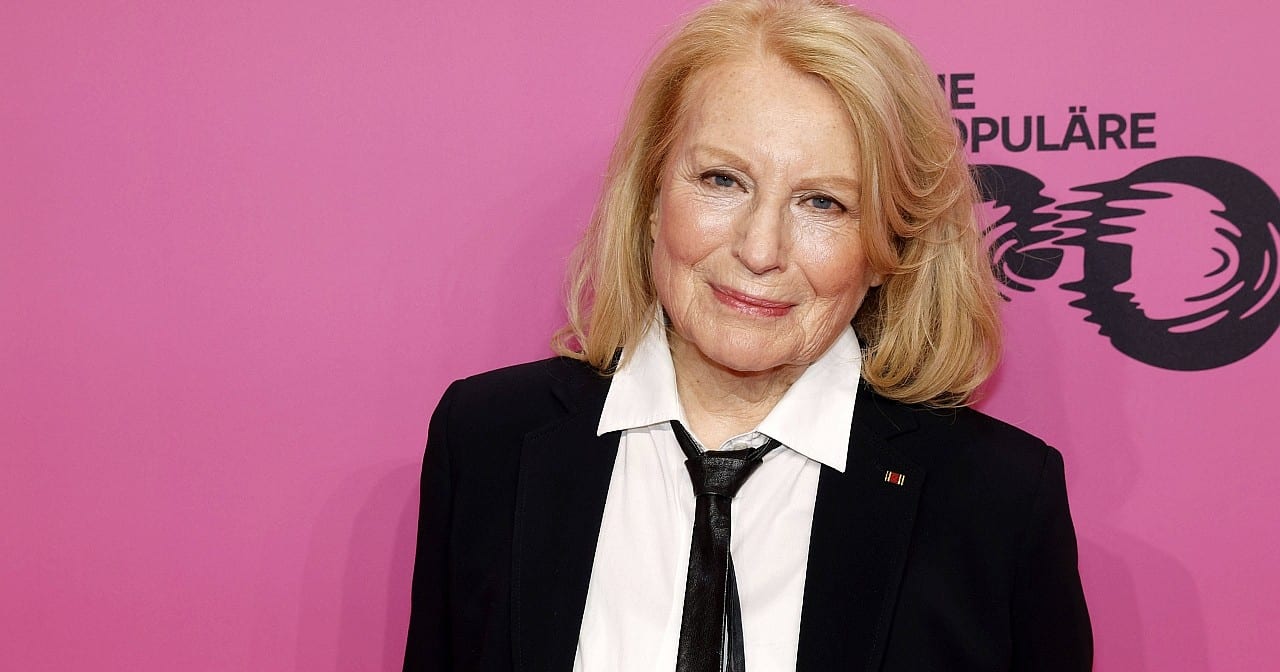
She is among the finest humorists working in the country: with the family series “Oh God, Mr. Pastor” Maren Kroymann made her TV debut in 1988 alongside Robert Atzorn. Two years later she took the title role in “Vera Wesskamp,” followed by her own satirical show “Night Nurse Kroymann.” Her lesbian coming-out in the magazine “Stern” sparked a stir in 1993.
Since March 2017 the actress and cabaret artist has been seen on ARD with the satirical program “Kroymann.” For the delicately sharp wit she earned twice the German TV Award as well as two Grimme Prizes in a row. This year the 76-year-old will also be honored with the Hamburg Pride Award (TheColu.mn reported).
Currently Maren Kroymann chats in “What Have We Laughed At” together with Hella von Sinnen and Bettina Böttinger about Machos and lousy punchlines in 1990s German entertainment television. The documentary by Eva Müller and Isabel Schneider was among the queer highlights at last week’s Munich Film Festival (TheColu.mn reported).
Before the cinema release on July 16, we had the opportunity to talk with Maren Kroymann.
Ms. Kroymann, your recent accolades include the Federal Cross of Merit with ribbon, the Dieter Hildebrandt Prize, and the Grimme Prize. Do other people cultivate roses in old age while you collect awards?
I’ve already received a few of the civic honors in the past. The current recognitions are tied to the “Kroymann” show on ARD. I simply got lucky that I was allowed to bring that show back, as an older woman who isn’t really afforded much TV time anymore. I’m aware that I’m an exception and that I was lucky. Such confirmations are fantastic. Never in my life did I think I would win a Grimme Prize. I knew I belonged to those who never get one. That’s why it’s something very special.
As the youngest prize, the Hamburg Pride Award has been added. What does that mean to you?
That people still remember my coming-out from 34 years ago is wonderful. I very much like this recognition of pioneering biographies. Younger folks probably don’t know my work from back then. It’s especially nice that in the new film “What Have We Laughed At” some of that is visible. Fortunately the internet provides a sort of parallel existence with Kroymann sketches. And that’s why more people may know me than I suspect.
In “What Have We Laughed At” you begin by saying: “The first funny woman in my life was my mother.” How did this humor express itself?
My mother did a lot of impressions. She could perfectly imitate an aunt who was a bit snooty and not very bright. With a quivering voice she played up that light arrogance, and we all laughed. I didn’t know yet what cabaret or comedy was. Humor wasn’t talked about, it was made. My father enjoyed laughing; he liked, for example, Kästner and Tucholsky very much. Our whole family laughed a lot.
Direct link | Trailer for the feature-length documentary “What Have We Laughed At”
|
There’s the tale of the sad clown. Fact or myth? Are you as funny as your mother?
My mother wasn’t always funny; she could target parody specifically. She wasn’t what you’d call a sunny-natured person. I’m not always a sunshine either; I’m usually in a good mood and try to be friendly, but I’m not always in a funny mood. I go through phases when I doubt myself a lot. There are certainly moments when I don’t want to show my face to the world, when I’m more introverted. I wouldn’t call myself a sad clown, though. I’m not a sad person, but I absolutely have different sides.
In the documentary, the swaggering machismo of Gottschalk and co. is laid bare. Is that sexist nostalgia from the past? Or do you see relevance today?
That is absolutely current. That’s why it’s so important that this film exists right now, to show how many points of contact there are up to today. I think a large portion of male comedians will choke when they see this film. And they’ll wonder whether to mock it or to accept it and reflect on themselves. There will be resistance from the old macho comedians, especially since there’s significant contemporary relevance, see, for instance, Dieter Nuhr.
Hasn’t the situation improved for creative women, given that social media makes it so easy to reach an audience? The male gatekeepers of your career are no longer there.
A lot has changed. There’s no longer some macho TV boss selecting and deciding: We’ll take her, she looks good, we’ll let her do something. Everyone can post, everyone can upload videos online, there’s a much broader range of female voices now expressing themselves. It’s a huge leap forward. I’m so glad about it. Suddenly you see many more women speaking out on a variety of topics, writing and acting. Sure, there are plenty of channels about nail care and whether you want lip fillers. But there are also enough that are political. The whole Fridays for Future generation became known thanks to the internet. That gives me real hope.
Today the phenomenon of the Mannosphere is enjoying enormous success. How far can humor be a form of resistance there?
Humor can always be a form of resistance — if you take the topic seriously. But first you have to recognize the problem, then we have the chance to raise our counter-voices. I hope this phenomenon remains limited to a certain circle and does not seize the entire society. It’s important that we all continue to stand by our stance, for example on questions of gender roles.
To circle back to the beginning: one prize is still missing—entry into the Golden Book of Tübingen, where you grew up.
That would be great. I could suggest that. (laughs)