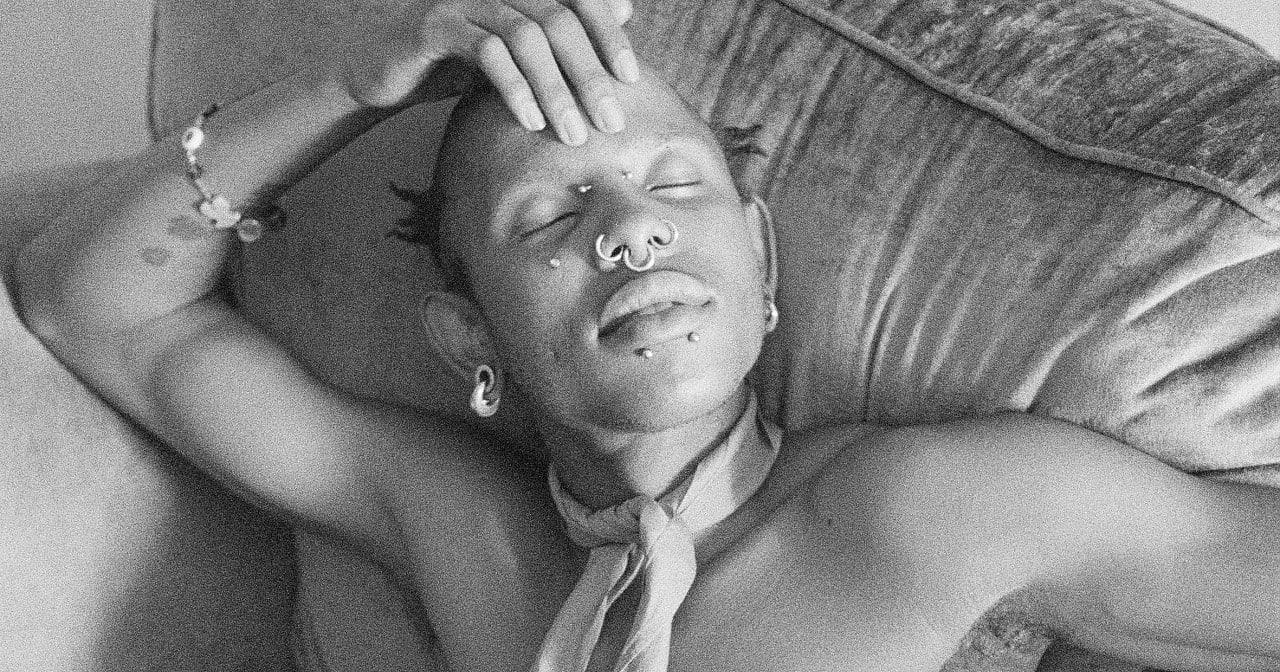
The Berlin-based Distanz Verlag, renowned for its exquisite art-book program, hosted a book presentation at the Center for Contemporary Arts, the CCA Berlin on Breitscheidplatz right beside the Gedächtniskirche. The newest works by photographer Jana Schulz were shown. The result was a book that serves as a photographic portrait of Bathenkosi Sphesihle Luphalule, a Black young man living in South Africa. The photos document his evidently playful engagement with masculine identity. They portray a form of masculinity beyond traditional attributions, the announcement states, and they promise not to disappoint.
No question, the topic of masculinity is a broad field with many mined zones. My mind instantly wandered to the successful song from the early 1980s — “Neue Männer braucht das Land.” Although the song did not reveal what exactly this new masculinity should look like. A look at today’s reality informs us that toxic masculinity is not about prejudice, but rather a reality that often outstrips the stereotype.
Undoubtedly, generalizations tend to lack footing; they stay vague and, in the end, unfair. For a long time, a critical masculinity has spoken up. A book title comes to mind: “Sei kein Mann” by JJ Bola — an example of this critical masculinity. Bola urges unlearning male behaviors. When viewing Jana Schulz’s photos, one could easily mistake them for a manual on how to do just that.
Is there “too little genuine masculinity”?
But let’s stay a moment longer in the problem zone. A few days ago, a professor from a Catholic university in Cologne wrote in the Neue Zürcher Zeitung that the problem isn’t “too much masculinity,” but “too little genuine masculinity” — yikes, and what exactly is “genuine masculinity”? According to Professor Michael Klein, it is something “based on compassion, protective instinct, and strength.”
With the adjective “genuine,” I always find myself treading carefully. Moreover, this discourse, framed largely by left-green circles, is said to lead to a crisis of self-worth and eventually radicalization. It’s remarkable how easily the problem of patriarchy is waved away, and the toxic masculinity gets attributed to those who critique it.
Anyway, let’s move on, because here we are really looking at an example that defines masculinity in a completely different way, without falling into the protector trap or the image of the “strong man.” The young man shown by the photographer attempts the opposite. He creates a habitus that seeks strength in vulnerability and creativity, without labeling him as the strong man.
Seeing and Being Seen
The question is how we define masculinity and whether we even need to define it, because we can open up the category rather than cement it into clichés. Bathenkosi, together with photographer Jana Schulz, chose to open it up. We see a thoughtful, sensuous young man who is very aware of his beauty and his erotic aura, without confusing self-love with narcissism.
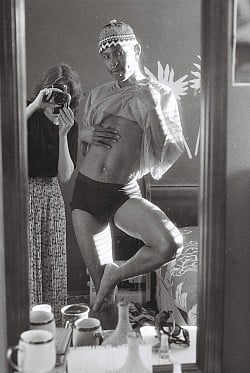
One of the photos uses the magic of the mirror to simultaneously quote the photographer’s gaze in the mirror. Essentially, each photograph is a kind of reflection, in which seeing and being seen are present in equal measure. In this instance, there’s also the question: what does the photographer recognize of herself in the person she photographs?
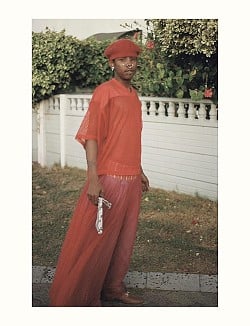
The soft focus of the photos, alternating between black-and-white and color, the occasionally diffuse light, sketch the contours of this youthful body more vaguely than sharply. The soft, flowing fabric of the extravagant clothing wraps the person in a literal sense and makes the body appear as fluid as the gender being presented. Veiling and unveiling alternate in Bathenkosi’s self-staging. Even in nude shots, it remains a distinctive blend of casual and inward-looking.
Fascinating choreography that seeks closeness to the body
Jana Schulz has not shied away from examining the topic of masculinity photographically before. When she was a guest at the famous Villa Aurora in Los Angeles, she chose a group of boxers to photograph and explore their world. Her interest in the topic of men, she explained, is closely tied to seeking an answer to what her life would be like if she had been born a boy. And what it feels like to be a woman among men, repeatedly confronted by one’s own insecurity. She also described the photography project as a dancer-like act of approaching.
The book that emerged from this is indeed a fascinating choreography that seeks intimacy with the body. It is also a successful example of questioning conventional images of masculinity. The peculiar title of the book, “Tetris B Mountaingoat,” is Bathenkosi’s artist name, with “Tetris” referring to the name of a computer game and “Mountaingoat” the English term for a mountain goat. The Nigerian-born, Berlin-based poet Logan February wrote a poem for the photo book. In one line he asks, “what is style?” The answer is found in the enchanting performance of this young South African man.
Jana Schulz: Tetris B Mountaingoat. 80 pages. 7 color and 35 b/w illustrations. Distanz Verlag. Berlin 2026. Softcover with flaps: $32 (ISBN 978-3-95476-852-3)