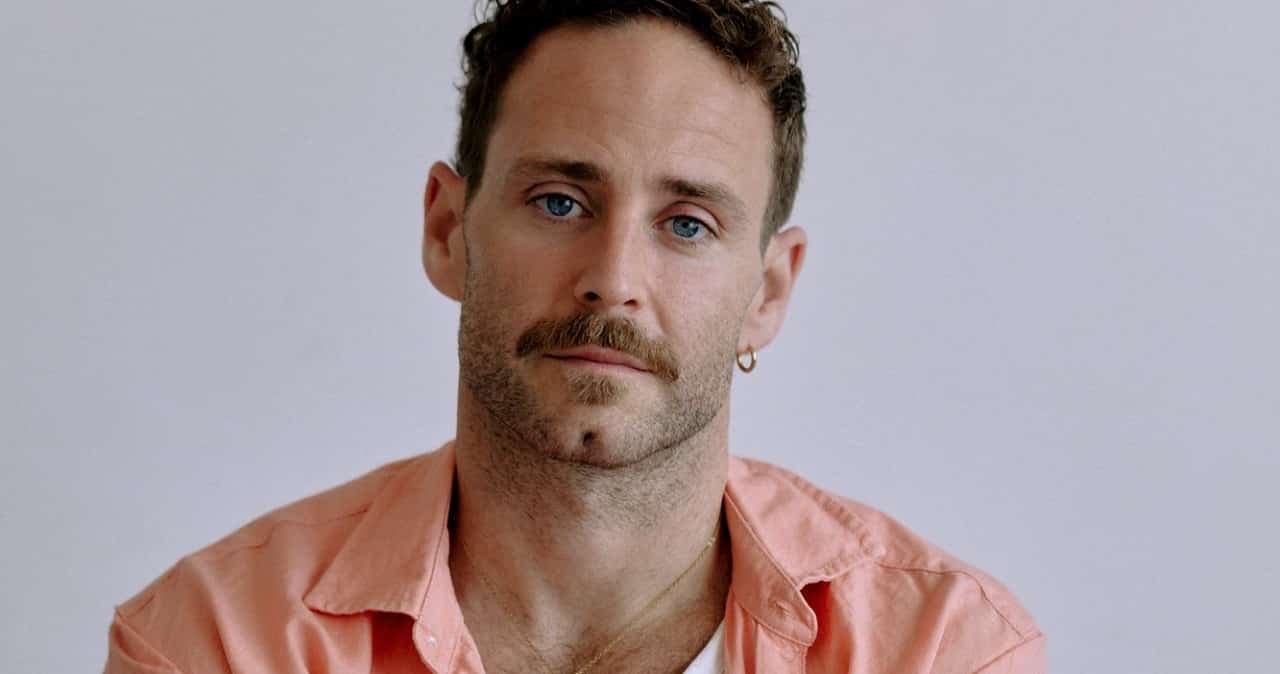
“With Speck you catch films,” Rosa von Praunheim titled his 2012 portrait of Wieland Speck. Together with Manfred Salzgeber, Speck launched the Teddy Award in 1987 as an independent queer-film prize at the Berlinale — the first prize for queer cinema at an A-list film festival worldwide.
The gay film professional, born in 1951, studied German studies, theater studies, and ethnology in Berlin. Beginning in 1982 he worked as Manfred Salzgeber’s assistant for the Berlinale’s Panorama. Three years later he presented his feature debut with “Westler.” He also served as a jury member and film-program advisor at international film festivals, as a member of funding boards, and as a lecturer at film schools such as the HFF in Munich or the Filmakademie Ludwigsburg.
For Teddy’s 40th birthday, we spoke with Wieland Speck about the prize’s origins, highlights from four decades, and its future prospects.
Wieland, how did the Teddy get its name?
Well, in the latter half of the 1970s there was for the first time a shared experience for gay people: in San Francisco’s Castro district. The clone in a checkered shirt was born and carried a small plush bear on his backpack. Now the Teddy is, above all, many people’s first bedfellow — and perhaps the Baby of the Berlin Bear, right? After all, there’s a gold and silver Berlin Bear for the festival.
What were the three most beautiful and the most embarrassing Teddy moments in four decades?
I’d love to recall wonderful events, but I can’t single any out as the best. Still, I want to remember the many amazing Teddy laureates who are no longer with us, currently Rosa von Praunheim and Udo Kier, and in the past Werner Schroeter and Derek Jarman — representing many whose works deserve to be rediscovered with great benefit. The notion of “embarrassment” isn’t something you can afford to entertain when queer people’s social standing is at stake, or as the Nairobi/Kenya queer-film festival’s motto put it: “We don’t have the luxury of shame!”
How would you summarize Teddy’s record after 40 years?
After four decades, you can speak of a consolidation. Yet Teddy has remained independent, surviving solely on the efforts of many people who want it to exist and who produce it year after year. Queer film is more present than ever — because we, the queer community, keep it visible. Teddy plays a clearly visible role in that.
How do you, as a longtime observer, view the current state of queer cinema? Have streaming platforms sparked a creative surge?
Technical changes always influence audience reception and, indirectly and directly, production — but the fundamentals remain largely unchanged. The position of queer people is gradually being integrated into the canon and, accordingly, reflected on “new” media. Consequently, there’s more Queer content, but also more of everything, including a staggering amount of trash across all channels. That, in a sense, defines the spirit of the times!
Why hasn’t this queer bear ever been included in Berlinale’s official Bear Collection?
A fair question. I never knew who would lead the Berlinale next, so I kept the Teddy independent. No one can stop him. At the same time, he is a media and audience favorite and had already become an officially recognized prize in the early 1990s.
How many cousins does Teddy have at other festivals by now?
The first festival to pick up the idea was the Kiev International Film Festival Molodist! It had been one of the most important festivals in the Eastern Bloc since 1970 and later hosted Sunny Bunny’s sister event in 2001. Today, that prize evolved into its own queer festival — a still rare species in Eastern Europe. By a wide margin, the major early followers were the venerable Venice in 2007 and Cannes finally in 2010.
How has the share of submissions shifted over the years, from gay to lesbian to trans?
At the beginning of the Panorama era in 1980, when it was still an Information Screen, there weren’t many films to choose from. Co-founder Manfred Salzgeber (who, by the way, also helped found the Forum of the New Cinema, which debuted in 1971 with “Not the Homosexual is perverse, but the situation he lives in,” in which Rosa von Praunheim participated — Rosa who passed away in December) had already shown works by John Waters, Arthur Bresson Jr. (who later presented the first AIDS film, “Buddies”), Lionel Soukaz (last year’s passing) and feminist films by Catherine Breillat or Vera Chytilova, lesbian themes from Chantal Akerman and Alexandra von Grote, to name a few. The trans theme appeared in short films from early on. The film search moved between these poles. While gay themes quickly resonated with and attracted audiences to our programming, lesbian themes and, eventually, transgender topics only found a wider, cross-cutting selection in the 1990s.
The Teddy Award was once groundbreaking for an A-list festival. Is such a prize still necessary almost four decades later? Or should queer films simply be “normal” by now?
That’s the Gretchen question that has accompanied Teddy from the start. Since the prize’s idea has always been tied to connecting international festival programmers from diverse backgrounds and circumstances who could actually do this work, the Teddy’s unique importance has always been clear. Here, truly different situations collide. And as long as sexuality is used by politics as a control mechanism to regulate society, the Teddy will continue to exist.
How important is the Teddy for marketing queer cinema?
The film program obviously depends on the market conditions each year. But with Berlin’s audience and international crowds, it has repeatedly been possible to bring even “difficult” films to the cinema. A prize award at least guarantees greater media attention — a crucial step on the way to getting into theaters. I’ve experienced that myself as a filmmaker, and it was one of the reasons I helped establish the Teddy.
What would you wish for the Teddy’s future?
That the current backlash, which has touched all political and cultural realms, won’t be so successful that we again have to stage the Teddy underground. Although it’s more urgent than ever to target a new underground — the backlash may not have reached its peak yet.
What was your all-time favorite queer film at the Berlinale?
I can’t really choose one, not after Derek Jarman’s work, which soars above the rest and isn’t alone in that regard, along with Werner Schroeter, Pedro Almodóvar, you name it — but John Cameron Mitchell’s “Hedwig and the Angry Inch” has nestled into my heart as well, even though its sensational success at the Berlinale didn’t translate into a long cinema run. The American rights holders weren’t interested in distributing it, as later turned out. Not the only bitter pill a curator must swallow over 39 years — but a particularly nasty one.
When will “Westler” come to Netflix or similar platforms?
Thanks for asking. The film is still distributed by Salzgeber, and it still fills theaters several times when it screens, as it did this year for its anniversary: 40 years — a year before Teddy!