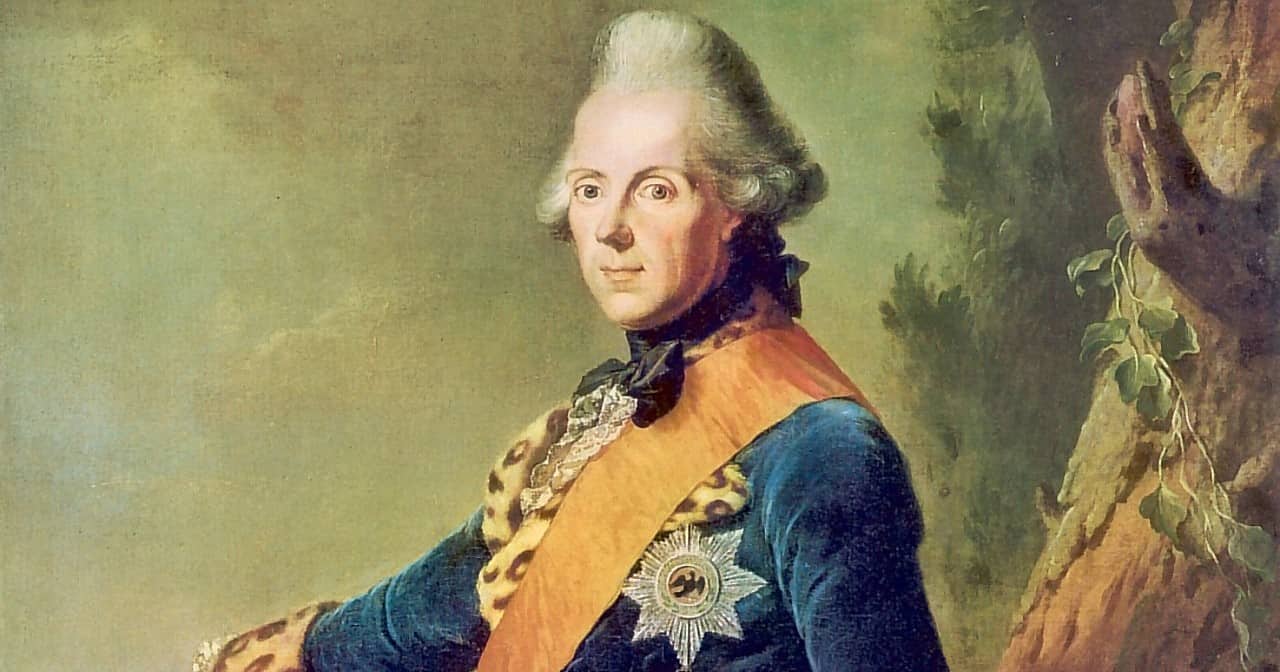
Prince Henry of Prussia (1726–1802) was the thirteenth child of King Frederick William I of Prussia and his wife. Under his older brother, King Frederick II the Great (1712–1786), Henry was already made the commander of a regiment at age fourteen, yet he remained in his brother’s shadow for the rest of his life. When examining his male friendships, scholarly investigations focus on his close relationships with his aides and favorites.
In the following, I reference not only scholarly works but also works of fiction. While these are not fact sources, they offer a valuable complementary perspective that enriches understanding of an era. Novels can provide direct insight into the thoughts and moral codes of the society of the time.
His Favorite: Kaphengst
In his Wanderings through the Mark Brandenburg (1880, Chapter 58), Theodor Fontane describes landscapes, places, their inhabitants and their histories across five volumes and treats Prince Henry’s affair with the later Major Christian Ludwig von Kaphengst (1740–1780). It is believed that Henry met Major von Kaphengst during the Seven Years’ War (1756–1763), “found pleasure in his youth and beauty,” and later took him to Rheinsberg Palace. Kaphengst was initially the prince’s adjutant, “a position for which his intellectual gifts by no means qualified him.” He rose to “Major and then commanded the court and the prince himself, whose demonstrations of favor made him arrogant.” Prince Henry’s brother, Frederick II, “who, in his Sanssouci isolation, was informed of everything,” disapproved of what happened at Rheinsberg and wished to end this “relationship.” The prince received from the king a larger sum of money, dismissed Kaphengst from official service, but, around 1774, gave him, among other things, Meseberg Castle. They remained a couple, so that with the termination “the burden and discomfort of an unregulated relationship” were removed.
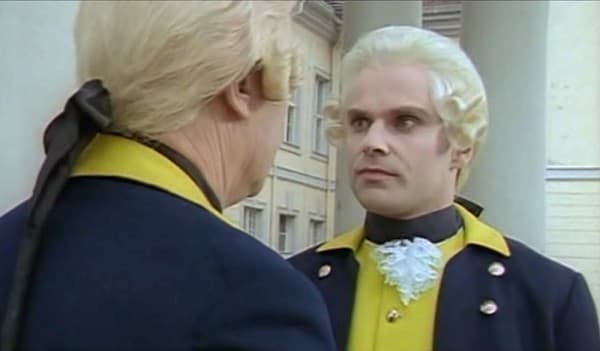
Already in 1986 there was a five-part documentary based on Fontane’s Wanderungen. In the second part of Fontane’s Wanderings through the Mark Brandenburg (1986, 12:20–21:10, especially 14:30–15:10), Fontane’s description of Prince Henry’s “perverse lover” Kaphengst and the “unnatural affair” between the two men is treated at considerable length. In this film excerpt, the documentary is clearer than Fontane’s text, yet it omits a sensational anus anecdote from Meseberg Castle.
The Anus Anecdote from Meseberg Castle
Meseberg Castle, which Prince Henry gifted to Kaphengst, is an 18th‑century Baroque palace. In Fontane’s Wanderings through the Mark Brandenburg, the anecdote is recounted: In the castle’s dining room, the painter Bernhard Rode created a ceiling mural that, “in the taste of that era,” depicted the deification of Prince Henry. Among the motifs is an altar with the inscription “Vota grati animi” (=“Take this as a donation from a grateful heart”). However, Henry and Kaphengst initially failed to notice that Rode—whether by accident or manipulation—had omitted the last syllable of the inscription, so it read: “Vota grati ani” (“Take this as a donation of a grateful anus”). Fontane wrote: “In the neighborhood, people laughed heartily.” It is, for the era, a fairly coarse pun, used either playfully or insultingly.
Magnus Hirschfeld (“Die Homosexualität des Mannes und des Weibes.” 1914, p. 664) recounts the story somewhat differently: according to him, King Frederick mocked “the inscription on a friendship temple that Henry had dedicated to one of his friends.” With the inscription “testimonium grati animi” (=“a testimony of a grateful mind”) he had the “last syllable ‘mi’ covered with a rosette.” This would yield “Testimonium grati ani” = “Testimony of a grateful asshole.”
In the exhibition catalog “750 warme Berliner” (1987, pp. 14–16) the anecdote is cited but not explained. Unfortunately, because of taboos about the anus, there are no clear explanations of the wordplay. In the correspondence collection “Theodor Fontane and Martha Fontane. A Family Letter Network” (edited by Regina Dieterle, 2002), Fontane’s May 13, 1889 letter to his 29-year-old daughter is printed, in which he emphasizes that the ceiling mural with the “jocularly indecent inscription” is a “hint” at the relationship between the two men (pp. 343–344). The editor later notes that this is a “hint at the homosexual relationship” between the two men (pp. 771), but does not elaborate further.
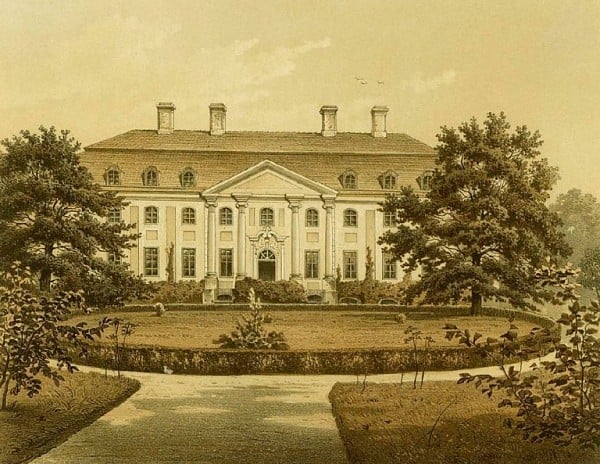
The castle today also functions as a guest house of the German government. A tourism page for Meseberg Castle notes: “The scholar of Latin will understand that omitting the two letters yields a risqué meaning.” Visitors without Latin knowledge are not expected to grasp the context. Wikipedia notes that at Meseberg Castle “a circular staircase between the master’s bedroom and the prince’s guest room has survived to this day.”
His Favorite Tauentzien
Prince Henry developed a deep fondness for the young Bogislav Friedrich Emanuel von Tauentzien (1760–1824), who became not only his adjutant but also his confidant and favorite in 1776. An oil painting from 1785 preserves the two men together, further underscoring their close bond (reproduced in “Hohenzollern-Jahrbuch” VI, 1902, pp. 12–37, here p. 25) and in “Prince Henry of Prussia. A European in Rheinsberg” (2002, p. 404).
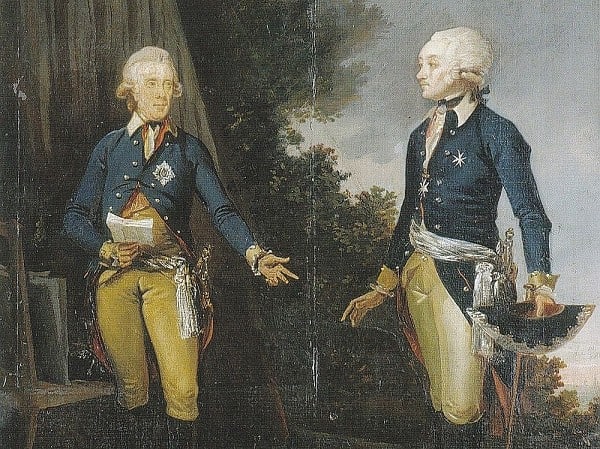
Prince Henry even dedicated Tauentzien with his own commemorative plaque on Rheinsberg’s obelisk, a hero memorial in the park of Rheinsberg Castle. Tauentzien is thus one of 28 men commemorated in this way by a French‑titled inscription written by Prince Henry himself (see Wikipedia for Tauentzien listed eleventh).

His Favorite La Roche-Aymon
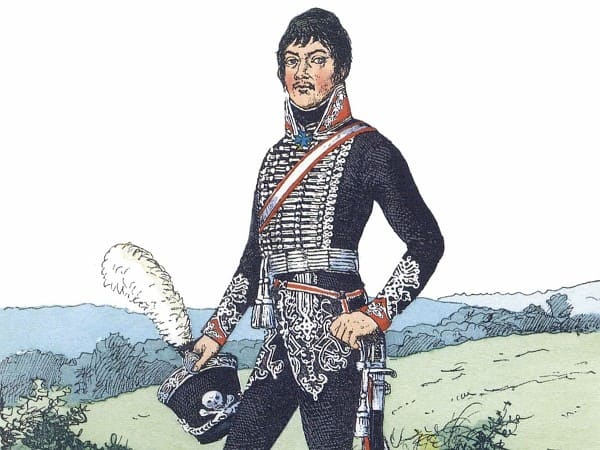
Fontane writes in Wanderings through the Mark Brandenburg: “Antoine-Charles-Étienne-Paul, Count La Roche-Aymon was born in 1775. In 1792, at seventeen, he was handsome, graceful, amiable—a cavalier in the best sense of the word—who soon entered a trusted position, indeed beyond that, into a heartfelt relationship with the prince, something the prince had not known since Tauentzien. The count appeared to him as a gift from heaven; the evening of his life had come, but, lo and behold, before the sun departed, it lent him one more beam of its glorious light. The Count La Roche-Aymon was (after Kaphengst and Tauentzien) the prince’s last adjutant. This friendship lasted until the prince’s death, who, a few months before dying (…), wrote the words: ‘I publicly thank the Count La Roche-Aymon for his tender attachment that he has shown me all this time, while I was so fortunate to have him nearby,’ and it also appears elsewhere that the Count was the prince’s closest trusted confidant who stood closest to his heart.” Fontane’s stated birth date for Count La Roche-Aymon is now (unlike Fontane’s) given as 1772 (Wikipedia).
The “Secret History of the Berlin Court” (1789)
An important source on Prince Henry’s homosexuality is Honoré-Gabriel de Riquetti de Mirabeau’s “Histoire secrete de la Cour de Berlin” (1789, Volume II, pp. 98, 131). The most relevant passages about homosexuality in this translation are not included in the edition titled “Secret History of the Berlin Court” (1789). These sources on Prince Henry’s homosexuality were cited repeatedly during the early homosexual movement, by Albert Moll (“Die konträre Sexualempfindung,” 1899, pp. 128–129), the “Jahrbuch für sexuelle Zwischenstufen” (1900, p. 428), Georg Back (“Sexuelle Verirrungen des Menschen und der Natur,” 1910, Vol. 2, p. 617) and Richard Linsert (“Kabale und Liebe,” 1931, p. 377). Mirabeau writes, among other things: a “former servant of Prince Henry was turned into his favorite by his skill in serving his master’s boy-love.” It was also known that “the Ganymede always decided everything for Prince Henry and will continue to do so.”
Alexander von Sternberg – “Der deutsche Gilblas” (1851/1852)
The German storyteller and poet Alexander Freiherr von Ungern-Sternberg (1806–1868) tackled Prince Henry’s homoerotic tendencies in two literary works. His two-volume work “Der deutsche Gilblas. Ein komischer Roman” (1851/1852) is a satirical social critique. A character named Xaver Violet comes to the prince’s court as a page. This page must undergo a weekly enema (referred to as “lavement” or “purging”), with the prince himself in attendance. Once a year, his six pages, serving to entertain the prince’s guests, must dress as “Arcadian shepherdesses,” with the prince himself assisting in the dressing room as they put on corsets and skirts. When the dresses are pulled up, the forms reveal their actual gender against their will. Xaver Violet becomes Henry’s favorite, and from there the once‑staff member Xaver Violet is welcomed as a guest. When Henry is alone with him, he indulges the same intimacies and jokes as before. Henry even sent him a birch rod with the remark, “Note that his fundament still lies at my disposal.” The Jahrbuch für sexuelle Zwischenstufen (1902, pp. 503–510) provides a thorough summary of the homoerotic content of the novel, which extends beyond Henry alone.
Alexander von Sternberg – “Künstlerbilder” (1861)
In “Künstlerbilder” (1861), a three‑volume collection of literary portraits of famous figures from art and intellectual history, Sternberg blends biographical facts with fictional elements. Regarding what Sternberg wrote about Prince Henry in “Künstlerbilder” (1861, Vol. 1, pp. 91, 97, 140–141), the “Jahrbuch für sexuelle Zwischenstufen” (1902, pp. 533–534) provides a concise summary: the musician Sangrelli found “employment with the prince” because of other achievements that had nothing to do with music. In other cities, Sangrelli sought out “young, handsome musicians” to recruit for Rheinsberg. This is how he also brought the fourteen-year‑old Fritz Mara, described as an Antinous “of dazzling beauty, black hair, dark eyes, fresh lips and white teeth,” to Rheinsberg. The singer Gertrud Schmähling also lived there. She developed “a distrust of Sangrelli” as his service at the prince’s court, the many young lads he had to manage and supervise, and the peculiarities of life near the prince all gave rise to a feeling of aversion toward the concertmaster.

Two Novels by Theodor Fontane (1878/1898)
I have already discussed two novels by the eminent writer Theodor Fontane (1819–1898) on TheColu.mn. His first novel, Vor dem Sturm (1878, Book II, Chapter 2), presents a portrait of Prussian society during the Wars of Liberation. In it, Fontane depicts Prince Henry as a man who “hated women. … Such contradiction, that in a court that negated women as women, these women nonetheless ruled.” The prince’s only need was personal exemption from consequences; otherwise, he tolerated all forms of life and company, which did not fear openly challenging moral norms, which offered him a favored topic of conversation.
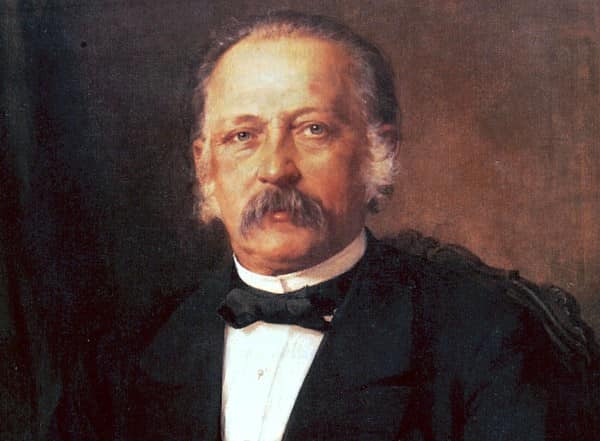
In Fontane’s last novel, Der Stechlin (1898, Chapter 13), Fontane becomes more explicit, for example in a dialogue between Armgard von Barby and the landowner Dubslav von Stechlin about Prince Henry. Armgard: “I think I’ve heard of the prince’s misanthropy toward women. He was said to be a so‑called misogynist — something sick in my view, or at least something very peculiar. … The women‑haters are even proud to be women‑haters, and treat their thinking and actions as a higher form of life. Do you know such people, and what do you think about them?” Stechlin: “I first see them as unhappy. … and secondly as sick. The prince was also a sick man.”
This novel appeared at a time when, due to publications by sex researchers and the emergence of a homosexual movement, many open-minded people viewed homosexuality not as criminal behavior but as a medical issue. The shift in perception—from criminal to ill homosexuals—can be read as a change in attitudes and a sign of progress and development.
Karl Heinrich Ulrichs (1868)
The early gay rights activist Karl Heinrich Ulrichs appears to have been the first to conceive a list of homosexual celebrities to offer positive role models for his contemporaries. He planned to compile a list of 80 people from the period since 1500, including Prince Henry (1868, Vol. VII, pp. 130–131). Since Ulrichs only imagined the project and never realized it, it remains unknown what information he had available.
Albert Moll (1910)
Like other authors writing during the early homosexual movement, Albert Moll, in his work “Berühmte Homosexuelle” (1910, pp. 31–33), discussed Mirabeau’s publication. He also cites two more historical sources. Moll notes that in “Les matinées du Roi de Prusse ecrites par Lui-meme” (1766) the prince’s regiment was described as “composed of pedophiles,” though a later online edition of the book does not confirm Moll’s page reference (p. 29). The author of this polemical, rumor‑driven text remains unknown.
Another reference is to Dr. Volz’s article: “Die Prinzessin Heinrich” in the Vossische Zeitung (July 15, 1908, morning edition, pp. 2–4), which is online and provides corroboration. In this article, King Frederick is quoted as saying: “I will not go further into the mystery of his love or his indifference; but I believe that, in every respect, a woman would do him good” (pp. 2). The French observer La Touche noted that “the prince is insensitive to the charms of his wife” (pp. 3). The section title “Princess Heinrich” refers to the stereotype that homosexuality is linked to traits deemed feminine, a classic form of vilification that uses identity or sexuality as an insult.
Magnus Hirschfeld (1914)
In his magnum opus (“Die Homosexualität des Mannes und des Weibes,” 1914, p. 664), Hirschfeld discusses Prince Henry in depth, including his relationship with Graf de la Roche-Aymon: He “did not conceal his intimate relations with his favorites.” Among the best known were, in addition to Kaphengst, the “notoriously homosexual singer Mara.” Fontane and Vehse portrayed Prince Henry’s homosexuality as “something self‑understood.” The homosexual author von Ungern-Sternberg also touches on the prince’s homosexuality from time to time. Hirschfeld refers to Mara as cellist Johann Mara (1744–1808) and to “Vehse” as possibly Carl Eduard Vehse’s major work “Geschichte der deutschen Höfe seit der Reformation” (1851–1858). The popular 48‑volume work contains many sensational stories but lacks precise sourcing, so Hirschfeld’s data cannot be fully confirmed.
Along with the Scientific‑Humanitarian Committee (WhK), Hirschfeld published the Jahrbuch für sexuelle Zwischenstufen. Here Prince Henry is cited around 20 times in connection with Mirabeau and Ungern-Sternberg, among others. See “Prolegomena zu Magnus Hirschfelds ‘Jahrbuch für sexuelle Zwischenstufen (1899–1923)’” (2004, p. 198).
The Theater Piece “Beaten!” (1923)
In his doctoral dissertation “Male Homosexuality in Weimar Drama” (2001, pp. 101–103, 585), Wolf Borchers discusses Hans Franck’s drama “Beaten!” (Beaten!, 1923; printed play; premiered April 25, 1923; revived in 1944 under the title “Königsbrüder”). The drama centers on King Frederick II’s life, but for Borchers the clarity is striking: it presents “the homosexuality of Frederick’s other brother, Henry,” as a device to emphasize negative traits. “Cowardly, spiteful and plotting, he is cast as a distorted mirror of the king.” Borchers quotes from the drama: “Of inconspicuous form, lacking grace, he resembles the king mentally and physically … in every respect, he is the king’s foil.” Borchers argues that the content makes Henry’s homosexuality explicit as a moral blemish. While the play does not depict direct homosexual acts, the bold innuendo signals are clear. Borchers notes that, notably, the work marks a moment when a member of the House of Hohenzollern could be clearly depicted as homosexual, along with the explicit language about the matter.
Eva Ziebura: “Prince Henry of Prussia” (1999)
Among the secondary literature from previous decades, two books and one essay stand out. Eva Ziebura’s book “Prince Henry of Prussia” (1999) is marked by thorough historical knowledge, with Henry’s homoerotic tendencies woven as a recurring thread. Henry, like his brother the king, had a “fondness for handsome young men” (pp. 44–48) and, driven by external pressure, married a wife he neither loved nor desired. After marrying, he joined Graf Lehndorf. The Graf “found the great love of his life in Henry” and would “for the next fifty years” maintain tender affection for the prince (pp. 68).
Ziebura treats the relationships with particular detail: the friendships with Count Friedrich von Kalckreuth and with Kaphengst. Kalckreuth would later write in his memoirs: “The prince found me most lovely, and from the first moment I was in the prince’s highest favor. He gave me orders every evening for supper” (pp. 84–85). Henry made Kalckreuth his adjutant, which his brother initially opposed (pp. 112, 114). Later, Kalckreuth gradually lost his privilégié status to Kaphengst (pp. 186–187, 221, 234–236, 309–310). When Kaphengst died in 1800, Henry had already grown distant from his former beloved, largely because he had been used by him for years (pp. 448–449). Deep feelings Henry had for Johann Mara, whom he had initially employed as the orchestra’s cellist, are also highlighted: when Mara left the orchestra, it was painful for Henry, who had loved him and supported his talent (pp. 222).
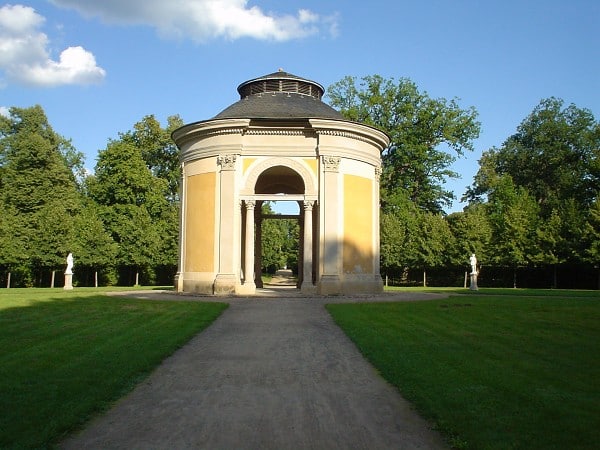
Ziebura points to the friendship shrine Henry built in Rheinsberg. At the opening, Henry gave a speech about a goddess who embodies both sexes and about friends who seek “the happiness of the beloved.” In this temple, Henry acted as the ceremony master and celebrated ritual bonds of friendship at an altar: “If you (name) are resolved to love (name) as a friend, and to call him brother, then you shall drink from this cup.” In the ensuing prayer, the pairs of friends refer to Jupiter and Ganymede (pp. 232–233).
“Prince Henry of Prussia. A European in Rheinsberg” (2002)
Eva Ziebura contributed three pieces to the splendid catalog exhibition “Prince Henry of Prussia. A European in Rheinsberg” (2002). In one contribution, Christoph Martin Vogtherr emphasizes Henry’s favorites, including Henry von Lehndorf (pp. 495–499), noting that in most cases it is not known whether Henry’s friendships with other men were sexual partners, but they at least fulfilled Henry’s need for love of men. Vogtherr appropriately notes that the modern division of love life into homo- and heterosexuality only arose gradually in the 19th century, and that the question of Prince Henry’s homosexuality (… ) as with his brother Frederick, is anachronistic. Thus Henry’s liaisons with men are introduced as exemplary and are developed further in Hannelore Lehman’s piece on Kaphengst (pp. 500–504) and in Eva Ziebura’s on La Roche (pp. 505–508). In Die Zeit (August 1, 2002, paywalled), historian Gerd Fesser wrote a perceptive review of this catalog.
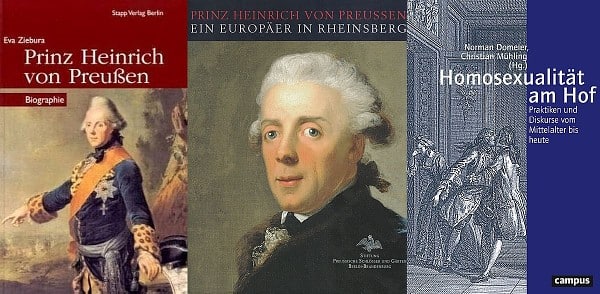
“Homosexuality at Court” (2020)
I would like to note the essay by historian Christian Mühling: “Homosexual Love at the Prussian Court in the 18th Century” in the book “Homosexuality at Court” (2020, pp. 281–302, here pp. 291–300). It offers well‑suited sources on Frederick the Great and his brother Henry to analyze homoerotic relationships in the Enlightenment era. There may be no first‑person testimony confirming the many rumors about Prince Henry, but there is a compelling self‑documentary in the diaries of Graf Lehndorff, in which he “describes in detail his love for Prince Henry,” and these reports fill many of his thousands of pages. Lehndorff’s accounts of their intimate meetings, without the presence of the rest of the court, underscore the closeness of their relationship. A review by Jakob Michelsen in Invertito (Vol. 23/2021, pp. 220–226, here pp. 223–224) rightly lauds Mühling’s article.
The queer community needs a strong journalistic voice — now more than ever. Do your part to support TheColu.mn’s work.
Conclusion
I’m glad that there is now solid secondary literature on Prince Henry that historically contextualizes and clarifies the hints about his homosexuality. In earlier times, it wasn’t taken for granted that historical writing would shy away from presenting the image of Prussian kings and princes as flawless. The broad discussion of Prince Henry that emerged in the early homosexual movement didn’t surprise me, and I can only hope his life offered positive role models for gay people in the past. This does not conflict with the fact that the question of Prince Henry’s sexuality is, in essence, anachronistic and that it is not entirely unproblematic to map today’s concepts onto the 18th century.
In about three weeks, I will here on TheColu.mn introduce another relative of Prince Henry of Prussia, with whom he was sometimes confused in the field of gay historical research: Prince Frederick William of Prussia (born February 12, 1826), who was born about a century later.