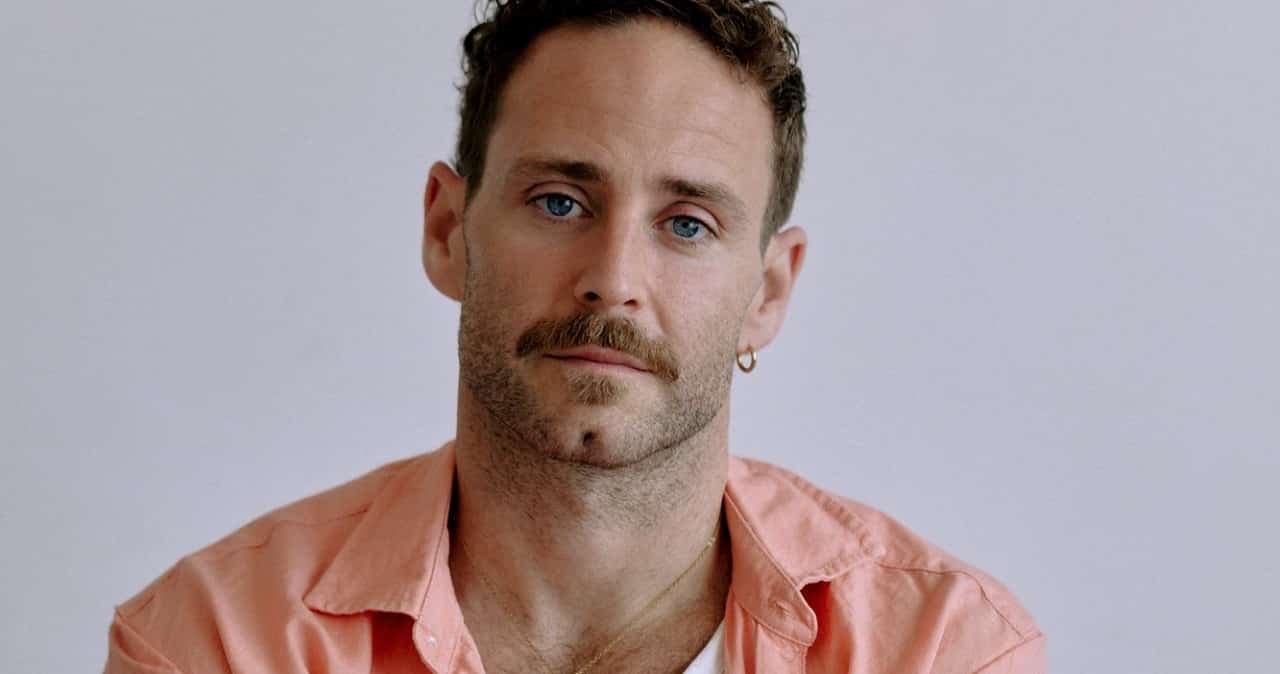
Who makes it into the annals of history, and who is left out? Who is visible, who is invisible? And who gets to play what roles? The Berlin-based author and journalist Morgane Llanque is convinced that too much remains in the dark in historical records, especially when it comes to diversity, and that there are far too many gaps. This, she argues, should change. She began to explore another story of humanity, as the subtitle of her recently published book from Droemer Verlag proclaims: “Diversity – A Different History of Humankind” (Amazon-affiliate link).
Before she joined the Institute for Foreign Cultural Relations in Berlin and started writing for “Die Zeit” and the “taz,” she studied history, political science, and cultural journalism. Her frustration with a too-narrow view of history and with too many gaps in the story of humanity was, in a sense, the initial spark to talk not only about diversity in society but to embark on a search for the history of diversity. She found a string of stories behind the story.
The so-called West was not a monolith of heteronormativity

The result is nearly 300 pages of engaging prose that now foreground all those who are usually overlooked. In eight chapters, the author travels through world history and across the continents. “I learned,” Llanque writes, “that the world has always been diverse and colorful and that marginalized people have always pursued excellence, visibility, power, and justice.”
For her, therefore, all those historical facts play a role that are often swept under the rug because history has been written from the vantage point of power. She also realized, “that the so-called West has never at any point in its history been the homogeneous monolith of whiteness, patriarchy, and heteronormativity that it likes to present itself as.”
And perhaps, in times of backlash—moments when political movements aim to roll back time—it is especially important to affirm diversity’s historical right. Specifically, that means repeatedly debunking clichés and prejudices. The author begins in the Stone Age, not to locate the inception of patriarchy, but to track traces of female power.
“Anatolia lies in our collective DNA”
Newer research has long offered a more nuanced picture of gender relations. Especially recent interpretations of burial finds have produced evidence for warrior women and hunter women. One thing early history was certainly not, is “a pure mecca of alpha-males and subservient women.” And Turkish migration did not begin only in the 1960s with Germany’s economic miracle, but already in the Stone Age. The conclusion is clear: “Anatolia lies in all of our DNA.”
From Rome, antiquity, and the Middle Ages, the author eventually arrives at the more modern history of the 18th and 19th centuries to seek out gender-nonconforming ways of life and to find them. And when we talk about globalization today, there had already been an initial wave of globalization in the Middle Ages. It is not a “modern invention” and, as the author explains, it should not be confused with colonialism.
A substantial portion of the book is devoted to disability: “The demonization of bodies that deviate from the norm could also serve the claims of certain individuals in early modern times who, though today world-famous, are curiously never seen as historically disabled people: pirates.” We hear about a one-eyed samurai, the hunchbacked statesman Earl of Salisbury, dwarfed individuals who, like Cuvilliés in Munich, helped shape architectural history, a blind pianist, and Lord Byron’s clubfoot.
The queer community needs a strong journalistic voice — especially now! Do your part to support TheColu.mn’s work.
More space for gender-nonconforming people
Equally prominent is the theme of gender-nonconforming people, coupled with the insight: “There is hardly any other group today whose basic right to exist and their historical continuity is so often denied simply because they do not identify with the gender assigned at birth […] and have faced persecution for it.” The author explores the Neapolitan femminielli, tells about Female Husbands, and also about the Hijras of India, and makes a large leap to Samoa to the Fa’afafine and Fa’atamoa, who can be compared to trans women and trans men. The crucial point is how inclusive cultures have been—and can be. Llanque repeatedly makes corrections to overly one-sided worldviews. The Berlin chapter, however, feels somewhat weaker than the rest.
“Diversity” is not a history book for a specialist audience alone; on the contrary, it is written in a genuinely accessible, popular tone and invites everyone who would like to learn the history behind the history. It could not be about completeness, but rather about sparking new thoughts. For historians, it may serve as a prompt for how valuable, in the truest sense of the word, perspective on diversity can be for a richer, more differentiated understanding of humanity’s history.
Morgane Llanque: Diversity — An Alternative History of Humankind. A New World History Through the Lens of Global Diversity. 304 pages. Publisher: Droemer HC. Munich 2025. Hardcover: 24 € (ISBN 978-3-426-56507-0). E-Book: 19.99 €