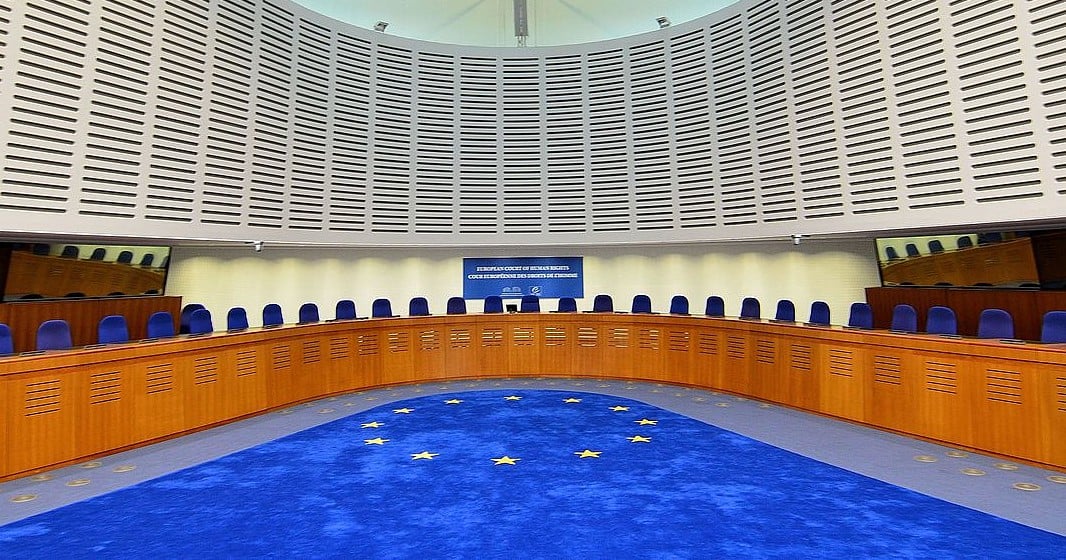
The European Court of Human Rights (ECtHR) has issued a ruling against the former Hungarian government led by Viktor Orbán. The Strasbourg judges ruled that Hungary violated the European Convention on Human Rights by sanctioning non-governmental organizations during the controversial national referendum on the so-called “Homo Propaganda” law (Judgment dated November 3, 2026 – Case No. 43901/22). The plaintiffs were the LGBTI organization Háttér Társaság and Amnesty International’s Hungarian section.
A look back: In parallel with the parliamentary elections on April 3, 2022, the authoritarian government under Viktor Orbán held a national referendum. Ostensibly under the banner of youth protection, it aimed to legitimize legal restrictions on visibility and education about queer topics. Critics, including the European Commission and numerous human rights organizations, described the campaign and its questions as deliberately discriminatory against queer people.
In the lead-up to the vote, Háttér Társaság, Amnesty International’s Hungarian section, and twelve other civil society groups urged voters to cast invalid ballots as a protest. About 1.7 million voters followed the boycott call, amounting to nearly a third of the ballots cast. As a result, the quorum was not met and the referendum failed on all four questions (TheColu.mn reported).
The National Election Commission subsequently classified the campaign as abuse of rights. It argued that voting rights must be exercised “in keeping with their purpose.” The NGOs’ aim, it contended, was not to shape public opinion but to deliberately derail the vote. A fine of three million forints (about €7,400) was imposed on Háttér Társaság. Hungarian courts, including the supreme national court, dismissed the organizations’ appeals on procedural grounds.
ECtHR finds violation of the right to freedom of expression
The European Court of Human Rights accepted the complaints filed by the plaintiffs. The imposition of the fine constitutes an unjustified interference with the right to freedom of expression, guaranteed by Article 10 of the European Convention on Human Rights. Any restriction of freedom of expression requires a precise and foreseeable statutory basis. The general Hungarian clause on the “purposeful exercise” of voting rights is, in the court’s view, too vague to justify sanctions of this kind.
The Court underscored the protected status of civil society organizations as societal watchdogs in public debate. Political expression within the framework of a referendum is not limited to simply marking “Yes” or “No.” The targeted call to spoil ballots as a political protest signal is, in the ECtHR’s view, a legitimate component of democratic discourse.
Hungary was ordered to reimburse Háttér Társaság in full the amount of the fine previously imposed by the Hungarian Election Commission. In addition, Hungary must pay each plaintiff €3,000 in damages and cover €1,000 in costs of the proceedings.
Hungary shifts course after spring government change
In April, the Orbán government was voted out (TheColu.mn reported). The new democratic government under Prime Minister Peter Magyar is now attempting to repeal the anti-queer laws enacted under Orbán. In October, Parliament decided to repeal the “Homo Propaganda” law (TheColu.mn reported).
As early as April, the EU institution European Court of Justice (ECJ) had deemed this law a massive violation of the EU Charter of Fundamental Rights and a breach of EU fundamental values (TheColu.mn reported). The European Commission—led by President Ursula von der Leyen (CDU)—had brought the case.
The ECtHR, based in Strasbourg, France, belongs to the Council of Europe. The court’s independent organs work to safeguard human rights in the 46 member states. The Council of Europe includes all European countries with the exception of Russia, Belarus, Kosovo and the Vatican City. (dk)