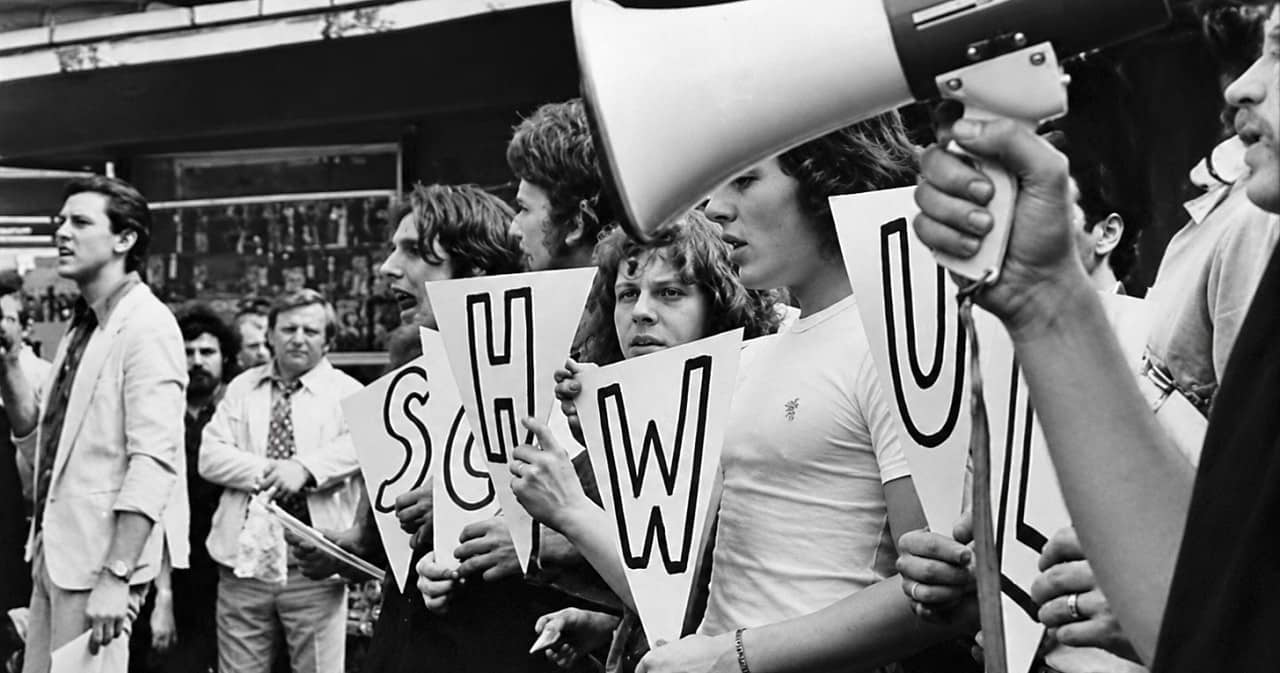
The film “Rosa Winkel? That’s Been Around For Far Too Long…” (1976) examines the persistence of oppression against homosexuals from the end of the National Socialist era well into the 1970s. If you want to watch this film, the process is simple. It can be rented individually from the distributor, and it is offered as bonus material to the documentary “Detlef. 60 Jahre schwul” (Amazon affiliate link) for purchase. But of course, it’s much nicer to watch this film on a Friday together with people who lived through it.
On November 6, 2026, at 6:00 PM, a special screening of this film will be held at Lichtwerk, an art-house cinema in Bielefeld, followed by a panel discussion. The occasion is the 50th anniversary of the film’s world premiere, which took place on November 6, 1976, at Bielefeld University. The post-screening discussion in Lichtwerk will include Prof. Christiane Schmerl, Peter Recht and Detlef Stoffel (filmmakers), Olav Meyer-Sievers (one of the film’s protagonists), Joachim Bartholomae (bookseller & Männerschwarm Verlag, for whom the film was a turning point in his coming out), and Stefan Westerwelle (director of the Detlef Stoffel biopic “Detlef. 60 Jahre schwul”). For details about the special screening, see also the piece on Bielefeld.jetzt. Detlef Stoffel, Joachim Bartholomae, and Olav Meyer-Sievers supported me in various ways in creating this article. I would like to express my heartfelt thanks here.
From the First Idea to the Film
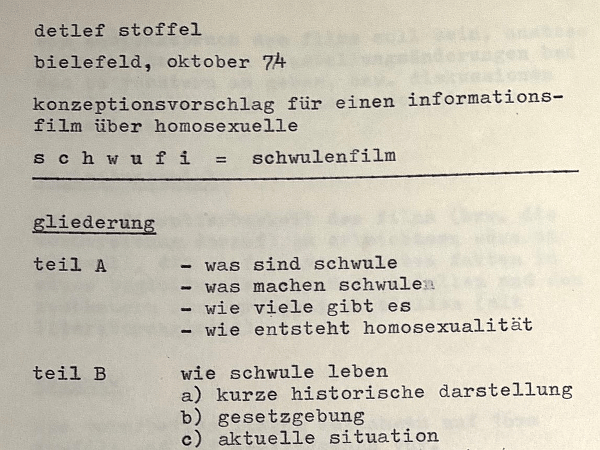
The idea for the film was also influenced by Heinz Heger’s book “Die Männer mit dem Rosa Winkel” (1972), which for the first time brought attention to the stories of gay concentration camp victims. In Detlef Stoffel’s archive I found materials concerning the film’s initial conception from October 1974. They include questions that were typical of the time: What are gay men? What do gay men do? How does homosexuality arise? Detlef’s archive also contains correspondence with Manfred Salzgeber from August 1976, who strongly advocated for this film (Manfred Salzgeber founded a film distributor in 1985 that bears his name and is still active today).
The 1976 Rosa Winkel film introduces the worldwide stage for the first time in cinema to the systematic persecution and murder of gay men by the Nazis, even though that is not the film’s main focus. Conceptually, the film convinces me: it documents the Nazis’ persecution of gay men, demonstrates the ongoing discrimination in the 1970s, and ends with an encouraging look at the militant gay rights movement. The interview with sex researcher Rüdiger Lautmann evidently serves to scientifically legitimate the film. This principle is not new; it is also seen in other sex researchers and in other films: Magnus Hirschfeld supported the educational film “Anders als die Andern” (Different from the Others) from 1919, and Hans Giese contributed to the educational film “Oswalt Kolle: The Miracle of Love” from 1968. The Rosa Winkel film is one of the first films in which the early German gay movement presents itself. Its production style is quite typical of its era: educational and didactic, delivering a clear political message. It employs a calm and factual, yet simultaneously demanding narrative voice.
The Backstory and the Portrayed Gay Men
The young Federal Republic, which rightly saw itself as a constitutional state and sought to distance itself from the Nazi era, initially had little choice but to adopt the Nazi-era § 175 in its exact wording. It wasn’t until the reform of § 175 in 1969 that adult men were allowed to engage in consensual sex with each other. The film makes it very clear that social attitudes did not automatically change with partial legalization. For openly gay people, there remained a de facto professional ban for a long time—whether they were politicians, priests, or teachers. Even tolerating openly gay men in show business and dismantling the taboo on homosexuality began more in the 1980s.
The film mainly centers on four men and their stories. If these four men had spoken about the consequences they faced for a supposed offense under the old § 175, that would have been bad enough. But these four men had not even violated existing law.
Otto Jänisch
For many years I’ve known the Spiegel article “Eternal Law. Because he was suspected of being gay, a Saarland lawyer cannot become a lawyer” (Spiegel, issue 30, July 21, 1974) about Otto Jänisch and the photo printed in the original edition. The article concerns Bernhard Riegler, president of the Saarland Bar Association, who did not want Jänisch to become a lawyer. He could prove only Jänisch’s contacts with gay people. As a standard for his actions, Riegler referred to “moral norms” that he traced to a “divine world order.” The Spiegel correctly argued that this amounted to a professional ban. In the Rosa Winkel film’s interview, Jänisch continues his story: He had been accused by a 19-year-old man; the case was dropped (until 1973 the age of consent for homosexual acts was 21). Jänisch then chose to push forward openly as gay and sought media contact. Articles like the Spiegel piece gave him support, so the Bar Association and the Ministry of Justice no longer maintained their objections.
Werner Janik
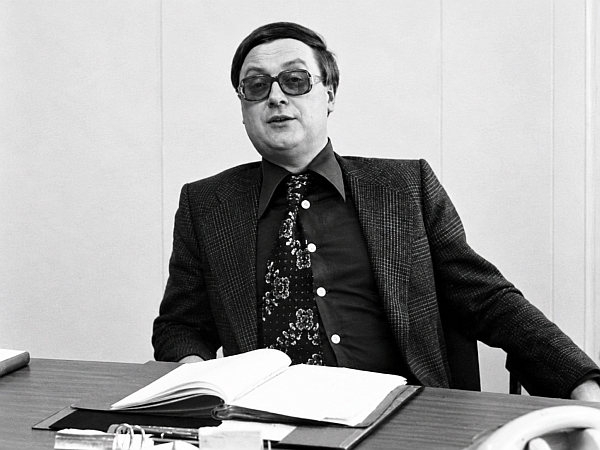
In connection with the vandalism of a telephone booth in July 1973, a stamp reading “Aktionsgruppe Homosexualität” and Werner Janik’s phone number were found. Janik was then a member of a Bonn gay group. Janik told the police that he had not committed the vandalism. The police asked Janik’s landlord about his private life. Janik was questioned several times and was asked to name the group members. Because he refused, he faced a 210-mark fine. A threatened three-month confinement was upheld by the district court. After he hired several lawyers and notified the press, the case was closed at Christmas 1974. Decades later, Werner Janik gained nationwide attention with his partner Ernst Mehlem: on August 1, 2001, they became among the first officially registered same-sex partners in Germany.
Olav Meyer-Sievers
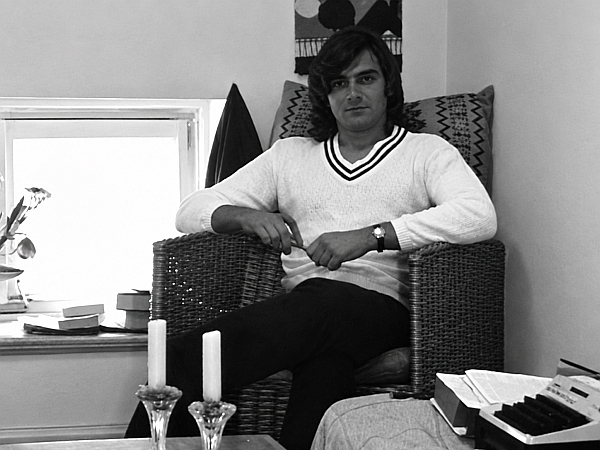
In the interview, the 17-year-old Olav Meyer-Sievers recounts how he slept at the home of his 16-year-old boyfriend Claus. Claus’s mother found out and called the police at three in the morning because she suspected “seduction” of her son. Claus’s father broke down the door with an axe, entering the room, followed by two officers who recorded their details. Because of Olav’s age, the police could do nothing legally, aside from enforcing the house ban requested by the mother.
The film also features Olav’s mother, Ingrid Meyer-Sievers. She explains how she later phoned Claus’s mother to calm her down. Claus’s mother likely would have done nothing had her son slept with a 17-year-old girl, because “that would have been normal.” The scenes with Olav Meyer-Sievers and his mother are striking, not only for Olav’s self-confidence at 17, but also for his mother, whom many gay men probably wished to have had in their lives.
Olav Meyer-Sievers — Today
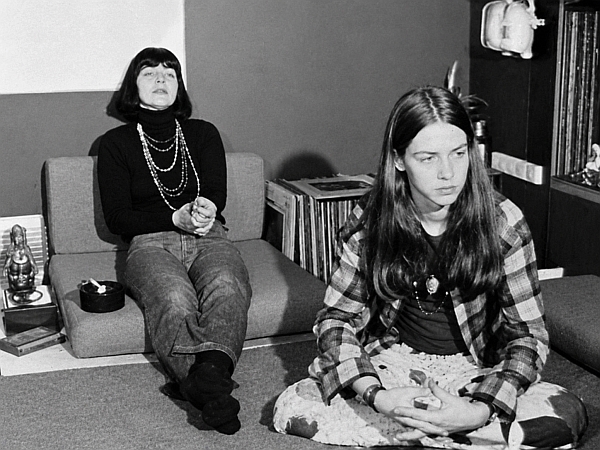
Before this article went to print, I reached out to Olav Meyer-Sievers. He is now retired and shared his memories with me. Meyer-Sievers: “When I came out as a 16-year-old, my active mother supported me. In 1974 we went public together. She wrote a cover story in ‘HIM’. There followed a TV program, a radio feature, and finally Detlef Stoffel’s film. A mother publicly speaking about and with her gay son? In the seventies that was very unusual! My mother did not live to see the film’s premiere in Bielefeld. In 1975 she took her own life. It was not the only suicide I faced. Later in life I devoted a lot of my professional and volunteer work to the subject of death. Now, at 69, I am, in a way, returning to where I started after my coming out with my mother: as an active participant in the Queer Elder Witnesses Hamburg.”

Reinhard Koepp
Reinhard Koepp was a teacher in Berlin. In 1974 the Berlin School Authority attempted to terminate him or remove him from service after his homosexuality became known. The official justification reflected the era’s prejudices: the termination letter accused him of demonstrating behavior that was deemed “as morally inferior as campy” or “tuntenhaft.” In effect, this was a professional ban. Koepp received broad support, and the film includes a student representative and a parent representative who stood by him. A Rosa Winkel film brochure also accompanied the release, and among the documents printed in the Koepp case (pages 29–43) is an article with the ironic title “Danger from the Green Nail Polish” (Stern, issue 44, 1974) and a photo of students demonstrating in support of Koepp. By November 1976 the case was not yet resolved. With the support and legal protection of the union, Koepp fought the measure and the authorities withdrew the termination, restoring him to the teaching staff. The scandal is not forgotten to this day: in the commemorative volume “40 Jahre. Gründung der AG Schwule Lehrer in der GEW Berlin” (2019) the Koepp case is discussed several times.
Theatrical Scenes from “Brühwarm”
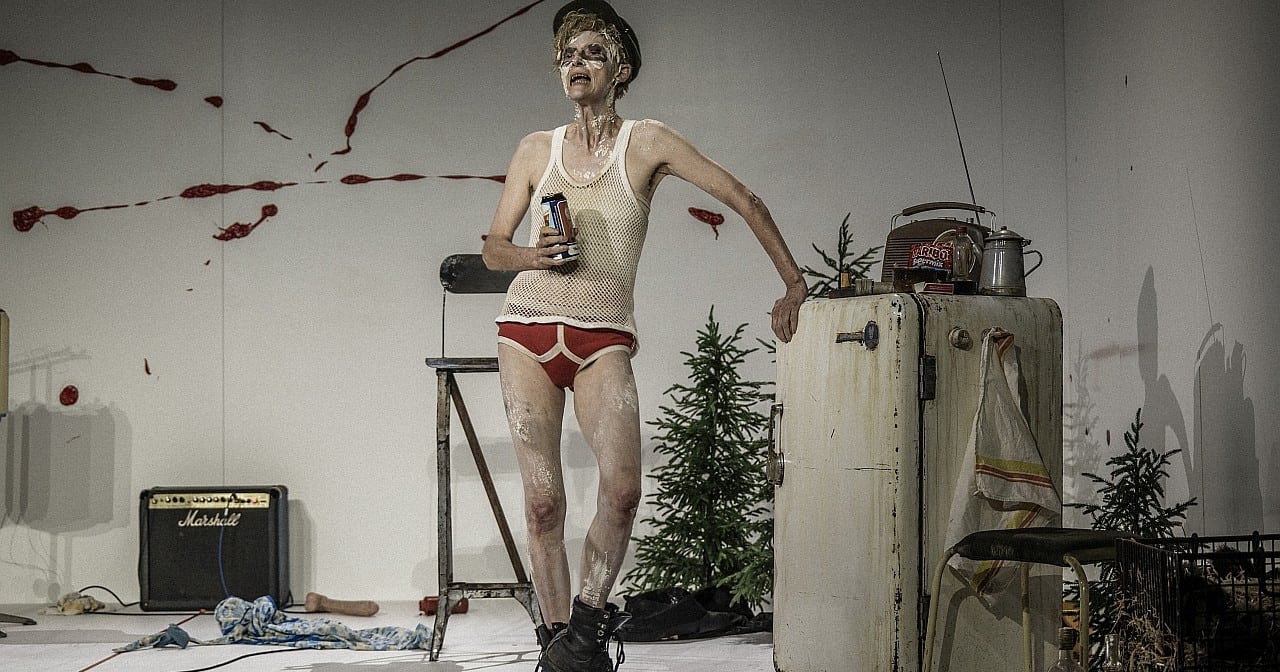
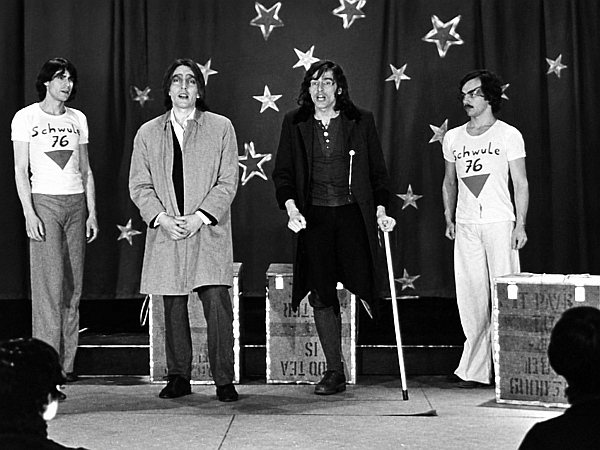
The Rosa Winkel film also features scenes from the theater production “Brühwarm – a Gay Fairground” by the group Brühwarm from 1976. Brühwarm was the first gay theater group in West Germany to gain wide regional recognition and is considered a key catalyst for the early gay movement. Among the founders and performers was Corny Littmann, who would later become the head of a major theater. The performances combined sketches, parodies, songs, and audience participation and addressed, among other things, psychiatric discourses about homosexuality, police surveillance, and persecution under National Socialism. With its blend of art and political agitation, Brühwarm played a crucial role in making gay culture visible in the 1970s. Since the 1970s, gay theater has undergone many changes; it evolved from a loud counterculture opposing state repression into a stable, diverse, and funded component of the cultural landscape. The film’s documentation of Brühwarm’s rare theater scenes remains of lasting cultural value.
Detlef Stoffel
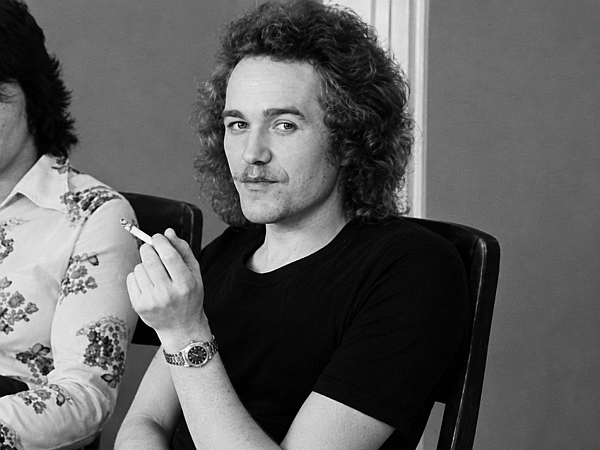
One of the film’s makers is Detlef Stoffel, whom I met in 2022. On November 30, 1972, he, along with others, founded IHB (“Initiativgruppe Homosexualität Bielefeld”). To mark the association’s 50th anniversary, I interviewed him in 2022 and subsequently wrote an article for TheColu.mn. Even then we agreed that I would contribute an article for the Rosa Winkel film’s 50th anniversary as well. For more about Detlef Stoffel, his website features a compelling interview about the former “Rosa Radikalen.” Among the materials I received from him is a calendar copy that offers a glimpse into what the premiere week felt like for him—from the press screening on November 4 to the premiere and premiere party on November 6.
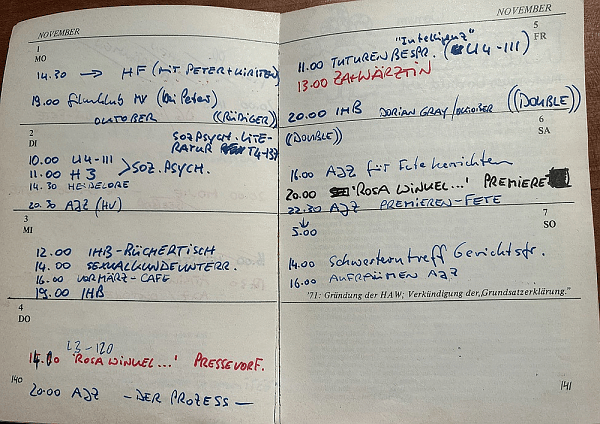
The Time Witness Detlef Stoffel Remembers
Stoffel: “After finishing high school in 1970, I came out and considered pursuing film training since I had been working with a Super-8 camera for a while. In 1972 I began studying sociology at Bielefeld University. The faculty of sociology managed to establish a professional film and television studio, and in the seminar ‘Visual Sociology’ we tackled various social topics. On April 30, 1974, I noted the working title ‘Schwufi’ (Gay Film) in my calendar and, in October 1974, wrote the first concept. So, in January and February 1975 we began with interviews. The change in direction came with Heger’s book ‘Die Männer mit dem Rosa Winkel,’ shifting the aim to the fact that the Nazis’ tightening of § 175 continued after 1945. In October 1975 the rough cut was completed. In early January 1976 we shot two scenes from the Brühwarm theater premiere that were tailor-made for our film. To place it in a scholarly context, we interviewed the then not-yet-out Rüdiger Lautmann. In July 1976 the cut and, in September at the Deutsche Film- und Fernsehakademie in Berlin, the fine cut and sound mixing followed.”

On October 7, 1976, my calendar read: “SCHWUFI DONE!” On November 6, 1976, the premiere took place in the university’s largest lecture hall. In a full hall, my parents sat among students and queer people from near and far; I stood at the edge the whole time because I could not sit due to the excitement. Afterward the film was shown in many other cities—almost always with a discussion afterward—for about until the end of 1978. We did not manage to find a distributor for the film, and WDR (the broadcasting corporation) gave only a snobbish refusal. It is thanks to Christiane Schmerl that the university ultimately moved away from demanding repayment of funding after some reviewers argued that the work was not a balanced (objective?) scientific, but rather a biased piece. Peter and I thus did not receive a diploma from the university. In 2024, when asked to contribute material for a new exhibit at the House of History in Bonn, I gave them the Rosa Winkel film, an original poster, and the book. It was very gratifying that this material was included in the exhibit. The film is not only a document of its topic but also a document of the era in which it was created. It remains relevant today, for example when Brühwarm sings: ‘Beware of climate change, fascism approaches in male clothes, therefore beware, warm brothers—the cold warriors stand ready.'”
The queer community needs a strong journalistic voice — especially now! Do your part to support TheColu.mn’s work.
The Time Witness Joachim Bartholomae Remembers
Many know the sociologist, author, translator, bookseller and publisher Joachim Bartholomae (born 1956) primarily as the manager and co-owner of the Hamburg bookstore Männerschwarm (1986–2002) and as a co-founder of the Männerschwarm Verlag (1992). Through his studies at Bielefeld University and through IHB (Initiativgruppe Homosexualität Bielefeld), he met Detlef Stoffel. About a year ago I reported here on TheColu.mn how a text by Joachim Bartholomae connected with IHB and a 1975 comic sparked a scandal in Bielefeld. Now I asked him to write his memories of the Rosa Winkel film’s premiere as a time witness:
Bartholomae: “In November 1976 I found myself in a hole between school and civilian service, specifically as a car washer for company cars at Dr. Oetker. When I applied for the job, I made sure that my sticker ‘Down with the Masculinity Obsessed’ wasn’t visible — I knew I was different in some way. And then I sat in the university’s Audimax among hundreds of gay men who had traveled from all over Germany. A few of them who were active in IHB I recognized from afar, but that was about it. Among the usual 70s clones were also leather guys in absurd outfits, and I experienced the first “queen” of my life: at the end of the film, Gerda, who in real life had a dull office job, ran down the stairs in a lovely white blouse to present Detlef with a long-stemmed rose. But most of all I fell head over heels in love with the student Olav during the film. Olav attended the premiere, and I was convinced that if we met, it would be the great love of my life and we would stay together for the rest of our days. I had to be at the premiere party, but I didn’t find the party! Desperately I went home, and the next Friday I went to the IHB’s group meeting, where everyone laughed themselves silly because apparently I was the only student from Bielefeld who had indeed been seduced by a gay comic in my student newspaper.”

The Film at the House of History
On December 8, 2025, the House of History in Bonn reopened after a year of closure. The following day, the revamped permanent exhibition “You Are Part of History. Germany since 1945” opened to the public. It adopts a modern approach and offers new perspectives on history: alongside a stronger focus on contemporary history, it includes biographical and everyday-life access that ties social changes to personal life stories.
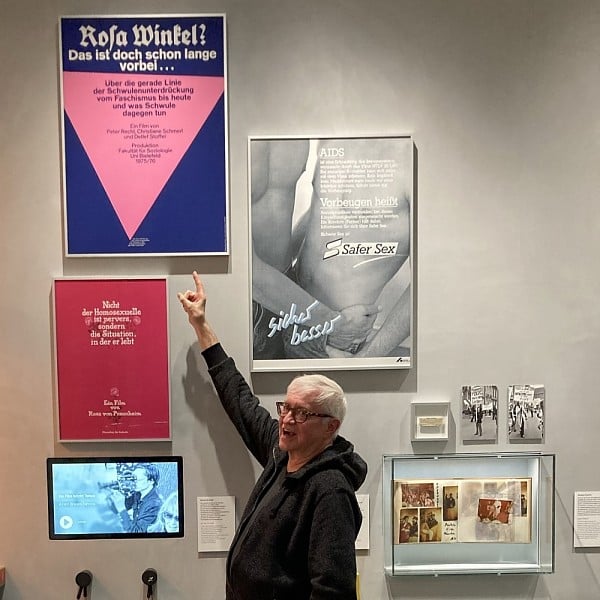
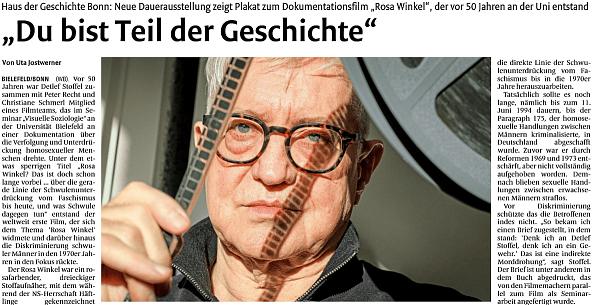
Against this backdrop, the headline of Uta Jostwerner’s article “You Are Part of History” in the Bielefeld newspaper Westfalen-Blatt on December 17, 2025 makes sense. It reported that Detlef Stoffel’s film poster is now part of the exhibition. A similar piece about Stoffel and his film appeared on January 22, 2026 in the Neue Westfälische. Heike Krüger noted that selected scenes from the “Rosa Winkel” film are also shown in a looping display in the exhibit.
Does the film still hold relevance today? Regarding the persecution of homosexuals under National Socialism, I do not see particular relevance; but for the 1970s its value remains intact. Moreover, the film remains meaningful today because the emancipation of homosexual people is not complete and is even threatened by renewed conservatism and old gender roles. For me, the four protagonists can not only illustrate the forms of discrimination that existed in the past but also raise the question for today’s gay people of how bravely they would act in a comparable situation.