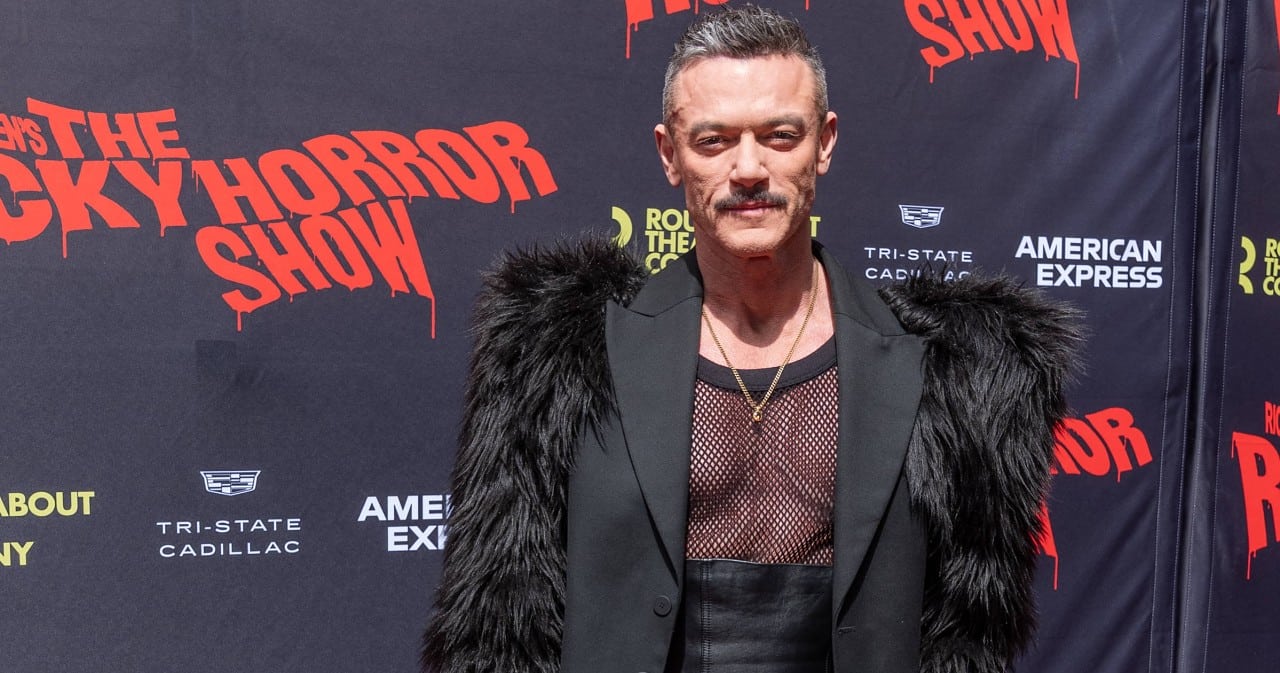
Hollywood likes to present itself as progressive on red carpets and in advertising campaigns, but behind the scenes of the dream factory, the reality for queer actors often looks sobering. In an interview with the British newspaper The Telegraph (paywalled), Welsh actor Luke Evans spoke plainly about an ongoing industry problem: he knows several Hollywood colleagues who still consciously hide their sexual orientation from the public.
“It wasn’t easy, quite a long time being the only one out while I was making films at this level,” the 47-year-old Welshman said verbatim in the interview: “And I know several actors in Hollywood [who have chosen not to come out]. But you never know what a person has gone through. You don’t know how their family would react or how hard they fought to build a career.”
The film industry, Evans described, is isolating. You get little support when it comes to personal life decisions: “No one comes up to you and says: ‘Oh, by the way, this is how you handle [a coming out] or whatever it may be. You’re on your own.”
Hollywood Not More Queer-Friendly for Economic Reasons
The hesitant representation of openly queer performers in major franchise productions Evans attributes to the studios’ business calculus. Like any other multi-billion-dollar industry, Hollywood tries to appeal to the broad audience and not alienate anyone: “Occasionally they try it. They’ll release, for example, a lone gay superhero, though that character in the franchise clearly plays a secondary role.”
Evans himself, famous for blockbuster franchises like the Fast & Furious series and The Hobbit trilogy, spent more than 15 years largely taking heterosexual male roles. Looking back, he sees this as a message against industry biases: “In my own way I conveyed the message that who you are and whom you love do not at all determine your talent — and that a straight person can play a gay role just as convincingly as anyone else.”
In the debate over casting, Evans takes a nuanced stance. Heterosexual performers can convincingly play gay roles, provided they avoid demeaning stereotypes. If heterosexuals nonetheless overdo all the clichés, he finds that insulting. At the same time, he emphasized that trans characters should not be cast with cisgender male megastars in Hollywood going forward.
Evans Grew Up in a Queer-Hostile Sect
Evans spoke in the interview about his personal journey. Raised in Aberbargoed, a Welsh coal town, in a Jehovah’s Witness family, he found growing up in a sect that views LGBTQ people as inferior to be extremely taxing: “I was part of a religion that said what I was was abominable and that God would kill me. There was no chance to develop self-confidence when that was hammered into you every week.”
At 16, he left his parents’ home to study singing and musical theater. Despite the initial church exclusion, he is now very close to his parents again.
Evans Has Recently Embraced More Queer Roles
Professionally, Evans has in recent years turned more to smaller dramas and queer roles, including Dan Levy’s Good Grief and the divorce drama Our Son. On the occasion of the premiere of the five-part British thriller series The Party on ITV in the United Kingdom and his latest appearances — such as playing Frank-N-Furter in the Broadway production of The Rocky Horror Show — Evans attributes his current fashion and artistic experimentation to a relaxed, confident attitude: “I’m 47! If I’m not comfortable with who I am and how I look now, how will the next 20 years go? … In public I’m handling all of this a bit more calmly than before. So I figured it’s time for a bit of fun.”