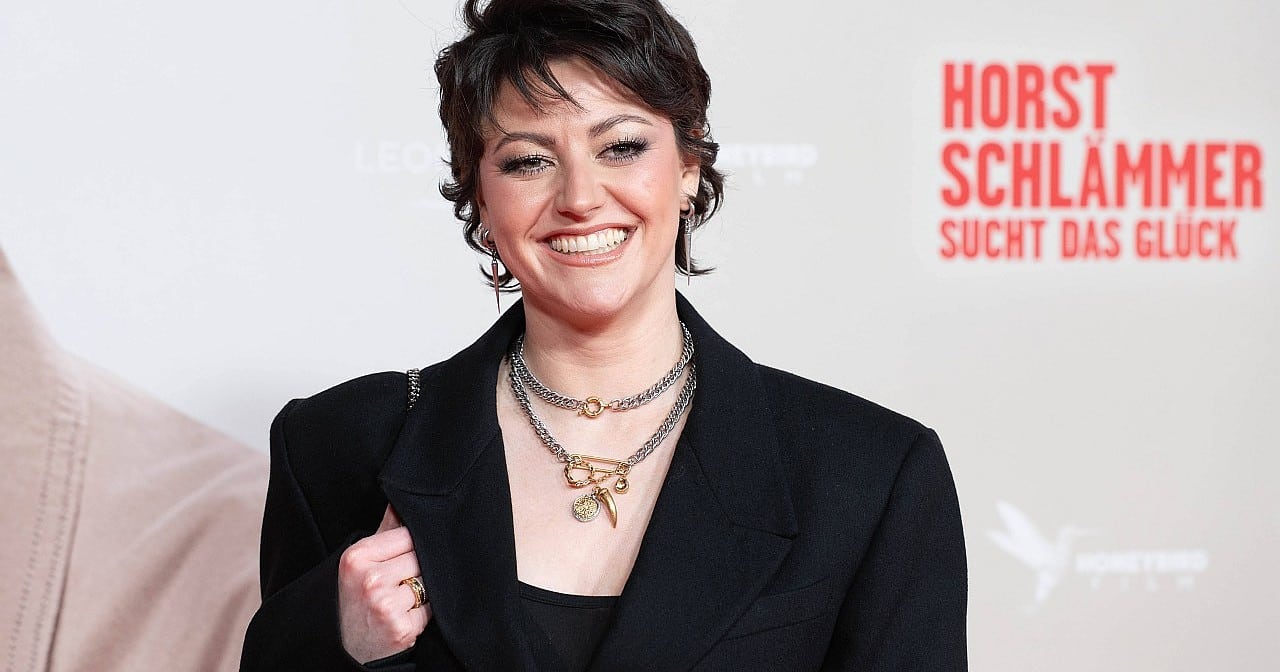
In September, Tahnee, 34, kicked off her fourth solo show, “A Touch Too Much,” launching her new comedy tour. For more than 15 years she has been a staple of Germany’s comedy scene. Her first TV appearance was in 2011 at the RTL Comedy Grand Prix, followed by numerous programs, including the second season of “LOL: Last One Laughing.” Her signature moves include impersonations of celebrities such as Heidi Klum, Helene Fischer, and Anke Engelke.
In her new program, Tahnee again tilts the spotlight more toward herself. “A Touch Too Much” centers on the feeling of being “too much” — and on a trait that can make life both thrilling and unpredictable. In the interview, the comedian explains how a new show comes together, what makes her laugh, and which cringe-worthy moment on stage still stays with her.
Tahnee is lesbian and she also explores her sexual orientation on stage. In January 2023, she and singer Juliette Schoppmann announced their wedding. The couple lives in Cologne.
Bastian Pastewka has called you the strongest female comedian of your generation. What effect does such high praise have on you?
That is an incredible compliment. I hold Bastian Pastewka in immense regard. To me, he is one of the most gifted artists we have. Hearing something like that from him is wonderful. If you do this job, you do it with heart and passion. But comedy remains entirely subjective in how people perceive it. Some may think what I do is dreadful, others might say, “Oh, that’s really funny.” That’s just the professional risk. But if you present it as authentically as possible, then you’re doing the best you can.
What makes you laugh yourself — and who reliably makes you laugh?
That varies a lot. I love situational comedy. When you’re with family or friends and something suddenly happens — right in the middle of a conversation or someone drops something — those spontaneous moments crack me up. I also enjoy slapstick, even though it isn’t as prevalent here in Germany lately. I think of The Naked Gun, for example; I find that over-the-top humor extremely entertaining. I live that kind of exaggeration on stage, which is probably why I’m drawn to it. At the same time, I can laugh at very smart humor, where you think, “That took a really clever turn.”
Touring soon again, and you’re developing a new show. How do you approach the creation of a new program?
In the end, a show is made up of countless moments. Any comedian will tell you: a show title is merely a hook, a first incentive—nothing more. The real program is thousands of small stories, tiny moments, and observations. My notes app on my phone is constantly filled. Whenever I see or experience something that inspires me, it lands there. When it becomes serious and I devote one or two months to shaping it, I stitch all those fragments into a cohesive whole.
Were there moments during the material-gathering process when you thought, “This isn’t going to work”?
That moment—“This isn’t going to work”—happens again and again. It’s both the best and the worst part of the job. In those moments you keep reverting to the role of an intern. When I’m at home writing the show, I never know if any of it will actually land. After more than 15 years on stage, I can trust that it will eventually come together, but there’s no guarantee. There are moments on stage when you think, “Nobody cared about this; no one laughed.” And you just think, “Oh dear.” It’s tough, but we all go through it. Especially the early phase of a new program is brutal. At the same time, that’s what makes the profession so exciting: you stay mentally fresh. And in the end, it will work out.
What has been your most embarrassing moment on stage so far?
There are certainly recurring embarrassing moments, but often they stem from the setting. Nowadays, the conditions under which I perform are fairly predictable. Early on, though, I had gigs where I thought, “Oh dear!” I remember several corporate parties or carnival events. In my twenties, I had just 20 minutes of material and got invited to a carnival session. At the train station, I was greeted by an entire carnival guard in costumes. In the tent, about 1,000 people sat there—classic beer tent scene: everyone was drunk, and no one was listening. They even tried to drown me out with football horns. Then the president of the Elf Council walked up to me, took the microphone away, and said, “Here, the girl is trying to tell you something, and you’re just honking. That’s rude. Do you want to keep going?” And I replied, “No!” I left the stage and cried for a moment. It was terrible at the time, and looking back, it’s a little funny too.
In keeping with the title of your new show: what about you personally is sometimes a “Touch Too Much”— and could you happily leave it that way?
I don’t think I’d ever want to dial down the “Too Much.” In my head, it’s basically rush hour all the time: too many thoughts, characters, voices, all trying to go in different directions at once. Sometimes I think, “Okay, that’s really a touch too much.” But I don’t know any other way. And now I’d rather have a little too much than something impeccably well-timed. (spot)