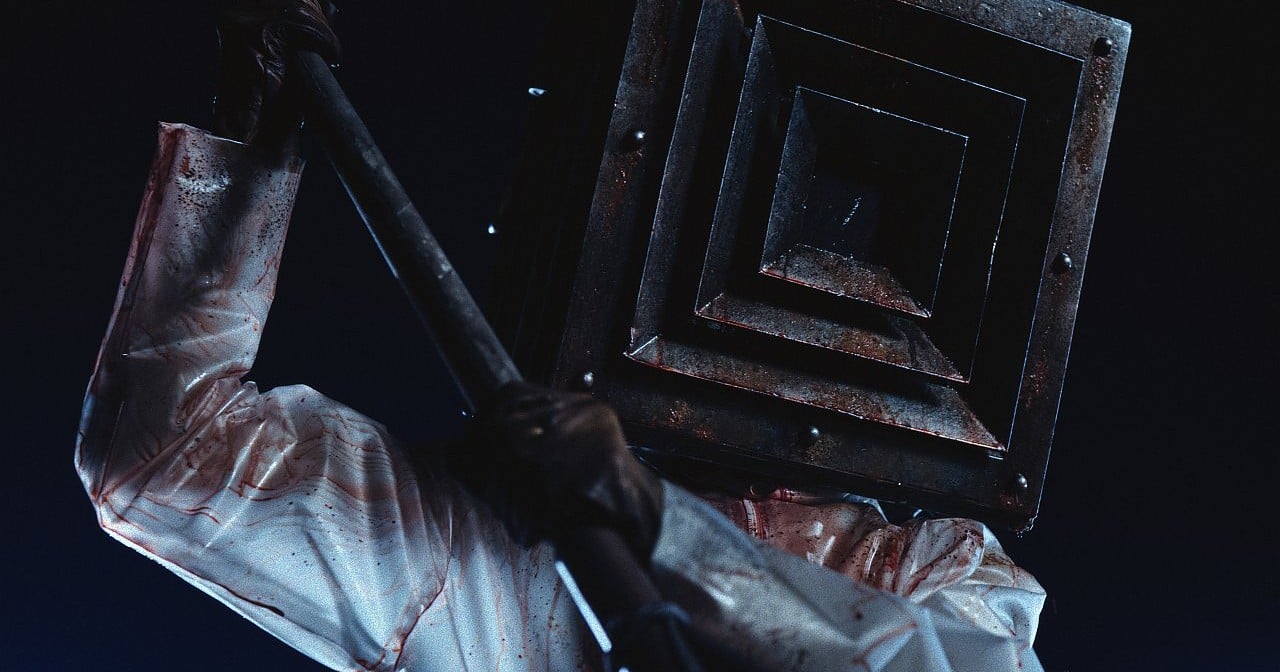
When “Little Death” drives its spear into someone, the blood doesn’t just flow. It shoots upward in a straight jet for meters, as if from a fountain. A death that is far from small, as the name might suggest. And because of this exaggeration, it often feels more funny than bloodthirsty. More on the obvious double meaning of “Little Death” later.
“Little Death” is the sinister figure of the “Camp Miasma” slasher films. It is the spirit of a child who was raised as both a boy and a girl. The gender-fluid child fell victim to a hate crime at a summer camp: the other kids drowned it in the lake.
A Lovingly Crafted Film Universe
Since then, the ghost haunts the bottom of the lake. From time to time it reappears as “Little Death” — and sticks its spear into anything that can’t outrun it quickly enough. This ghost is actually an interesting figure: a victim, a perpetrator, and a symbol of sexual longing all at once. That’s the setup you’d expect from the typical arc of the “Camp Miasma” films.
There are more than a dozen of the films, plus board games, small figurines, an arcade machine: it’s a whole, lovingly designed film universe that “Teenage Sex and Death at Camp Miasma” builds and introduces in the opening credits. A genuine and nostalgic homage to the slasher genre. But it’s also a clear critique: articles in newspapers and blogs discuss the series’ flop or the transphobia, which would be criticized years later.
The Reticent Star
Now Kris Williams (played by Hannah Einbinder, known from HBO’s “Hacks”) wants to become part of this film world as well: the young queer filmmaker (pronouns she/they) is supposed to direct another sequel. But the new film is meant to be more reflective and to address the past’s shortcomings. To do that, they want to meet Billy Presley (Gillian Anderson), the star from the first film.
After a long drive through the snowy landscape of the Pacific Northwest, Kris finds themselves at the location of the first film’s shoot. Billy now lives in seclusion where the original “Camp Miasma” was filmed.
Intimate Encounters Instead of a Business Meeting
The former actress comes across as elegant. She wears dark red lipstick, perfectly bleached blonde curls, flowing outfits, and a black turban. She’s the counterpoint to Kris, who sports a center-part and a comfy sweater.
Billy is a bit quirky, but immediately flirtatious. Kris is visibly nervous in the presence of the franchise’s star, the figure who means so much to her. Yet the work meeting quickly evolves into an intimate encounter. Kris speaks about her dissatisfaction with the polyamorous arrangement, about orgasms and secret desires.
Fried Chicken Has Never Been This Sexy
That’s the horny side of “Teenage Sex and Death at Camp Miasma,” Jane Schoenbrun’s third feature. The handling of sex is playful and, above all, flirtatious, light-hearted, and with a knowing wink. It’s precisely in these moments that the film shines the brightest.
One example: when Billy serves her guest an unglamorous fried chicken from a bucket from KFC, accompanying it with a hushed “I love dipping sauce,” which likely refers to more than just condiments. In a close-up and slow motion, the two dip the fried pieces into the sauces, with a satisfyingly sticky, slurping sound that verges on ASMR: fast food has rarely been staged so erotically.
“Cult Figure for the Queer Crowd”
This freedom, visible in other buoyant moments as well, is new in the US nonbinary filmmaker Jane Schoenbrun’s work. Their earlier features, “We’re All Going to the World’s Fair” and “I Saw the TV Glow,” were noticeably heavier.
Jane Schoenbrun had already become “a cult figure for film nerds and the queer crowd,” according to a detailed profile in epd Film. The American trade publication Variety recently noted that a “rising group of trans and nonbinary artists is stepping into the spotlight.”
On the Call: “Queer Assistant”
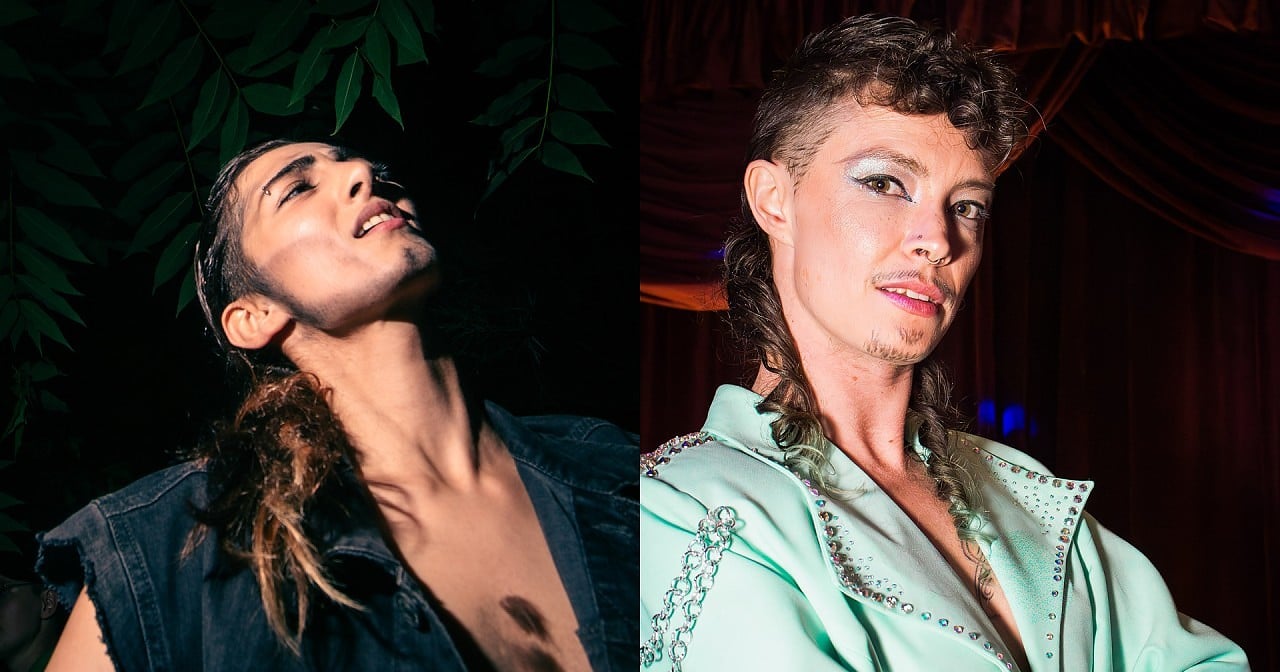
Among those involved are Louise Weard, Alice Maio Mackay, Avalon Fast, Vera Drew — and Jane Schoenbrun. Schoenbrun, 39, is probably the trans filmmaker with the largest budgets in Hollywood today. “I feel enormous guilt,” they told Variety, “because I took money from Hollywood when I clearly needed it.”
The guilt makes its way back into the third film as a blunt critique of Hollywood’s capitalist machinery and its treatment of minorities. In a call that Kris makes after the thrilling visit to Billy in a parking lot, there is also a “Queer Assistant” — that is literally the assistant’s name.
Direct link | Official trailer
|
Films as Safer Space to Live Out Fantasies
To Variety, Schoenbrun explained: “Whenever I’m on Zoom with people in Hollywood, my transness is present.” Even when the other side means well, it’s a minority experience, because there aren’t many other trans people on the other end. “And if there are, then it’s a queer assistant, right? And that person has no real power—just a symbolic presence.”
It’s successful in letting this critique of the system unfold rather casually. Other topics stay largely at the meta level: the film contemplates whether audiences construct the media—or whether the media constructs the audiences—and to what extent films can be a safer space to explore fantasies.
Murder with the Phallic Symbol
“If it gets too real, you can always turn it off,” is a line that recurs. All of that is theoretically engaging, but it doesn’t automatically make for a film that sustains continual suspense over its entire running time.
While the film on one hand suffers from being overly theoretical, it latches onto other blunt motifs: the Little Death figure is a somewhat overt nod to the French orgasm metaphor “La petite Mort.” That the killer ghost uses a spear—the quintessential phallic symbol—as its weapon goes without saying.
“Teenage Sex and Death at Camp Miasma” succeeds primarily thanks to the two superb actresses who interact at the right tempo. As a queer expansion of the slasher genre, the film works, as does its critique of queer-hostile undertones. Yet too often the film seems in love with its own theses — and those theses aren’t as fresh as the movie would like to pretend.
Teenage Sex and Death at Camp Miasma. Slasher film. USA 2026. Director: Jane Schoenbrun. Cast: Hannah Einbinder, Gillian Anderson, Amanda Fix, Arthur Conti, Eva Victor, Zach Cherry, Sarah Sherman, Patrick Fischler, Dylan Baker, Jasmin Savoy Brown, Kevin McDonald, Quintessa Swindell, Jack Haven. Runtime: 112 minutes. Language: English with German subtitles. Rating: R. Distributor: MUBI. Theatrical release: August 20, 2026


Teenage Sex and Death at Camp Miasma
12 Images