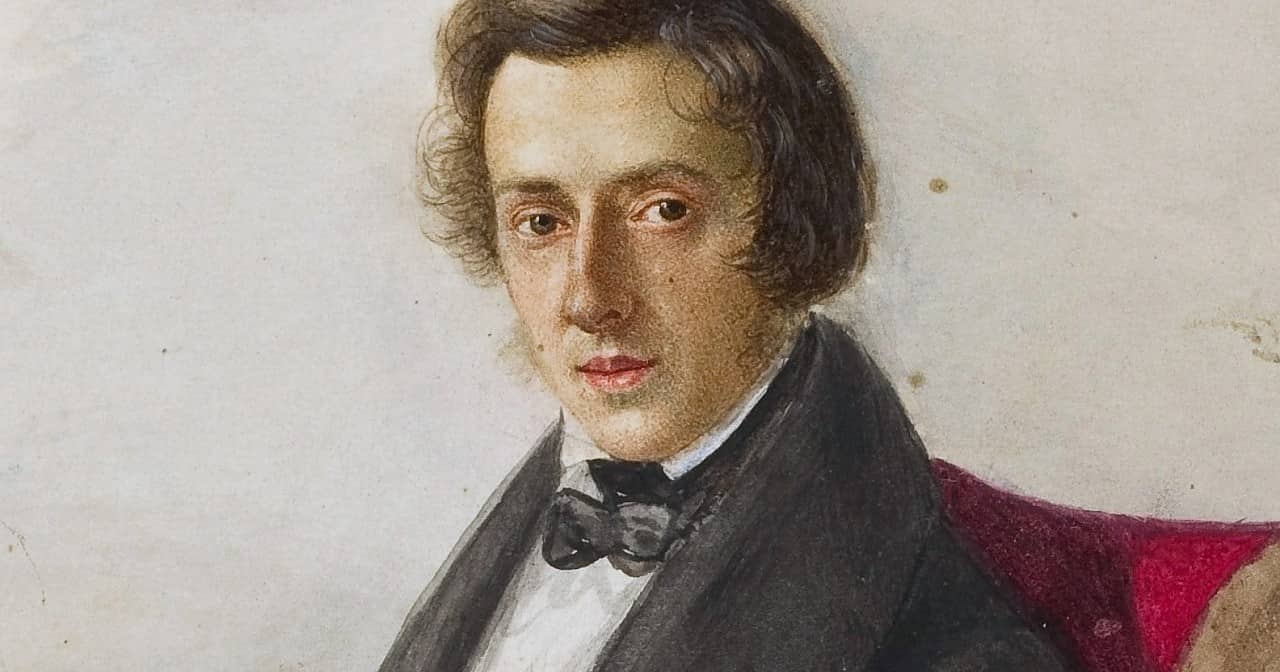
Otherworldly and cerebral: The conventional portrait of Frédéric Chopin reads as strangely bodiless. The frail, sensitive composer seems to lose himself entirely in his music, while his sexual desire almost vanishes behind the myth of the romantic piano poet. That’s the cliché, so to speak.
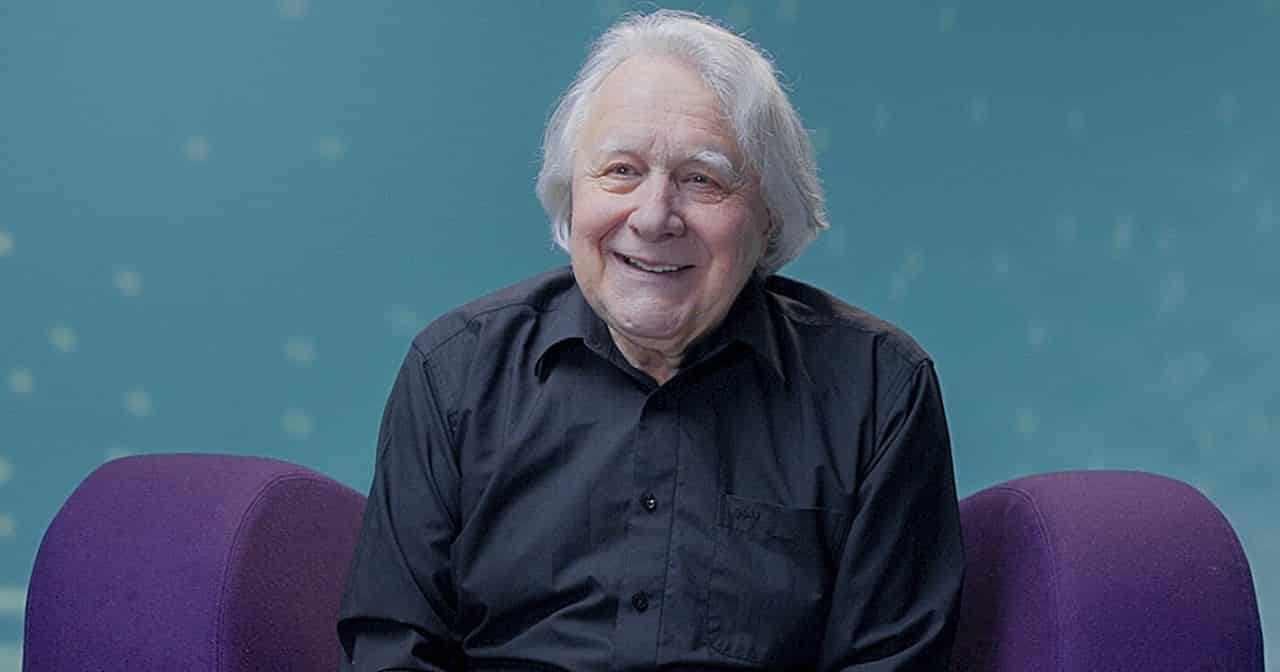
The pianist and music journalist Moritz Weber now brings to light in his newly published biography Chopin’s Men (about five hundred pages) a different Chopin: quick-witted and self-assured, at times blunt and earthy, moving through a lively Parisian milieu that one could reasonably describe as queer from today’s perspective — and which already existed in the first half of the 19th century, long before a modern gay identity is commonly thought to have emerged. Above all, Weber sketches a man who knew precisely whom he desired and how he expressed that desire.
Declarations of love to Tytus Woyciechowski
Indeed, the author does not need to decipher hidden messages. He lets the composer speak for himself, and he has him write to his beloved Tytus Woyciechowski not only that he loves him, but that he wants to “cuddle” with him, to kiss him “directly on the lips,” and he asks him, “Do you love me too?”
Weber is of course aware of the objection that such outpourings of feeling among men of Early Romanticism were not unusual. Yet Chopin himself seems to contradict this later explanation. “I embrace you warmly” is one of those formulas that others end letters with without really knowing what they are writing. He, in contrast, knows it, “for I love you” — so Chopin writes to Tytus.
But what matters more than individual letters is their abundance. Tytus is by no means the only man to whom Chopin expressed his love and whose reciprocation he wanted to secure. In his letters to women, nothing comparable appears. Even Chopin’s music takes on a new light here — his feelings for men flowed, Weber contends, directly into individual compositions. “To the piano I tell what I would often tell you,” Chopin writes to Tytus Woyciechowski. He attached a waltz specially composed for him to the letter. And the slow movement of his F minor piano concerto he linked to his male “ideal” — Weber also identifies this as Tytus. Overall, Woyciechowski was the man to whom Chopin dedicated by far the most works.
The “Lid on Hidden Feelings”
So Chopin in Weber’s account no longer appears as the solitary genius, but as a man who formed his life and work through close connections to other men. This has consequences for the conventional biography: most stories about alleged affairs with women do not withstand source criticism. Conversely, the question arises under what conditions Chopin could live out and express his more thoroughly documented feelings for men.
Declarations of love disappeared from editions
The truly telling aspect of Weber’s book is therefore less the finding that Chopin desired men than the story of how posterity over generations adapted his desire to fit the image of a heterosexual composer: declarations of love vanished from editions or were recast as romantic male friendship, explicit phrasing in translations softened, and masculine pronouns falsely changed to feminine. Weber meticulously interrogates all these evasions — and makes clear that this is not merely a matter of a few errors. Chopin was, he writes, “not an isolated case”: even the love poems of Michelangelo and Shakespeare were heterosexualized in later editions, for instance by changing male addressees into female ones.
A sad tradition of cultural-historical censorship
The practice of straightwashing historical figures is thus not a peculiarity of Chopin scholarship but a lamentable tradition of cultural-historical censorship. In the proliferation of such interventions, an almost obsessive energy of erasure becomes evident. Moreover, numerous sources were lost, destroyed, or altered after the fact. Surviving letters were redacted, passages made illegible, and in Chopin’s case even individual words were removed with acid. How much knowledge about queer life across the centuries has been permanently lost in this way is impossible to measure today. With Chopin’s Men, Moritz Weber therefore makes a significant contribution — and one that reaches far beyond the biography of a single composer: his book serves as a striking example of how queer life was rendered invisible, although the sources could already have offered a realistically rich portrait.
Moritz Weber: Chopins Männer. 547 pages. Schwabe Verlag. Basel 2026. Hardcover: 39 € (ISBN 978-3-7965-5429-2). E-book: 31.99 €