Only 9.2 percent of companies in Germany gender their corporate websites. That’s the finding of an analysis by the data platform Listflix, which examined 2.3 million online business profiles to see whether they use gender-inclusive language on their sites. The study accounts for five forms of gendering: besides the form Lehrer*innen, which is also used on TheColu.mn, there are Lehrerinnen, Lehrer:innen, Lehrer/innen, Lehrer(innen) or LehrerInnen.
Hospitals gender language more often, but doctors’ offices not so much
Interesting figures also emerge when looking at specific subsectors. For example, the gendering rate among hospitals in Germany is about 70.3 percent — the highest anywhere. In medical practices, it’s only 15.6 percent.
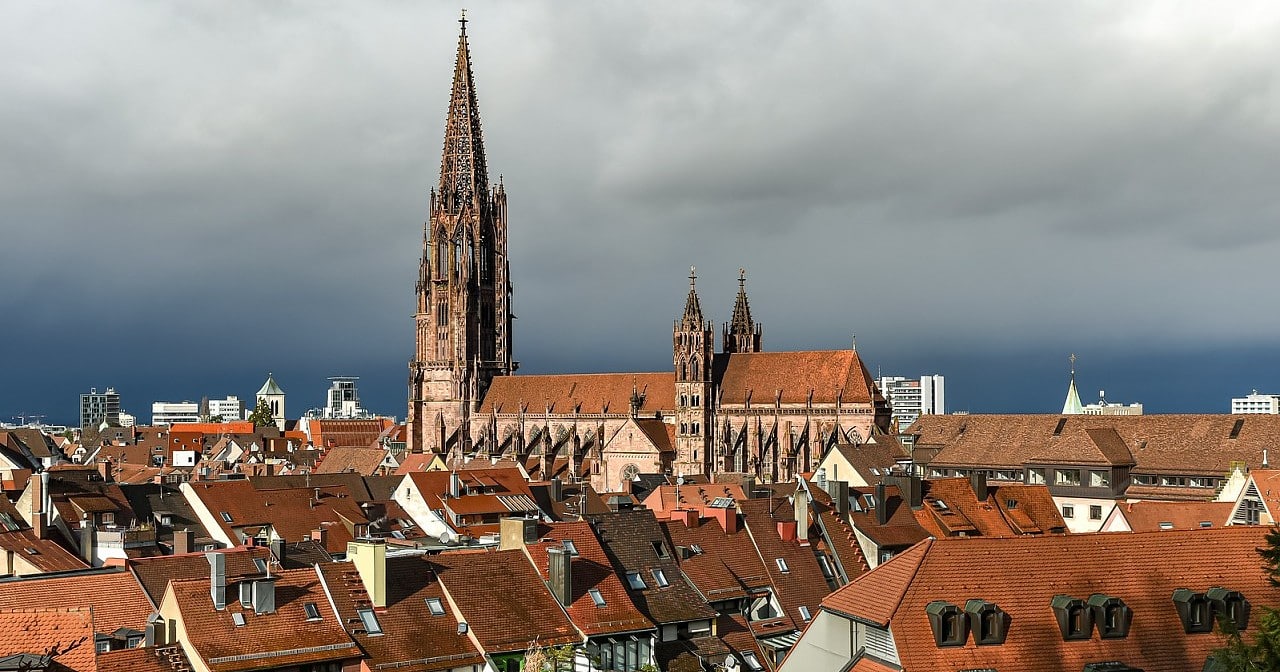
There are also large regional differences. Gendering is particularly popular in university towns, which appear nine times in the top ten among independent cities and counties. In first place is Freiburg im Breisgau (15.7 percent), narrowly followed by Münster (15.1 percent), Osnabrück (14.8 percent), as well as Cologne and Kiel (each 14.5 percent). The only non-university town on the list is Lüchow-Dannenberg County in sixth place (13.9 percent). The sparsely populated district in Lower Saxony is nationally known mainly for its anti-nuclear movement.
The least gendered areas are Suhl, a city in Thuringia (4.5 percent), as well as the Vorpommern-Rügen district (4.6 percent) and the Regen district in Bavaria (4.7 percent). The three share a common trait, though they lie in three different states: the far-right AfD enjoys above-average support there.
City-states lead the state rankings
When looking at the states, the three city-states are at the top for gender-inclusive language: Berlin sits first (13.5 percent), closely followed by Bremen (13.3 percent) and Hamburg (12.9 percent). Lower Saxony (10.0 percent) and North Rhine-Westphalia (9.8 percent) are the largest “gender-friendly” regions.
At the bottom of the list lie three new states: Mecklenburg-Vorpommern (6.5 percent) is last, followed by Thuringia (6.8 percent) and Saxony (7.7 percent). (dk)