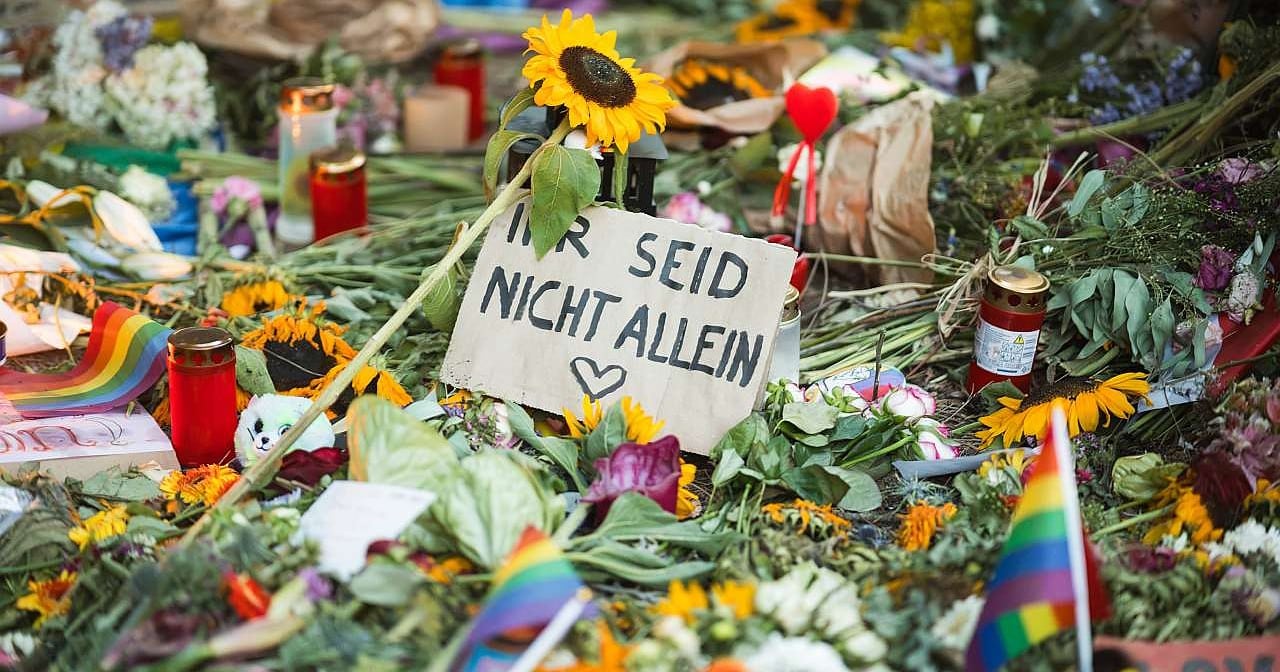
Four weeks after the Islamist terrorist attack at Berlin’s Christopher Street Day (CSD) celebration, the acute phase of victim support has ended. “We are now engaging in personal conversations with those affected to tailor assistance,” Roland Weber, the Federal Commissioner for Victims of Terrorist Attacks, told the German press agency.
“We are increasingly concentrating on longer-term care options,” Weber explained. “From what he has learned, most of the injured have already been able to leave the hospital. Now, for example, the aim is to help them in finding rehabilitation opportunities.”
Weber: The support system is functioning
So far Weber reports no complaints. “That is a sign that the help system is functioning and that we can continue to assist people,” he said. Those affected are entitled to medical or psychological help, as well as rapid material support.
A free hotline run by the Victims Commissioner has already been shut down. About two weeks after the attack, calls to the hotline had dwindled. The hotline allowed victims of the attack, their relatives, the injured and their families, as well as eyewitnesses or people who provided first aid at the scene, to reach out.
To aid the victims of the attack, Weber said he, together with the Central Contact Point for Victims of Terror Attacks in Berlin, established contact with the relatives of the woman who was killed and with the injured—where these individuals were known. They received comprehensive information about available support options, including hotlines, online resources, networks, or assistance facilities.
During the terror attack on July 25 in Berlin’s Tiergarten district, the 21-year-old assailant drove a van into pedestrians, then—likely with a machete—injured additional people. One woman died, at least 31 people were injured, including seven severely. The Islamist was shot dead by police Sunday evening after they cornered him in a garden colony.