Hermann is the quiet observer of this story. Judith Fanto paints through his eyes a friendship among six very different people who meet as children. He is “The Observer” (Amazon Affiliate Link): someone who perceives with precision, frets, recognizes connections—but rarely steps into the unfolding events. As the world around him grows politically extreme and the friendship bears the weight of the social upheavals of its era, Hermann often remains in the privileged position of spectator.
1948 brings a letter to him from Franzi, whom he had lost touch with due to external circumstances. This letter forms the narrative frame of Judith Fanto’s new novel: starting from this message, Hermann dives into memories of his youth and the history of his friendship with Béla, Franzi, Max, Bertl, and Lotte. They first met at a music summer school by Altaussee; each year they renew their bond during shared vacations, until Hermann again becomes part of the group in Vienna. Across decades, the novel follows their friendship—and shows how political conditions reach into the most intimate relationships.
Sent to Vienna as a Half-Orphan
The geographical anchors of the story are the Dutch town of Haarlem and Vienna, the former capital of a crumbling monarchy. Hermann’s own biography begins with loss: his father returns as a broken, alcoholic soldier from World War I, his grandmother suffers a heart attack, and his mother dies in an accident. His childhood security shatters completely, and he finds little to hear him: “The sobbing was only drowned out by the shouting of others.” With this burden, Hermann is sent as a half-orphan to Vienna, where he lives with his aunt, who despises him for his Dutch origin and mistreats him. She herself moves through a society whose old order collapsed after World War I.
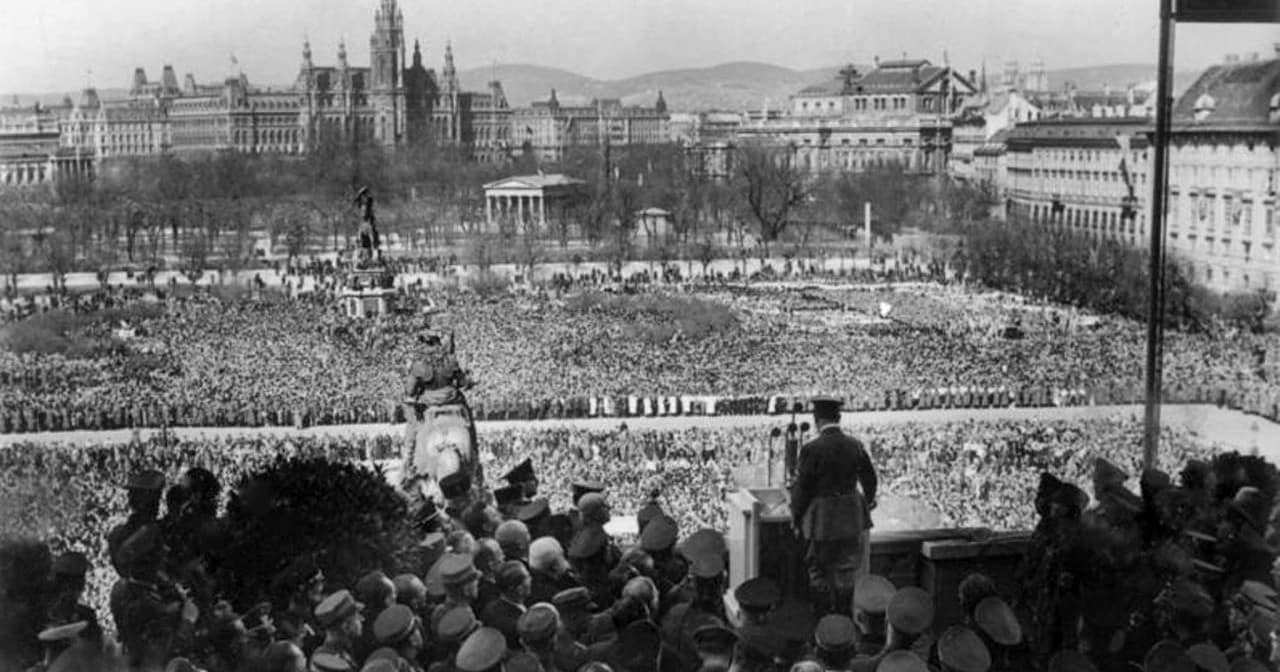
Hermann lands in a Vienna suspended between past and future: shaped by the collapse of the monarchy, social insecurity, rising antisemitism, and the criminalization of queer lives. To an even greater degree, the counterworlds that Fanto repeatedly conjures resonate. “When the summer holidays began, I felt the urge to participate in life again; it was as if a dark veil lifted and I stepped from the darkness into radiant creation.” Places like Altaussee from his childhood, a journey to Béla’s family in Hungary, the courtyard of a friend with its narcissus fields, or the hikes on the Loser become temporary utopias — spaces where origin, religion, or sexuality seem to matter little.
How Could the Nazis Become Socially Acceptable?
Yet this freedom remains fragile. In antisemitic Vienna, friendship grows increasingly political, and at the latest with Austria’s Anschluss to Nazi Germany in 1938 the differences within the group become obvious. Béla is gay, Max and Franzi are Jewish and politically active, while Bertl and Lotte eventually join the NSDAP. Hermann begins to question the political convictions of his friends: How could a party that preached violence and exclusion become socially acceptable? How could assaults be dismissed as mere acts of individual “troublemakers”? At times Fanto relies on a problematic equating of political extremes that recalls the horseshoe theory — while at the same time realistically portraying the uncertainty and denial of those who did not want to face the rise of fascism.
Fanto’s strength lies in her calm, empathetic, and sensuous storytelling. She works with a delicate foreshadowing that hints at the later ruptures early on, without turning the characters into simple stand-ins for political positions. Béla, as a secondary character, gains remarkable depth. He immerses himself in the world of scents and perfume, lives his homosexuality cautiously but with confidence, and embarks on a romantic relationship with a man. At the same time, it becomes clear how brutally society reacts to queer people: in a police raid on a gay bar, Béla becomes a victim of the increasing persecution of homosexual men. His story also shows how destructive political fanaticism can infiltrate the circle of friends — up to the worst consequences.
His Passivity Becomes a Political Issue
Hermann’s relationship to this reality is notably ambivalent. Although he has Jewish and gay friends, he repeatedly enjoys the privilege of retreating and avoiding political conflicts. During the Nazi-backed coup attempt of 1934 and the murder of Austria’s chancellor, he withdraws with Robert and Thea Eigenberger to a lake where they had rented a vacation home. Hermann remains the “Observer”: someone who watches and understands, but does not act. His passivity thus becomes a political issue in its own right.
Fanto’s portrayal becomes especially piercing through Hermann’s later vocation as an art restorer. In a lecture as a professor — for which he himself had to sign an “Aryan certificate” — he describes paintings as fragile composites of different elements. All parts work together, yet each component follows its own logic; if one part changes, the entire artwork can lose its balance. “No wonder restorers constantly search for the best methods to reassemble all components so as to preserve the artwork as a whole.”
The metaphor points beyond the realm of art to Hermann himself. While others create, fight, and destroy, his role is that of the restorer: to preserve, arrange, and try to hold onto what already trembles on the brink of disappearing. Yet this is also his tragedy. Restoring means preserving an existing state — not creating something new or changing the conditions under which a work of art was damaged. Hermann remains the one who looks back. And from that arises the novel’s central question: How resilient is friendship when societal conditions no longer permit remaining uninvolved?
Until July 20, 2026: We are giving away five copies
Judith Fanto: The Observer. Original title: Narcis. Translated from Dutch by Christiane Burkhardt. 464 pages. Kein & Aber Verlag. Zurich 2026. Hardcover: 26 € (ISBN: 978-3-0369-5188-1). E-Book: 18.99 €