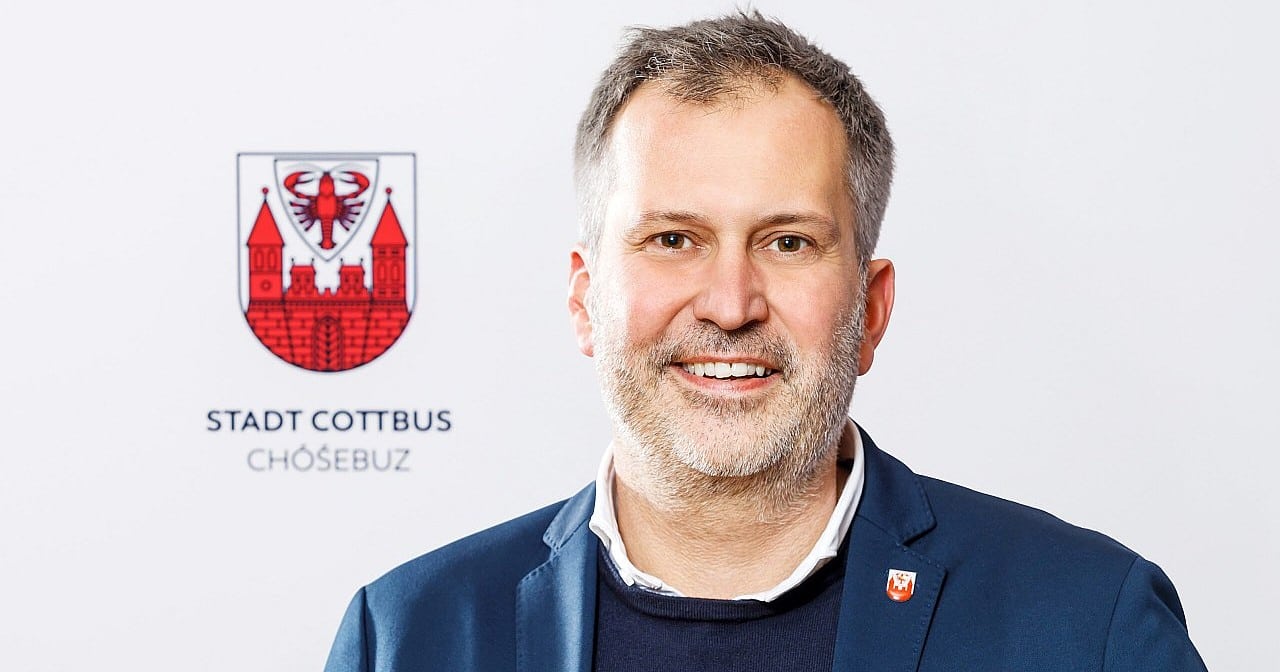
In Cottbus, Germany, a dispute over gender-inclusive language in the city administration’s communications has flared up. Mayor Tobias Schick (SPD) seeks to block a city council resolution that would require the generic masculine in official texts.
The generic masculine is a linguistic form in which masculine-sounding terms are used to refer to people of all genders — for example terms like “teachers,” “citizens,” “tenants,” or “doctors.” The debate over the generic masculine and gender-inclusive language has long been controversial.
The regulations adopted in Cottbus are intended not only for the city hall but also for volunteers serving in council factions, in local advisory committees, and in other bodies. Schick said that he is not authorized to dictate how they should speak or write.
In June, a majority of the city council approved a proposal from the AfD factions and the Brandenburg Small-Business Initiative / Future-Protected Cottbus. The proposal states that the use of “gender-language special forms” in the full-time administration and in the volunteer administration is not permissible. This primarily concerns the gender star, the gender colon, and the gender underscore. The administration — meaning both the city hall and volunteer city councilors — would instead have to use the generic masculine or gender-neutral umbrella terms.
“The administrative language should align with the rules of official German orthography and be as easily readable, accessible, and understandable as possible for all citizens,” the motion states. The rules should apply to official letters and forms, but also to websites and other communications to the public.
The city administration announced on Tuesday that the Cottbus mayor had raised objections to the city council’s decision after a legal review. He argued that it violates the city’s main statute. That statute already requires that, for designations, both the feminine and masculine forms be used unless no neutral form is possible. “In the motion, by contrast, the use of the generic masculine is demanded and approved.”
Use of special characters such as a gender star to make nonbinary people visible had already been deemed impermissible. This aligns with the current recommendations of the German Orthography Council.
The city council must vote on the motion again, the city administration said. If the vote retains the majority, another objection will follow. The municipal supervisory authority will then assess the legality of the decision.