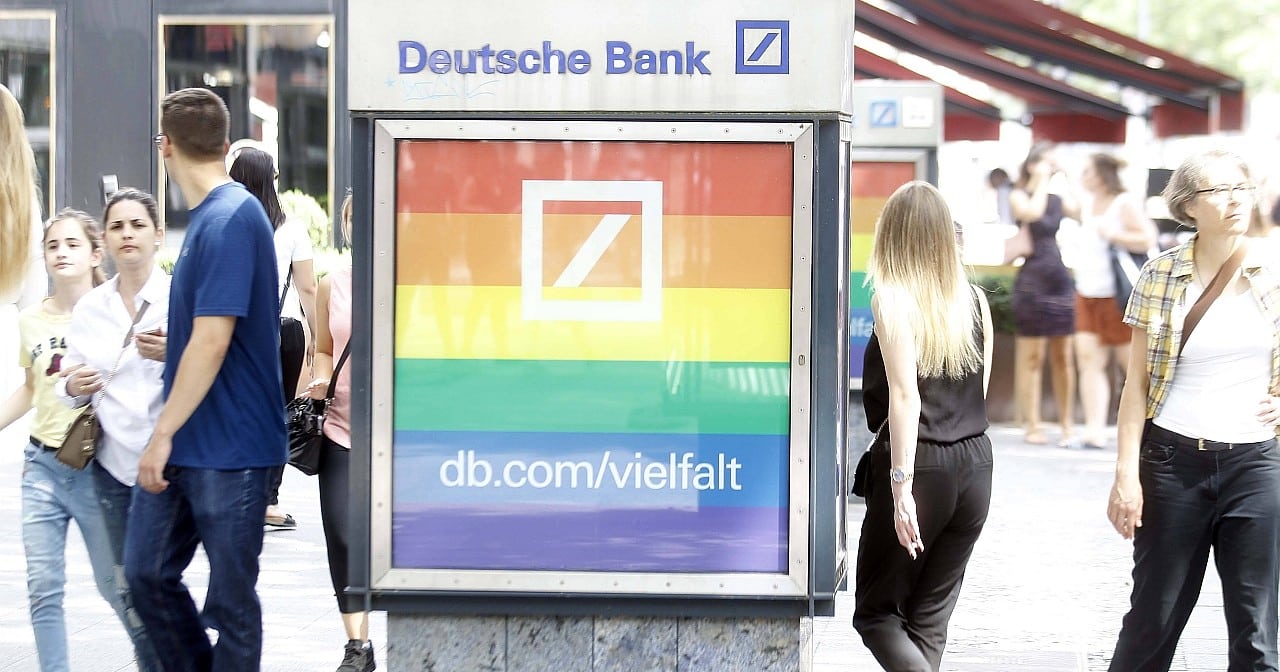
The queer community is in a bind. For years, advocates within the scene accused many companies, associations, or organizations of pink-washing or rainbow-washing. The claim: tolerance is being pushed as a facade because the topic is currently in vogue — without those behind it truly embracing the values at stake.
But the phenomenon has started to fade. Even in June — the so-called Pride Month — when the protests at the Stonewall Inn on Christopher Street in New York on June 28, 1969 are remembered.
Corporate logos are no longer just adorned with rainbow stripes for a few weeks or slogans changed. Fewer products appear in rainbow aesthetics. Companies engage more cautiously with the community at events like Pride parades or trade shows. At least, that’s how many perceive it.
A New Zeitgeist?
Queer content creator Max Rogall, also known as 321maxx, posted a TikTok video earlier this month with the line, “I miss Rainbow-Washing.” He quickly clarifies: he doesn’t miss the companies themselves or their performative allyship. But he misses the reality in which rainbow-washing worked, he says.
@321maxx Don’t get me wrong — I don’t miss these companies or their performative allyship. But I miss the reality in which Rainbow Washing worked. In the past, it was socially seen as positive to support queer people. Because today we see the opposite in many places — and queer visibility suffers as a result. #gay #queer #pride #lgbtqia
original sound — Max
TikTok / Max ?
|
Giving in to Trump-era Politics?
The economy is inseparable from everyday life, explains Andre Lehmann, a member of the national board of LSVD+ — the LGBTQ+ Diversity Association. “Therefore, companies also have a responsibility to this society.” But more and more they withdraw from it due to political pressure, especially from the United States. “Queer visibility is pushed back, support for the community ends, and diversity programs are terminated.”
Last year, after Donald Trump began his second term, changes became visible. There was criticism, for example, that some companies no longer colored their logos in rainbow hues on LinkedIn for June job postings.
The software company SAP cites overarching corporate-design guidelines for the changes. A Lufthansa spokesperson says, “The Lufthansa Group has decided not to change its logos for occasions — neither for Pride Season nor for other initiatives.”
Other Forms of Support
Both emphasize that the underlying commitment to the queer community has not changed. Lufthansa continues to support events like the Frankfurt CSD, the Schwule Museum Berlin, and local AIDS charities. With Pride flags at the Lufthansa Aviation Center, the support is made visible. SAP, according to a spokesperson, participates in Pride parades in Berlin, Mexico City, Tokyo, and Vancouver. “This year we also celebrate 25 years of Pride at SAP, with a range of events at many locations.”
The German SME Association—the Deutsche Mittelstands-Bund—noted that it cannot confirm a nationwide rollback of commitment by small and medium-sized enterprises. Board member Marc S. Tenbieg concedes, however, that “the Rainbow-Washing debate is important because it demands genuine credibility. Nobody needs colorful logos without any stance behind them.” The SME sector is characterized by close ties to employees, customers, and regional communities. Corporate culture here is less about campaigns and more about everyday interaction.
“Now More Corporate Engagement Is Needed”
“The issue becomes problematic when corporate engagement around Pride and Pride events gets swept up by populist currents and companies pull back for fear of confrontation,” Tenbieg notes. Budget shortfalls mean less municipal support, while Pride event costs rise due to heightened security. “If a company steps back from Pride or Pride events when it could still afford to participate, that sends a dangerous signal.” Now more than ever, corporate engagement is essential.
Reticence is short-sighted, agrees Lehmann from LSVD+. A diverse workplace environment benefits a company’s success. Those who publicly stand with the queer community during times of social tension send an even stronger message. Such companies still exist. “They continue to play a very significant role today.”
The BASF chemical corporation, after a pause, returned to the rainbow logo. Last year, the emphasis was on participatory and dialogue-oriented opportunities, the company explains. “The idea was: less symbolism, more concrete actions.” This year BASF is focusing on visibility, which also explains the logo change on social media.