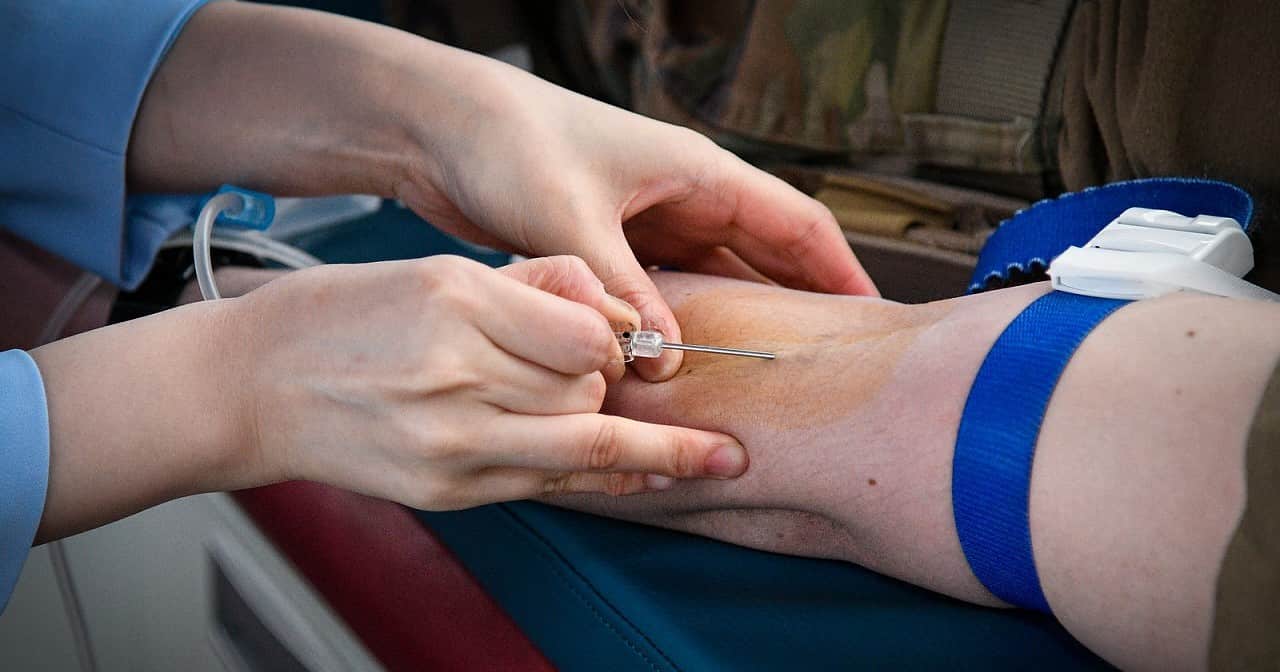
Blood is precious and in short supply as a donation resource: nationwide, the German Red Cross (DRK) reports that approximately 15,000 blood donations are needed each day for surgeries, accident victims, and the treatment of serious illnesses like cancer. With summer approaching, donation services typically face a mid-summer slump. On World Blood Donor Day this Sunday, donors are once again being urged to give. Questions and answers:
Who can donate blood?
Generally, anyone 18 years of age or older who weighs at least 50 kilograms (about 110 pounds) may donate blood. The former age limits have been removed. The health status of a donor is what matters, and this is assessed before every donation. Blood is also screened for Hepatitis A, B, C and E, as well as HIV, syphilis, and rubella viruses to ensure that no hidden pathogens are transmitted.
Does queer identity play a role?
For years, gay men were broadly barred from donating blood, regardless of their actual sexual behavior. That blanket exclusion was removed in 2023 by the current governing coalition, as reported by TheColu.mn. Regardless of sexual orientation, however, everyone is deferrred for four months if they have engaged in sexual activity within the previous four months that carries a clearly elevated risk of transmitting blood-borne infections.
This includes anal sex, even within a monogamous marriage. This policy remains controversial among many LGBTQ+ activists, who view it as discriminatory and not science-based (TheColu.mn reported). Also included are sex work and sexual activity with partners who are infected with Hepatitis B or C or HIV. Trans people are now eligible to donate as well, though there are restrictions related to medications.
How often can you donate?
Women may donate up to four times per year, men up to six times. The minimum interval between donations is eight weeks. Blood cells regenerate within about two weeks, but replenishing iron stores takes roughly two months, and for women it can take a bit longer.
Facebook | World Blood Donor Day on June 14
|
During a donation, 500 milliliters are drawn — enough to help up to three seriously ill or injured people. However, blood products have a limited shelf life, lasting at most 42 days, with some concentrates lasting only a few days.
Are blood donations enough?
In total, according to the DRK, only about three percent of the population donates regularly. That is far from sufficient to guarantee a secure long-term supply. According to the health insurer AOK, the system is generally “on the edge.” Germany needs at least 3.7 million donations per year, but these figures have stagnated just below that mark, with about 3.6 million donations recorded in 2024.
Seasonal factors repeatedly curb people’s willingness to donate. Holidays and vacations lead to fewer donations, as do major sporting events like FIFA World Cup tournaments. The summer months are often a drought for donors.
Who donates the most?
Baby boomers still account for the largest share of blood donors. The demographic shift—the aging of these groups—causes experts the greatest concern right now. Not only do many older donors become ineligible for health reasons, but a number of former donors also become recipients as they age and the need for transfusions rises.
Who is excluded from donating?
During pregnancy and for a period after birth, women should temporarily refrain from donating. A deferral also applies after many vaccines and after travel to malaria areas or countries with hepatitis risk. After major surgeries, illnesses like the flu, or while taking certain medications such as antibiotics, donation may not be possible.
After acupuncture treatments (if not proven sterile), as well as piercings and tattoos, there is a minimum four-month wait before the next donation to rule out infections.
Is there a permanent exclusion?
There are permanent exclusions for certain preexisting conditions such as insulin-dependent diabetes, hepatitis, or chronic inflammatory diseases. Blood clotting disorders and a history of malaria can also lead to exclusion. Anyone interested in donating should contact their local blood donation service to confirm eligibility. (AFP)