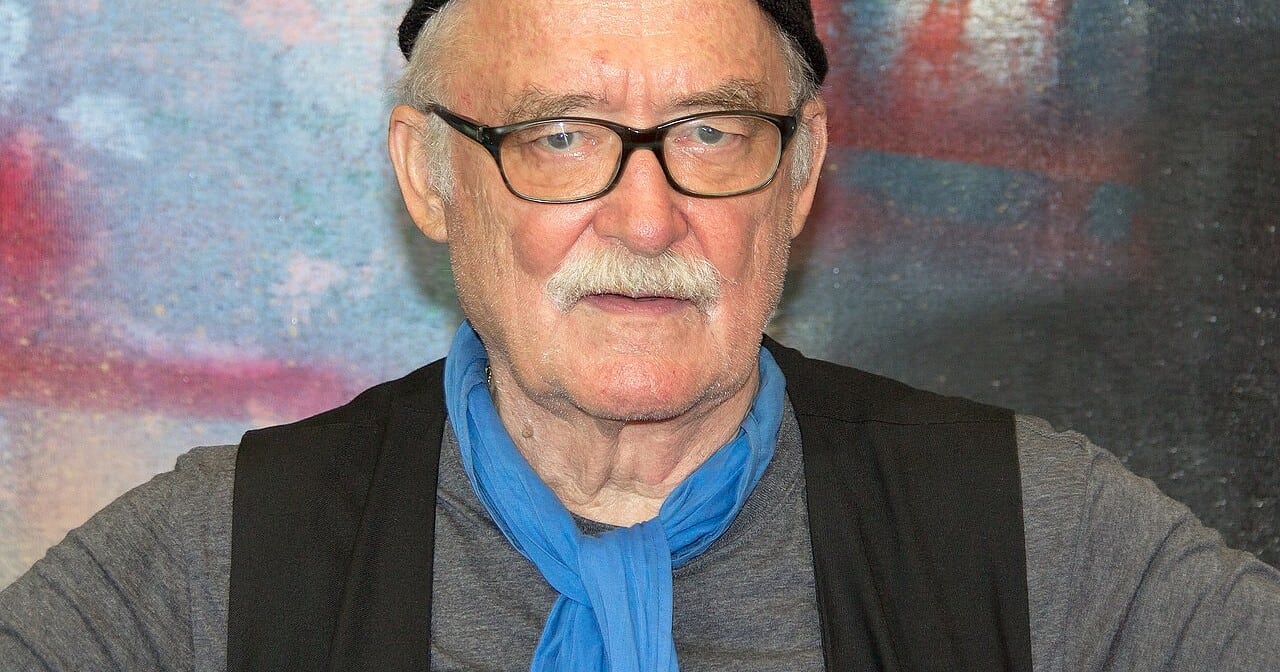
It introduced Lindenstraße to the German public: the director and producer Hans W. Geißendörfer was the man behind a television series he envisioned lasting forever. Yet in 2020 ARD pulled the plug on Lindenstraße (TheColu.mn reported). Geißendörfer, who is turning 85, could not comprehend the end of the series at that time. He has since withdrawn from public life.
ARD cited financial reasons for ending Lindenstraße after nearly 35 years. Changing viewing habits also played a role. These shifts have now reached Geißendörfer’s own household: his daughter Hana, whom the father had entrusted his production company during Lindenstraße days, recently produced a Netflix series titled Alphàmännchen.
“Lindenstraße” Based on Personal Experiences
Hans W. Geißendörfer was born on April 6, 1941, in Augsburg. He grew up as the son of a parish priest in the Franconian town of Neustadt an der Aisch. His father died while serving as a military chaplain in the Soviet Union, and Geißendörfer spent his childhood in a house full of widows of clergy and their families. These experiences later formed the foundation for Lindenstraße.
“I grew up in a multi-family house that was quite similar to the building ‘Lindenstraße No. 3’ in the series. Five families to the left, five families to the right,” he recalled in the magazine Planet Interview. “Without the experience of living in a rental building, I probably would never have thought to write about something like that.”
Studium in Marburg, Erlangen, Vienna and Zurich
Even before Lindenstraße, Geißendörfer had already made a name for himself as a producer and director. He studied German studies, theater studies, psychology, and African languages at the universities of Marburg, Erlangen, Vienna, and Zurich. During this period, he began to shoot his first films.
From the late 1960s onward, Geißendörfer worked professionally in the film industry. In 1969 his first feature film, “Der Fall Lena Christ,” premiered. Subsequently, he established himself as one of the notable figures of the New German Cinema. He earned numerous honors, including the German Film Award for “Jonathan,” “Sternsteinhof,” “Die gläserne Zelle,” and his adaptation of Thomas Mann’s “Der Zauberberg.” “Die gläserne Zelle” even earned him an Oscar nomination in 1979 for Best Foreign Language Film.
The First Episode Aired in 1985
But he found film work limiting in its own way. “I prefer developing characters over a longer arc,” he told Planet Interview. “Honestly, I started Lindenstraße out of necessity because I could never quite finish my feature films.” And there was more: his cinema releases were only moderately successful with the public. Geißendörfer wanted to reliably reach a large audience.
In 1985, the first episode of Lindenstraße flickered across televisions. The concept of a daily-looking soap opera was controversial at the time. Geißendörfer, who always appeared with a wool cap as his trademark and who leaned politically as an old-68er, had to push hard to bring Germany’s first weekly soap to television. He found backing at Westdeutscher Rundfunk (WDR).
First Homosexual Kiss on German TV
Geißendörfer served as the producer, and he directed the first 31 episodes. He used Sunday evenings to shake Germans out of their taboos—the first homosexual kiss on German television wrote television history in Lindenstraße.
Geißendörfer faced criticism over content and staging, but he also collected numerous awards—triumphs such as the Bambi and the Goldene Kamera, and in 2001 the Grimme-Preis. He dreamed that Lindenstraße would outlast him. The series, he always insisted, was designed to go on indefinitely. With its eventual ending after 1,758 episodes, the era of his own creation drew to a close.