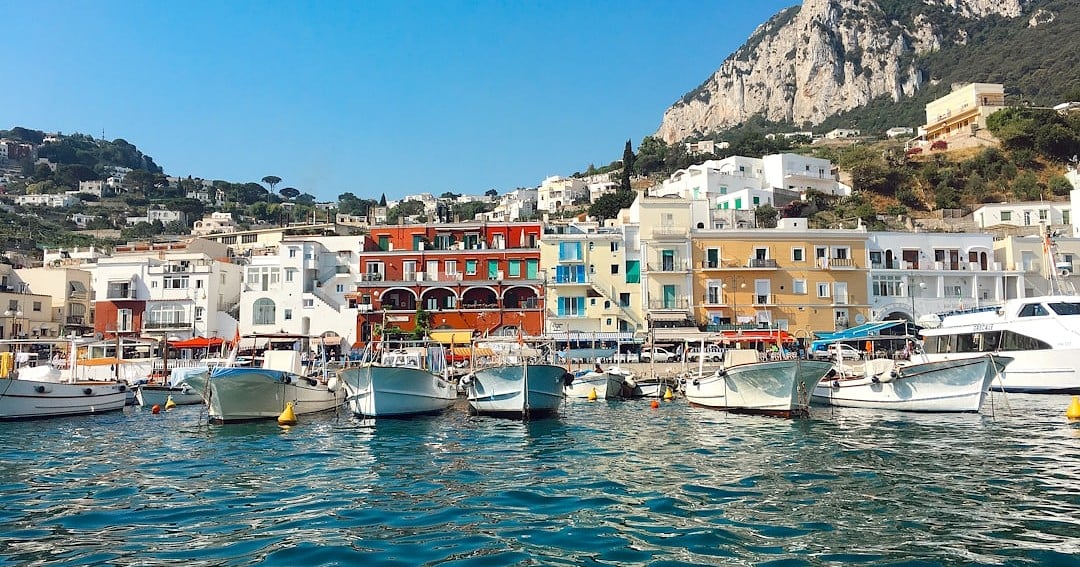
For decades, the Italian island of Capri has stood as a dream travel destination. But it comes with a price. While tourism pours money into local coffers, the sight of the red sun sinking into the sea is rarely accompanied by peace. To reduce the burden on residents, new regulations are set to take effect during the peak season this summer—expected to begin in May.
According to varying estimates, Capri is home to about 13,000 to 14,000 people, but tens of thousands of tourists flood the island on some days. Every day, tens of thousands of visitors disembark. Estimates suggest that in peak season up to 50,000 people per day want to soak up Capri’s sun. Along with the crowds come challenges, including a high volume of waste, a lot of noise, and chaos.
What is being done about it?
In February, the Capri town council, led by Mayor Paolo Falco, reportedly in unanimous agreement and in collaboration with the tourism official Melania Esposito, decided that new rules were needed. Organized groups of tourists may not exceed 40 members in the future, according to Il Sole 24 Ore.
Groups with more than 20 people traveling with a guide must also listen to explanations via headphones—speakers are off-limits. Additionally, tour guides may only draw attention to themselves discreetly and may no longer use large umbrellas, flags, or the like. During the tour, guides must ensure the safety of participants and that the group does not take up too much space on the streets.
This is also intended to prevent chaos during arrivals and departures in the summer. Falco has, according to Euronews, announced further steps to regulate boat traffic. In the Marina Grande harbor on Capri, docking times for boats could be limited to certain periods. It is not yet clear what those times might be. A corresponding approach is currently under review, and a solution will be presented well before the start of summer.
Dress code for Capri?
In line with the new rules, the dress guidelines for Capri are unlikely to change in the coming months. There is no formal dress code for visiting the island, but certain footwear has long been discouraged. Since the 1950s and 1960s, wearing wooden shoes or clogs has been prohibited, as they create a lot of noise on the cobblestones. Loud music is also discouraged. Back then it was about radios; today smartphones and Bluetooth speakers at full volume are not welcome either.
The local trade association Ascom Confcommercio Capri expressed a positive view of the changes, according to Il Sole 24 Ore. President Luciano Bersani called it a “first important step” toward bringing order during particularly busy daytime hours. There is also hope for further initiatives. Lorenzo Coppola, president of the Capri tourism association Federalberghi di Capri, spoke of an “act of responsibility” that reflects the vision of a “more livable island at last.” The new regulations are described as “indispensable tools” to relieve pressure on critical areas.
Meeting place for gay intellectuals and artists
Capri has long been regarded since the late 19th century as one of the earliest symbolic retreats in European queer history. In a time when homosexuality was criminalized or socially ostracized in many countries, the island attracted gay artists, writers, and intellectuals who found a comparatively tolerant atmosphere here.
Figures such as Jacques d’Adelswärd-Fersen, who moved to Capri after a scandal in Paris and had Villa Lysis built, and the British author Norman Douglas helped shape the island’s myth as a queer haven.