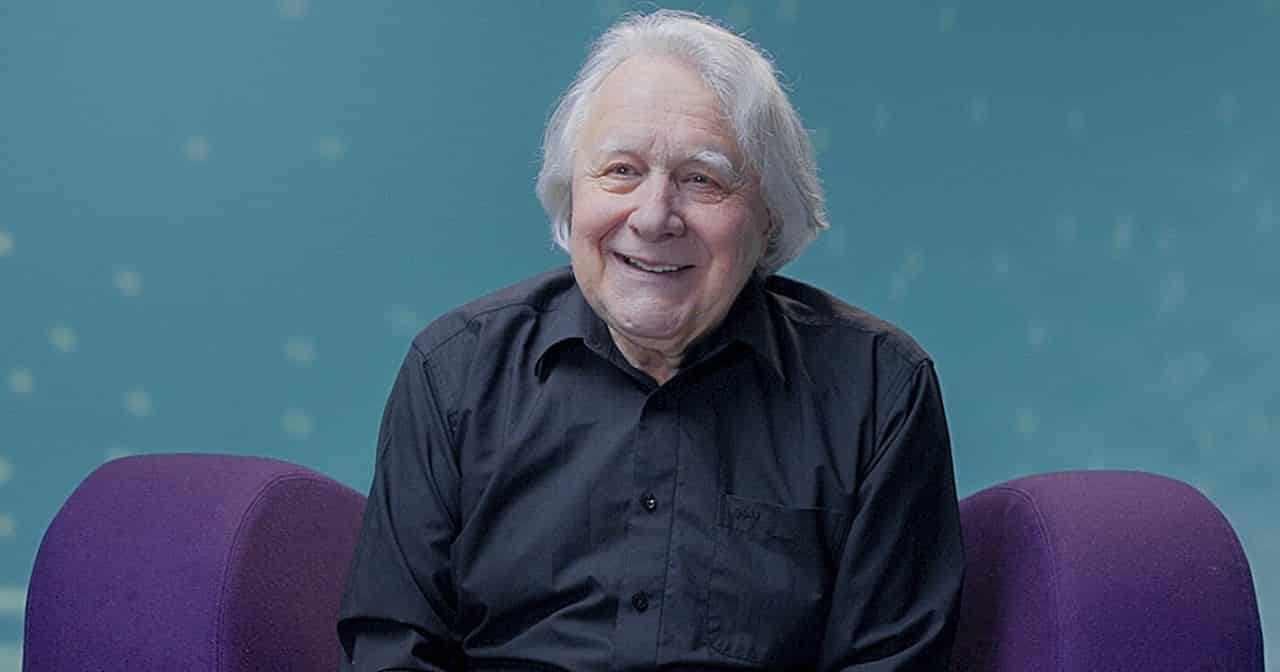
My mother and her brother were still kids when my grandfather set up a darkroom for them. They spent half their adolescence developing photos they had taken themselves—true old-school. Later, my mother briefly worked as a fashion model, and after she got married, my father’s camera became her constant companion. Our entire family life, every outing, was recorded and projected onto the living room wall during slide shows, to the delight of friends and relatives.
Not surprisingly, I was drawn to photography as well. I didn’t pursue a formal degree in it, but while studying at Stanford and at UCLA, I repeatedly took courses in the darkroom to familiarize myself with black-and-white photography and the technical finesse of image editing.
When, around 2007, more sophisticated image-editing programs hit the market, I was instantly hooked. I was familiar with analog methods, but when it came to digital editing, I was a total beginner. I resolved to start looking for models only once I felt technically confident, and in the following years I produced countless self-portraits while wading through mountains of books on studio photography, working with models, image editing, and photorealistic painting.

Eventually I was ready for the next step and set about outfitting my own photography studio. To make space, I had to part with the grand piano I had bought years earlier when my passion was free improvisation. Fortunately, I found a buyer right away.
In my search for models who shared my vision, I prowled Craigslist, Model Mayhem, and Instagram. My basic rule was: no photo session without a prior in-person meeting. One reason was that you cannot trust the internet, and the other was that by meeting in person I could get to know the person—her or his unique wishes, goals, and quirks—which makes studio work immensely easier.
Occasionally I’m asked to do fashion photos, but I usually politely decline. In my view, clothing exists mainly to be removed—a detour on the road to the real goal.
A question I hear from time to time: “Who, exactly, wants to shoot nude photos? And what kind of people would do that?” Yet showing the human body in its naked state is not unusual in art: Correggio, Caravaggio, Rodin, Michelangelo, Donatello, Cézanne, Manet, Degas, and Picasso—all celebrated the body in their works, and only in the Middle Ages was its depiction banished from the cultural life because, under Christian belief, all flesh was sinful.
Fortunately, that changed with the Renaissance, but given the current culture wars, one can only hope we won’t face a new dark age.
Taking nude photos of myself proved instructive—I know my best angles, and more importantly: how vulnerable one feels when posing naked. Without this heightened sensitivity to my own image, I would lack the sense of the sensitivities of my models; without this experience, I wouldn’t be able to empathize with them to the same extent.
Models decide to pose for all kinds of reasons: one had recently survived cancer and sought artistic expression to celebrate his renewed body; another, raised in the most remote corners of Appalachia, finally yielded to the pull of the city and wanted to experience urban life in all its facets; another had spent too long on a ranch in Oregon and has now taken the leap to Hollywood to give show business a try; one was a painter and sculptor who wanted to explore his body in another artistic medium; another had set out to travel around the world and funded his journey by posing at each stop, even if it was only for couchsurfing; another was an aerialist in a traveling circus and wanted his rich repertoire of poses captured against the weightless pull of gravity; some wanted to document that months of intensive bodybuilding hadn’t been for nothing; some felt their bodies were marred by scars, vitiligo, or moles and wanted to overcome their shyness; others were rightly proud of their bodies and wanted to show them off; another wanted to add nude photography to their portfolio; and the rest posed for nude photos because they saw it as a challenge they could not avoid if they hoped to discover their true self.
In the world of social media, selfies and even nude selfies are ubiquitous. Yet even though today anyone can snap a shot at any moment and drop a filter on it—photos only become true photographs through a unique point of view, a carefully composed frame, lighting, and staging. I always give my models direction to transport them into imaginary worlds, and I ask them, for example, to fixate on a spot on the wall as though there were, high up on a jagged cliff, a burning fortress to be seen there—or an angel descending from a halo of radiant light in a dark sky. Such fantastical details are meant to spark emotion, and the best nude models stand out because their bodies become the expression of that emotion.
My job is essentially to light them attractively and send them on their fantasy journeys—a staging that is perfected in post-production.
And this is where I differ from other photographers. Lately it’s become almost fashionable to give images a rough, unfinished, “unretouched” look, and I sincerely hope that trend will soon fade. My aim has always been to present my models in the best possible light, everything should be artistic and feel artistic—and never project a false naturalness. I usually work in color because I love blending filters, painting with multi-colored light, and I use dark backdrops (and sometimes fog) because they yield even more intense color effects. The images become more dynamic, more dramatic—and that should make clear which field of study I actually pursued.
For assignments in magazines or the advertising world, the order is always the same: first comes the mood board, then the search for a model who fits those parameters. I proceed in the exact opposite way: the starting point of my work is always the individual model, the heart, the soul, and the body of my work, around whom I create my worlds.
Earlier on, good friends constantly encouraged me to show my photos in different formats, whether as framed prints in bars or as lightbox displays in major galleries. So I’m delighted to present to all who share my vision of the young male body and, at the same time, appreciate the tangible quality of paper, this, my first book.
Todd Paris — 2025
The publication of this text is made with the kind permission of the artist and Salzgeber Books. “Day Dreaming” and many other exciting non-heteronormative photo books, novels, and DVDs are available, among other places, at Salzgeber.Shop.
Todd Paris: Day Dreaming — Visions of Youth and Beauty. Photo book. Format 24 cm x 32 cm. 160 pages. 103 color illustrations. Salzgeber Books. Berlin 2025. Hardcover: $59 (ISBN 978-3-95985-714-7)


Day Dreaming
11 Images