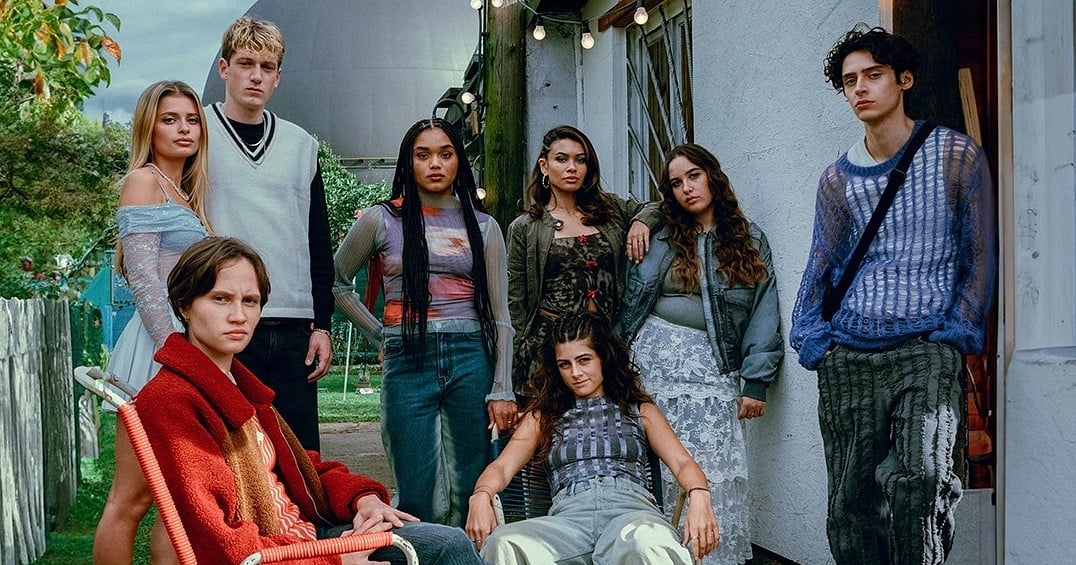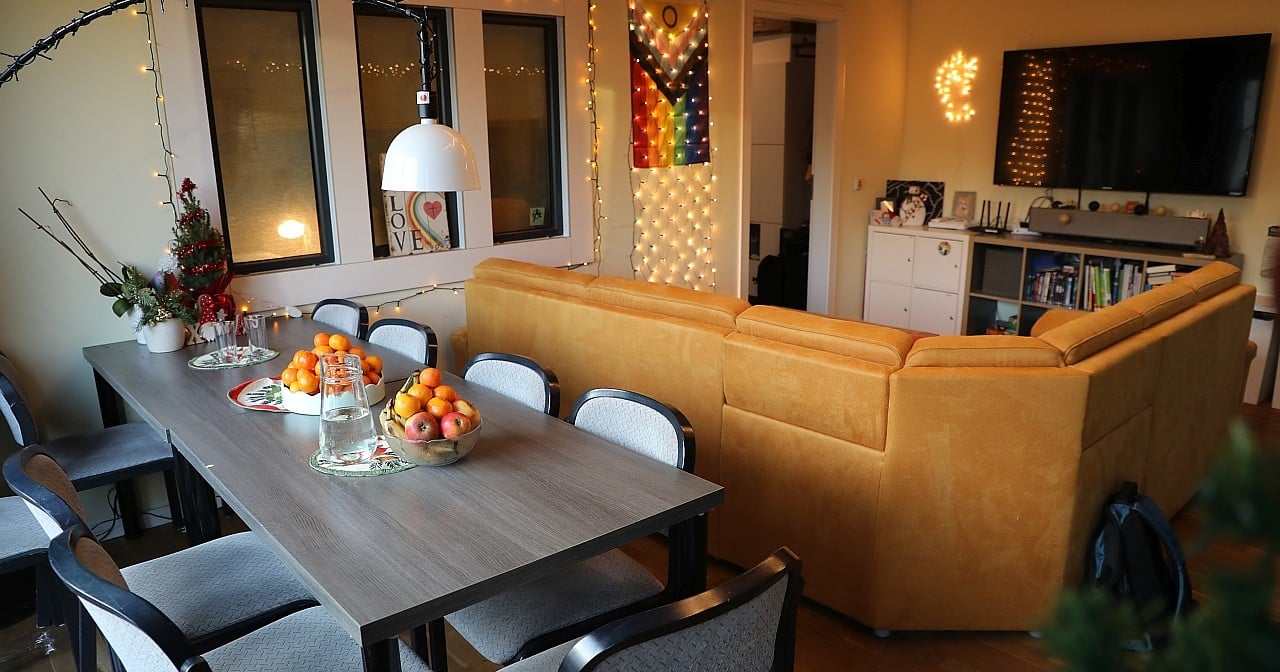
Across the country, there are only a few group homes within child and youth services that are specifically targeted at queer young people. Two of them are run by the SozDia Foundation Berlin in the Weissensee district: “Queerfeldein,” which opened five years ago, and, at the start of this year, the new “Queerbeet.” Together, the two housing groups offer 17 beds for young people aged 14 and up who identify as lesbian, gay, bi, trans, intersex, or nonbinary. The foundation grew out of social-diaconal youth work in Lichtenberg, and according to its own statements, it operates about 60 facilities across child, youth, family, and community work.
At the same time, child and youth services are undergoing profound changes: With its structural reform, the federal government aims to ensure that going forward, general offerings like counseling, youth social work, or early childhood education centers are used first, before targeted parental–support or child welfare interventions are activated. The bill was discussed in the first reading in the Bundestag in early October. Social welfare groups warn of gaps in coverage, while municipal associations doubt the hoped-for savings.
Queer youth in the youth-services system, the creation of the Queer WGs, and the reform debate are the focus of a conversation between TheColu.mn and Michael Heinisch-Kirch, founder and chair of the SozDia Foundation, and Johannes Siegmund, head of the Youth & Education department.
The federal government has launched a structural reform of child and youth services. How do you assess it?
Michael Heinisch-Kirch: I understand the critical perspective. Social work costs money, and money must be spent responsibly. But time and budget plans are poor guides when it comes to individual and often complex challenges.
Our goal is for a young person to find their place and to be able to stay on that path in the long term. Young people need guidance, support, and sometimes more than one chance. That requires time. And, of course, money as well.
Right now, the talk is mostly about potential savings by trimming funds. The long-term consequences are being left out. If young people lose touch with school, training, or work, it can mean they will need significantly more support later on. Those who justify reforms on economic grounds should also address the potential consequences: higher social costs at the same time as lower tax and social-contribution revenues.
For us as a social provider, it isn’t just a matter of cost accounting. Behind every case is a young person with abilities, hopes, and their own story. Particularly with young people, support is often an investment whose returns aren’t immediately visible in numbers. But if it helps a youth complete their schooling, begin an apprenticeship, develop a stable life path, or regain confidence in their own abilities, that is not only morally important—it’s also, in the long run, sensible and sustainable for society as a whole.
How would you describe the living situation of queer youths in child and youth services and in your WG? What special difficulties and hostility do they face?
Johannes Siegmund: Coming out by queer teens often triggers conflicts at home and among friends. Exclusion and bullying — for example at school — are far from rare. The consequences of these experiences are serious and include shame and self-rejection, as well as depression and anxiety, and can even lead to self-harm and suicidal ideation.
The growing social prejudice and public hostility worsen the situation. Bullying at school is reported by at least half of the young people. Trans* youths in particular face stronger harassment. It’s perhaps no accident that they have formed the majority among the residents of Queerfeldein in recent years.
The youths in our housing groups are, on average, 15 years old. What continues to impress me is their inner certainty. They are very clear about who they are, what they are, and where their journey should go — and they’re just 14, 15, or 16 when they realize it. Identity formation is no longer the central issue for them; most have come out before joining the group.
How did the SozDia WG come into being?
Michael Heinisch-Kirch: One of our staff members, who is herself queer, noticed that Berlin lacked a housing option specifically for queer teens. She raised this need with our board and proposed building a dedicated residential group home.
What mattered to us was not to treat this as a standalone project but to think together: What do queer youths need to feel truly safe and accepted in a group home? The colleague was involved in the concept from the start and could contribute her professional experience and her perspective as a queer person.
So five years ago, our “Queerfeldein” was created — a group home with seven beds for queer youths. With the new “Queerbeet” at the beginning of this year, we expanded to a total of 17 beds. The focus is on a protected space where young people do not have to explain, hide, or justify their identity.
What I still find especially meaningful is that the idea arose from the needs of our staff. It shows how important it is for professionals to listen, to be attentive, and to have the courage to explore new paths when they notice something is missing.
What needs to be done to combat discrimination of trans* and other queer youths in child and youth services?
Johannes Siegmund: Queer youths experience discrimination and exclusion at rates well above those of their peers. Unfortunately, child and youth services are not immune to this.
To counter this, it starts with well-qualified, sensitive staff. Queer and trans life realities should be part of training and professional development, as well as of our pedagogical concepts. Where there are no specialized offerings, there must be clear protection concepts, respectful language, and a stance that makes it clear: no one should have to hide their identity or justify themselves. At the same time, specific programs — such as our queer youth housing groups — can be the right, safe space for some young people.
Equally important is listening to queer youths and involving them in decisions. They themselves know best what makes them feel safe and what support they need. This also calls for stronger collaboration with queer youth associations and self-organized groups.
And, finally, we need reliable structures and funding — including for needs-based, queer-specific offerings. Queer-sensitive work should not be a one-off project that only happens when grant money is available. It should be a normal part of good child and youth services.
The queer community needs a strong journalistic voice — especially now! Do your part to support TheColu.mn’s work.
What are your main demands as a foundation from policymakers? And what are your expectations of mainstream society? For months there has been increasing opposition to diversity, inclusion, and participation.
Johannes Siegmund: We already touched on the need for reliable funding — particularly for specialized offerings. Equally important is health care. Especially for trans* youth, access to specialized medical and therapeutic care must be reliable and as straightforward as possible.
Michael Heinisch-Kirch: More broadly, I want us to see discrimination as a society-wide responsibility. Exclusion and hate should not be treated as the isolated problem of those affected. We all can contribute to making young people feel safe and not compelled to justify their identity or their way of life.
Johannes Siegmund: Especially in a time when there’s persistent rhetoric against diversity, inclusion, and participation, I think it’s crucial that we don’t just talk about tolerance but live solidarity in practical terms. Diversity isn’t a niche issue for a single group. It’s about the kind of society we want to share — and whether all young people truly have equal opportunities to chart their own path.