That in binary, two-sex societies—where it is assumed there are only two clearly separable genders with distinct roles—inevitably some people collide with the system is powerfully illustrated by the life of the Frenchwoman Adélaïde Herculine Barbin, who was known to her surroundings as Alexina Barbin. Born in 1838 in Saint-Jean-d’Angély into poverty, she was raised as a girl in an environment that was almost entirely female and religious—in a hospital, at the Ursuline convent of Chavagnes, and in girls’ boarding schools. Later she attended the École normale of Oléron, run by the order of the Filles de la Sagesse, where she earned a diploma and then began work as a teacher. But when a priest and a doctor perceived her body as not feminine, they initiated a process that moved from an imposed medical examination of her anatomy to a court-ordered change of her legal gender and, finally, to her tragic death at the age of only 29.
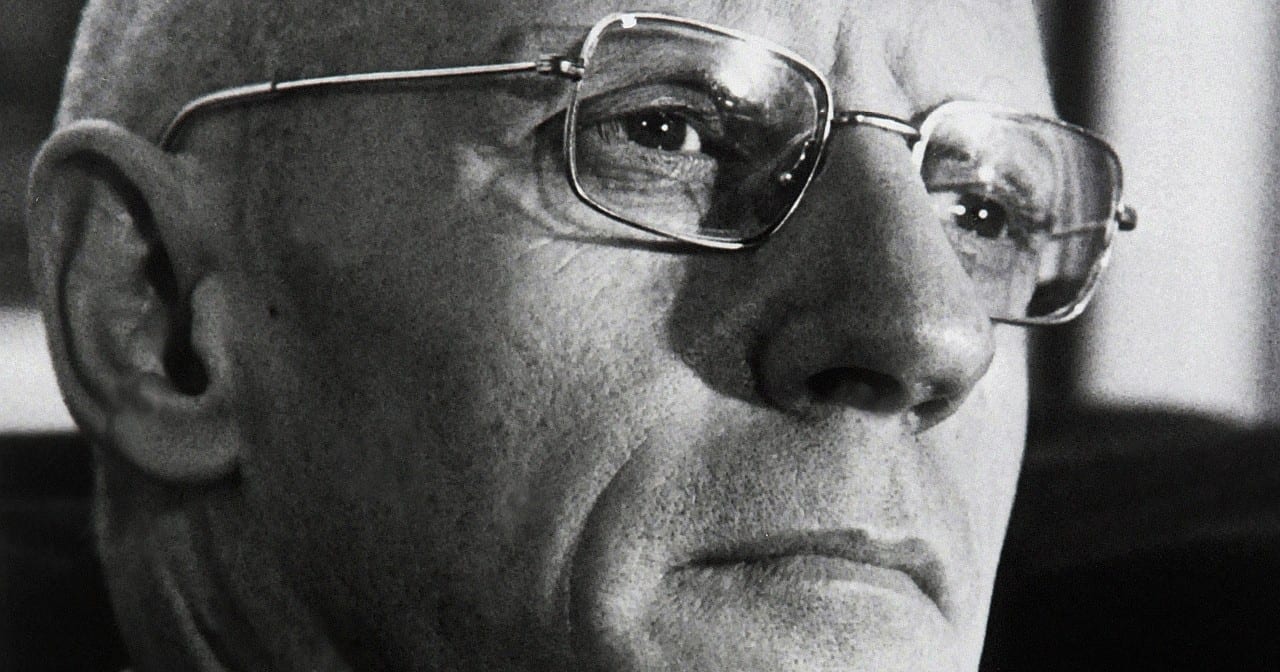
Barbin left behind a manuscript of memories, which the sexual pathologist Ambroise Tardieu published in 1874. Well over a century later, this document was republished by Michel Foucault and opened with the following remarks:
Do we really need a true sex? With a persistence that borders on obstinacy, Western societies have affirmed it. They have stubbornly framed the question of the ‘true sex’ within an order of things in which—as one might imagine—only the reality of bodies and the intensity of desires count.
Who decides gender identity?
To illustrate the genesis of these claims, Foucault undertakes a historical digression that begins in the Middle Ages. Back then, canon and civil law prescribed that people labeled as “hermaphrodites”—those whose two sexes appeared together in varying proportions—at baptism were assigned a gender by their father or godparent, but upon reaching marriageable age they could choose which gender they would belong to.
“Biological theories of sexuality, legal determinations of the individual, and forms of administrative control” gradually led, starting in the eighteenth century in modern states, to rejecting the idea of a mixture of the two sexes in a single body and, consequently, to restricting the free decision of those whose identities were in doubt. From that point on, it was no longer up to the individual to decide their gender status in legal and social terms; instead, a professional determined “which gender nature had chosen for them” and what society would demand they adhere to.
Even today, the notion that one must ultimately have a true gender is far from extinct. While tolerance has increased, public opinion still holds the belief that those who deviate from gender norms—such as a “masculine” woman—are lying to themselves, because their behavior does not match reality. Many people think: “Wake up, you young people, from your deceptive pleasures; shed your disguises and remember that you have a gender, a true one.”
Gender is not a matter for public negotiation
This “cruel game of truth,” as Foucault calls it, had fatal consequences for Barbin and other victims. Their fate should serve as a warning that gender is not a matter to be publicly negotiated. In particular, people with a humanistic stance should refrain from such debates, guided by the primacy of human dignity, even if they believe they possess a “truth.” After all, this concerns respecting the wishes of a person, their otherness, and the uniqueness of identity and gender expression, as psychiatrist Dagmar Pauli succinctly stated in her 2023 book The Other Genders.
For a deconstruction of our binary notions of “femininity/masculinity,” the Foucauldian work offers “fertile research perspectives,” as Andrea D. Bührmann argues in her essay “Gender and Subjectivation”:
The [ ] considerations of Foucault on the formation and transformation of modern subjectivities—especially his claim about the fundamental contingency of modern subjectivities—open the way to questioning a mimetic linkage between gender identity and gendered bodies, the deconstruction of the system of biological two-genderism, and the discursive and non-discursive formation and transformation of female and male subjectivities.
Toward a dissolution of the gender binary
Ultimately, the aim is to tie gender less to physical traits, chromosomes, and hormone levels and more to an individual’s inner sense. If we could stop automatically sorting people into “female” or “male” categories, there would be a chance that the binary gender system would not hold such enormous, almost feverish importance in our lives, as Juli Faber puts it. “And who knows,” Faber writes, “perhaps one day we will live with much simpler gender concepts that govern our daily lives less.”
It may be that dissolving the gender binary as we know it would strip the gender order of some of its simplicity and clarity, but that would not mean people would suffer less under a birth assignment they cannot identify with—and, as Lydia Meyer writes in her 2023 book The Future Is Not Binary, we would all gain new “possibilities—in expression, in thinking, and in our encounters with others.”