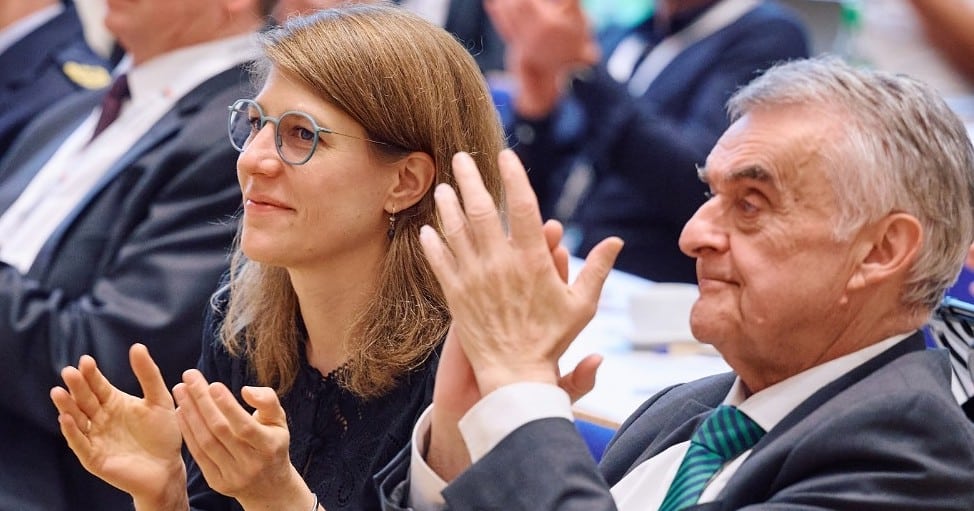
Against the backdrop of a drastic rise in anti-queer hate crimes, the North Rhine-Westphalia state ministries for Family Affairs and the Interior invited for the first time a joint expert day. About 150 professionals from police, social work, academia, and queer organizations gathered on Thursday at the police training center in Selm to better coordinate protection against hate crime and build trust. The conference was opened by Family Minister Verena Schäffer (Greens) and Interior Minister Herbert Reul (CDU).
The situation is alarming: between 2021 and 2025 the number of politically motivated crimes reported against queer people rose by 300 percent. Estimates indicate that only about one in ten affected individuals files a report. According to the state study “Queer through NRW,” more than 37 percent of the surveyed queer people experienced assaults in the past five years. In addition, there were more frequent targeted disruptions of Pride events (CSDs).
Several measures planned
Several measures are planned to strengthen community networks. For instance, the “Queer Anti-Violence Work” (QUAGA), based in the Cologne nonprofit Rubicon, will be expanded with an additional full-time position. In addition, the NRW Police and QUAGA aim to develop a joint guidance document. Coincidentally, on the very day of the expert conference, the state anti-discrimination law officially went into effect. NRW is, after Berlin, only the second state to enact such a law, although in a heavily diluted form (TheColu.mn reported).
“We are responding with a determined alliance between the police, social work, and civil society to the rising number of assaults and the growing fears within queer communities,” explained Family Minister Schäffer. “Through close cooperation, prevention, victim protection, and law enforcement will be brought together.”
Interior Minister Reul stressed that in NRW every person has the right to “live according to their own ideas” — and that the state has the duty to “make sure that this is safely possible.” To those affected, he sent the message: “I want queer people to know that they are seen, heard, and protected by the police.”