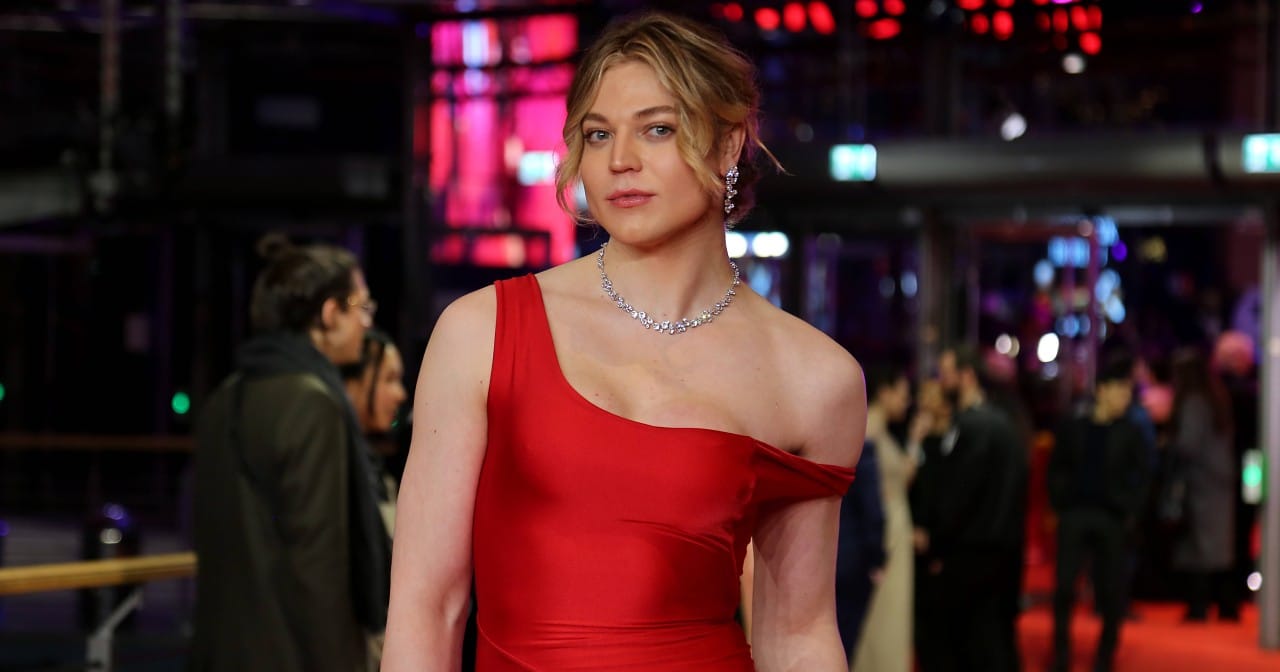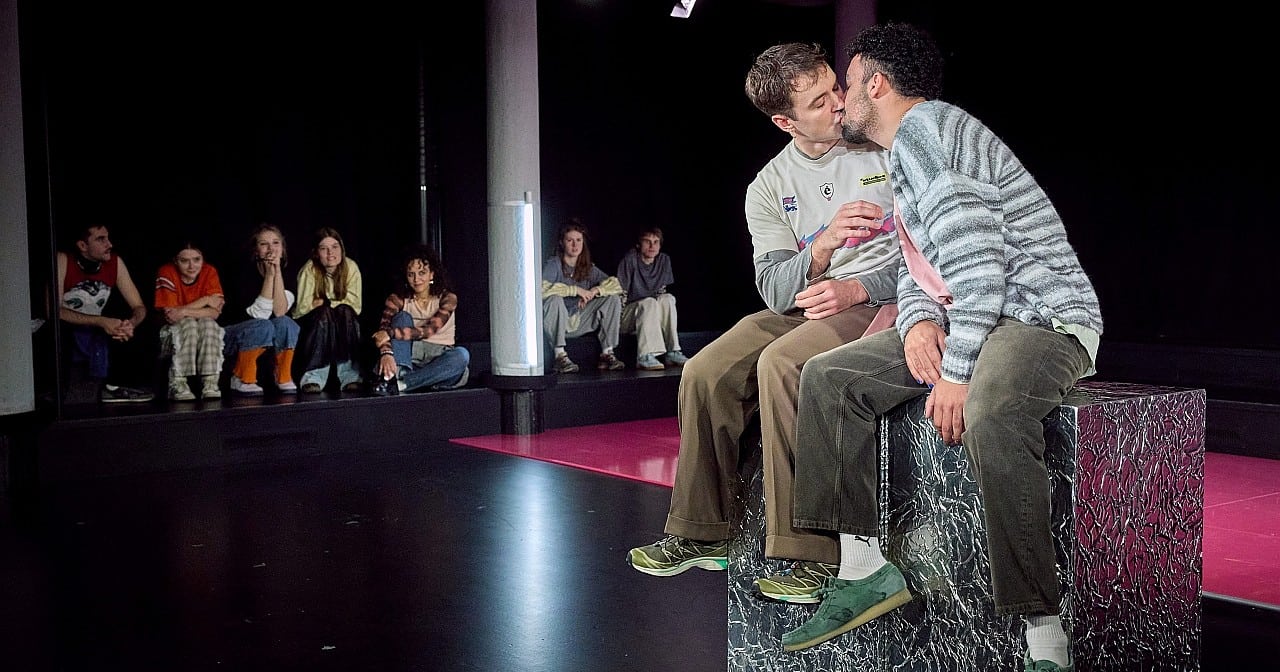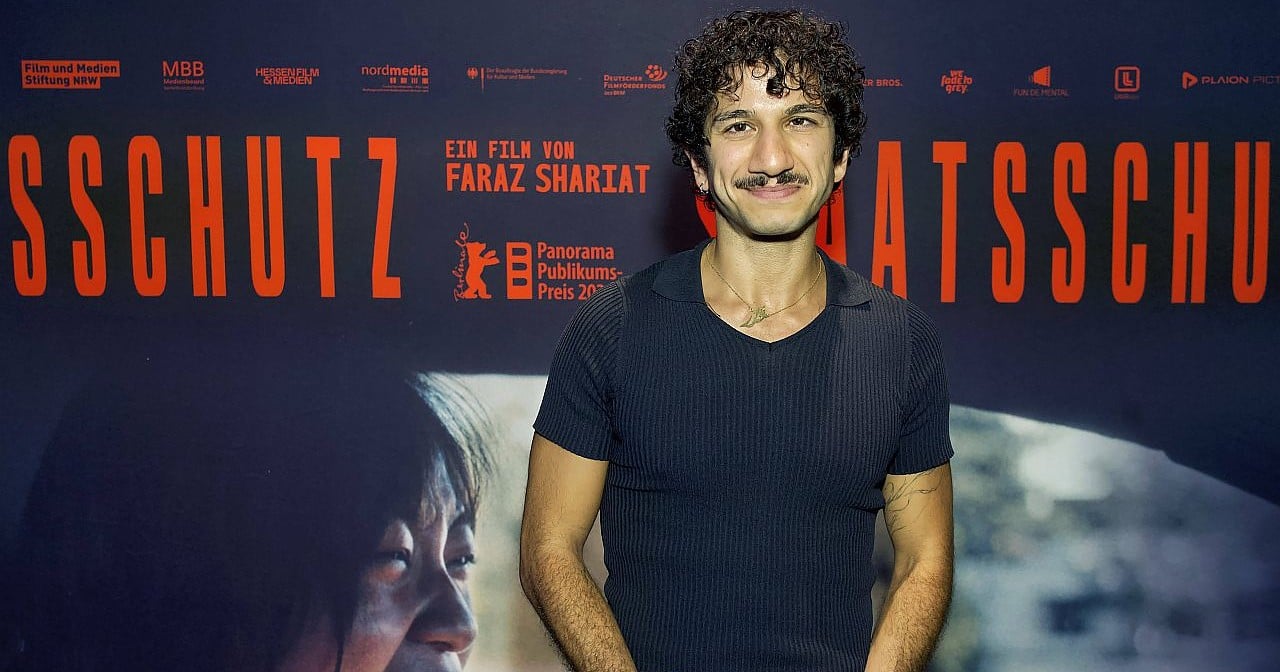
With “Staatsschutz” Faraz Shariat presents an impressive film that directly challenges the myth of state neutrality. Centered on a young prosecutor who herself becomes a victim of right-wing violence, it tells of institutional racism, the continuity of the far right, and a society where the boundaries of what can be said keep moving further to the right (a review by TheColu.mn).
At the same time, “Staatsschutz” is a deeply queer film: the relationships, friendships, and forms of community that Seyo experiences are not merely refuges — they are what must be defended against hate, violence, and authoritarian developments.
We spoke with director Faraz Shariat about the years of research behind “Staatsschutz,” the limits of supposed objectivity, and the question of how much responsibility institutions bear in the fight against right-wing violence.
Following your debut feature Futur Drei, Staatsschutz is noticeably darker. How did that come about?
Both works speak in direct dialogue with the societal development in Germany. Futur Drei began in 2015, when I translated for refugees in the context of Angela Merkel’s “We can do this.” At that time, a lot of my questions revolved around what a shared future could look like and how to visually convey hopeful, affirmative visions of a plural society. I personally felt a strong need for queer joy, for that sense of languidness and hanging out in a sunny small town, and I wanted to give that space.
When the film finally came out in 2020, it was my starting point as a filmmaker. I didn’t study film; I came to filmmaking as a nontraditional entrant with a strong DIY mentality. Futur Drei was a very autofictional approach, closely tied to my own life.
Afterwards I suddenly had the chance to think: What do I want to do next? Many projects I had developed lost bite as I watched how Germany was evolving. The overall societal shift to the right had intensified so dramatically that I didn’t feel any of those stories were the right project for two or three years of work.
Staatsschutz emerged through Claudia Schäfer, who wrote the script. This project could break out of the sense of powerlessness, anger, and frustration that had also caused my writer’s block. Seyo Kim, the film’s protagonist, is, for me, an inspiring figure: she proposes what resistance could look like and how to counter Germany’s fascism.
Of course, Staatsschutz is darker than Futur Drei because my perception of Germany has grown darker. At the same time, both works share a commitment to finding empowering moments, to generating hope, and to asking how structural racism can be fought.
The film isn’t anchored to a single case, but it’s tightly connected to real life in Germany. How did your research unfold? You spent years on the topic.
Before I even started working on the film, Claudia Schäfer had already spent three years researching and writing. For her, it was a strenuous but highly informative process. She shadowed the public prosecutor’s office responsible for the decision to close the Oury Jalloh case. She also observed at Halle and at the Berlin public prosecutor’s office, where she had very different experiences that all found their way into the screenplay.
She also studied with closely involved plaintiffs, the people who represent the perspective of the victims in court. This included the NSU trial, as well as the Neukölln case, the attacks in Hanau and Halle. The central question was: What does it feel like to have to place your trust in the state — the very entity that is supposed to uncover the case — while sitting opposite the alleged perpetrators in court day after day?
In the screenplay, Seyo’s story is of course a dramatic condensation. There wasn’t an incident where a state prosecutor was attacked and then investigated her own case. But every case that frames the film is drawn from real-life events. Claudia was keen to ground the film in the reality we live in today.
How did your intense engagement with right-wing violence alter your own sense of safety — even as a filmmaker?
I can’t give a final answer yet, because the film is only now playing in theaters as of August 27. But during the production, our team felt a powerful sense of community, solidarity, and empowerment. The work on this film has given me a tremendous amount personally.
From the outset, safety was a topic we confronted in production. What does this film mean for the vulnerable actors, the principal performers, and for me? The NSU 2.0 references were especially salient. The leak of data lists, the targeting of activists, journalists, and anti-right violence advocates whose addresses were published — some of which happened to friends of mine — created a sense of unease even before the film. How in Germany a climate of hatred and hostility is spreading, aiming to instill fear, remains a concern to me today.
At the same time, for me — and for the character Seyo Kim — there is no way around taking a stand against right-wing extremism and being visible about it. I still believe we are stronger together. The politics of increasingly pitting groups against each other over discrimination experiences can only be overcome by staying in touch with one another. So it’s a deeply ambivalent feeling to have made this film.
And yet the film also deals with the entanglement of the justice system. The recurring line is: “We are the most objective agency in the world.” What role does this mantra play for you?
A question we returned to often was: Why should the entire society’s rightward shift stop at the justice system? German justice carries the myth that it is the most objective authority in the world. This sense of certainty is shared, at least in some legal schoolrooms, internationally as well. The ideas underlying German law aren’t inherently bad.
But an agency can only be as objective as the people who work there. We aimed to show that ideological influence operates within the judiciary — just as it does within the police or in politics. In politics, it’s normal for different stakeholders with distinct ideologies to collide. Why should it be any different in institutions like the judiciary?
Structural racism is everyday life there. This is also reflected in the recently published InRa study (“Institutions & Racism”), the largest government-commissioned investigation into racism in state institutions. Over three years, researchers looked across a range of agencies. Surprise, surprise: the results show that all agencies are affected by racism.
So the point is to acknowledge that racism isn’t a one-off incident but a structural force. The big question, therefore, is: how do you develop concepts and practices to denazify or anti-racist-ize public institutions? Right now, that’s a crucial debate.
There’s a key scene toward the end in which a character cites the Constitution — and is immediately branded as left-wing radical for doing so. What does that moment mean to you?
I think we’re witnessing a massive shift in discourse. Values that this society once agreed upon are increasingly politicized and smeared as leftist propaganda — most notably human rights and fundamental rights, the very principles on which the Constitution rests.
We must resist that. We shouldn’t be forced to defend solidarity, human dignity, or equality in schools, public spaces, or politics. We should not surrender to a right-wing rhetoric that questions these values.
What has happened in recent years is, in essence, a radicalization of the political center. Large parties have progressively translated the AfD’s demands into government policy. This makes far-right positions seem acceptable.
That’s why invoking the Constitution today feels almost like a political act. Many people now feel that by advocating solidarity, community, or equal rights they’re labeled as “left,” even if they don’t identify as leftists. This is precisely the experience we wanted to illuminate in the film.
The scene works so well because at almost every screening I’ve attended, there was applause at this moment. I’m genuinely glad because many people realize this is exactly how today’s debate feels. And we have to break free from that rhetoric.
That was also the reaction at the Berlinale summer cinema. In light of that, what does the title “Staatsschutz” signify? Who does the state protect — and who protects the state?
I’ve loved this wordplay from the start. “Staatsschutz” first refers to the prosecutor’s office division that handles politically motivated violence — i.e., crimes committed by far-right, far-left, or Islamist actors. Its mandate is to protect those affected by such violence.
At the same time, many victims of right-wing violence report a very different experience: they feel the state mostly protects itself — that investigations are defended, institutional failures aren’t admitted, and the agencies themselves are shielded rather than made to take responsibility.
That’s the core problem. Restoring the trust that victims of right-wing violence have lost for decades will require state institutions to take responsibility and to change in real ways. It also means making these institutions more diverse, because — as I’ve said — institutions can only be as objective as the people who work there.
The queer community needs a strong journalistic voice — especially right now! Do your part to support TheColu.mn’s work.
Would you say there is objectivity — in the judicial sense?
I’d say objectivity, if it exists at all, is only possible when there are many voices involved in a give-and-take process. Objectivity isn’t a neutral static state; it arises from the negotiation among different subjectivities.
The film also places surprising emphasis on the courtroom audience. How did that choice come about?
We’re interested in the role of civil society in questions of how to be resilient against right-wing extremism. Staatsschutz centers resistance within institutions, but civil society engagement is a crucial part of the fight against the right. The audience in the courtroom mattered to us because it adds transparency while also bringing solidarity and emotional life into a space where these elements are often suppressed.
Through Seyo, her case connects to other cases of right-wing violence. It’s about a specific case, but the consequences affect all of us as a society.
The film also highlights the perspective of people who can barely defend themselves — for example because of their immigration status. How important was this migrant perspective?
The justice system only works as well as it serves the most vulnerable groups. Refugees or those with limited resources often have little trust in the courts and face significant threats. How can someone testify against a city’s well-known neo-Nazi if there’s no protection after the fact?
That’s why, in “Staatsschutz,” it’s also about the resilience of institutions. Civil society matters, but institutions have the power to send clear signals: we pursue right-wing violence and protect those who fight against it. If that doesn’t happen, you create a climate that tolerates right-wing violence.
Are you afraid of the reaction to the film? The release coincides with several elections. The film is already being attacked from the right and linked to “Citizen Vigilante.” Does that scare you — or does it indicate the film hits a nerve?
We released the film just ahead of the state elections in East Germany on purpose. We wanted to bring attention to the topic and engage in conversations with local actors before the votes. We hope to organize screenings and discussions and use the film as a prompt for exchange.
As for reactions, I’m torn. I enjoy engaging with feedback — especially when it comes directly from audiences. But online, many people simply post a lot of garbage from morning to night. I don’t think we should weigh those comments too heavily.
We expect pushback from right-wing trolls anyway. That doesn’t surprise us. I even had to smile at some comments: one person claimed the film was made on behalf of the federal government. They’d probably be the last to want a film like “Staatsschutz” to exist.
The film nevertheless received broad funding from the cinema fund, despite its clearly stated stance. How do you explain that?
That was an interesting experience for us, because we saw the film as quite radical in its stance — a film that points a finger at the wound and doesn’t flinch. The broad funding likely came from multiple factors: first, Futur Drei had drawn significant attention in the film world even though it received little funding at the time. With Staatsschutz, we could say, “Now it’s my turn to make my second feature—funding, please.” Second, institutional racism and the judiciary’s handling of right-wing extremism are topics that funding bodies recognized as relevant. The script was well researched and well structured, which convinced many people.
Of course there are voices claiming the film is too black-and-white or doesn’t deeply analyze the roots of right-wing extremism. But that was never our aim. Staatsschutz doesn’t do root-cause research. The film asks: What can resistance look like? And more specifically: Can institutions that are starting to tilt or become corrupt still be defended from within?
Despite the dark mood, there are constant moments of friendship and queer romance. Why was that important to you?
As the film progresses, it becomes increasingly important to show what’s really at stake. Seyo is under constant pressure — from the authorities and from the threats she faces. She hardly allows herself to feel anger or fear.
So I deliberately included moments of solidarity, community, love, and humor — as what is worth defending. Whether it’s a summer evening by a lakeside with a colleague or scenes with her on-off love interest, these are moments of intimacy, doubt, and sensuality in a story otherwise dominated by unease and violence.
Direct link | Official trailer for the film
|
In the end, the film shifts almost from a legal drama toward a thriller. How did that genre shift come about?
When we made Futur Drei, we often spoke of activist popcorn cinema. For me, cinema is a place to ask complex questions and challenge the status quo, while also promising entertainment. I want my films to stay accessible and to use the power of cinema to depict the present while also imagining other possibilities.
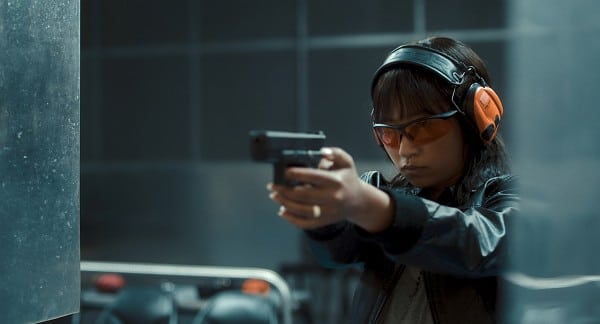
The genre gives a character like Seyo, who is in an inhumane situation, a way to give something back. Under such conditions — isolated and without institutional protection — no one could simply carry on. That she ends up with a weapon and a secure car is, therefore, a form of poetic justice.
At the same time, it isn’t about revenge. She doesn’t go on the offensive; she defends herself because she feels she must protect herself. Ultimately, we wanted to ask: where does hope lie? For me, hope lies in the idea that society and the judiciary work to shift the balance of fear — that right-wing extremists no longer feel as secure as they do now. If we don’t believe that’s possible, we might as well give up immediately.
What can we expect from you and your “youth” in the future?
I’m curious to see where this goes myself. I’m currently working on a lesbian horror film set in 1990s Iran. I’m eager to continue working in genre cinema and to engage with Iranian cinema more broadly. I’m also developing my first English-language project. Together with American author Ottessa Moshfegh, I’ve written a screenplay. It centers on the late-life coming out of a 70-year-old man after his wife’s death — albeit as a pretty twisted, dark comedy.
I want to keep making political cinema, but I also want the freedom to follow my instinct and not always beat the same path through Germany’s underbellies. There are plenty of other depths to explore. I’d like to broaden my gaze a bit.
Staatsschutz. Political thriller, drama. Germany 2026. Directed by Faraz Shariat. Cast: Chen Emilie Yan, Julia Jentsch, Alev Irmak, Arnd Klawitter, Sebastian Urzendowsky, Kathrin Angerer. Runtime: 113 minutes. Language: original German. Rating: 12. Distributor: Plaion Pictures. Release date: August 27, 2026


Staatsschutz
11 images