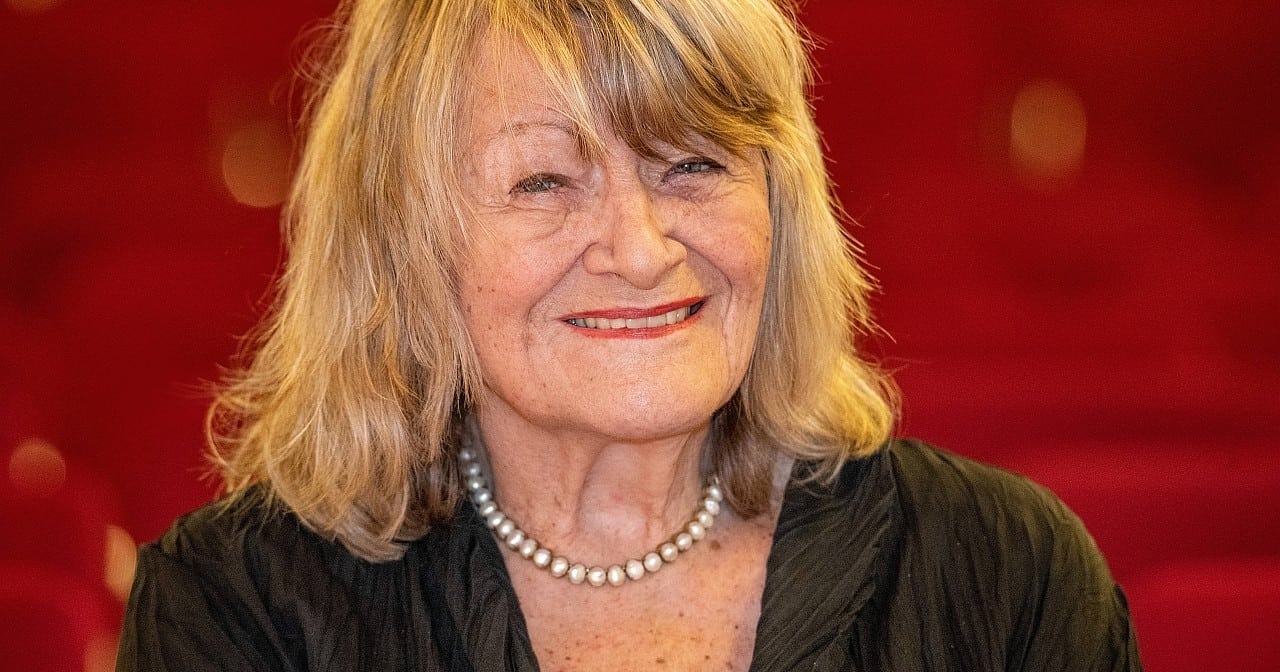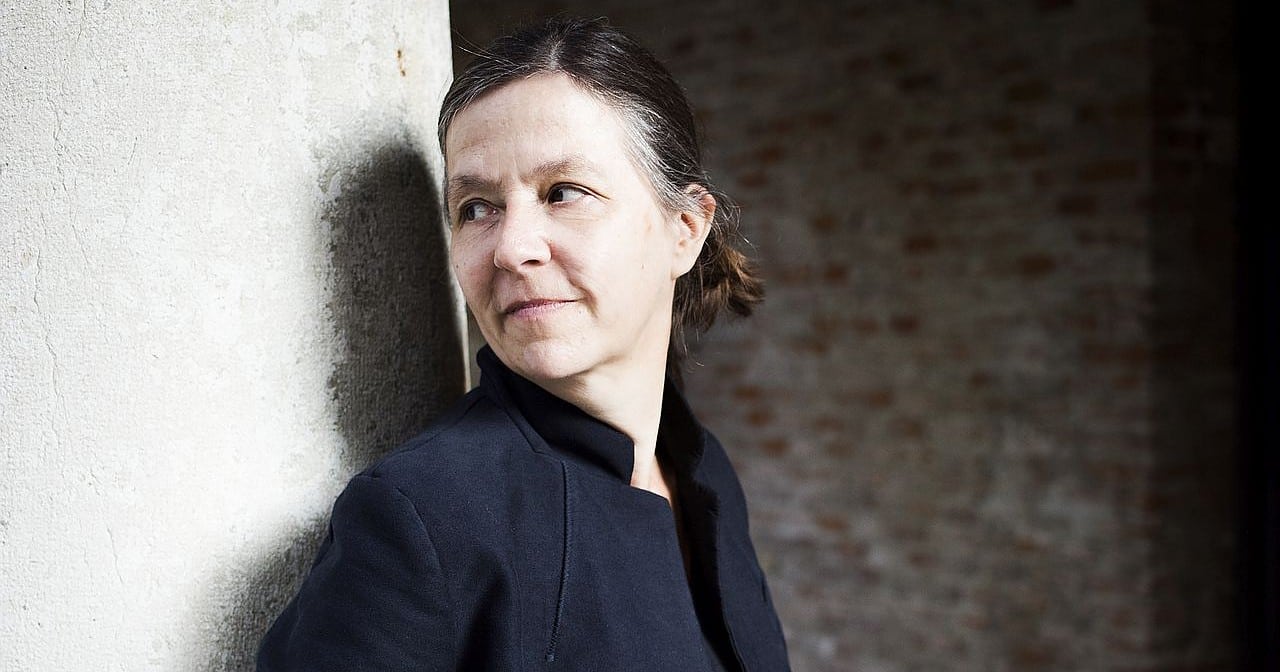
She usually discovers her material by chance—and transforms it into novels that blend fact and invention in striking ways. This year, the Georg Büchner Prize, endowed with 50,000 euros, will be awarded to novelist Christine Wunnicke. The 59-year-old author has also made a name for herself in queer literature.
“The German Academy for Language and Poetry awards Christine Wunnicke the Georg Büchner Prize 2026 for her consistently surprising and confidently conceived narrative work, which unfolds in places as varied as Hollywood, Nagasaki, and Paris,” reads the jury’s justification.
Academy praises it as brilliant art
“The power to astonish of this oeuvre, its effortless eccentricity, and the unflinching quarter-century of work impress readers who, with every book, are drawn into a new and fascinating negotiation between fact and invention,” the jury continues.
Wunnicke’s brilliant artistry makes the fictional visible within the supposedly historical, enabling a revealing look at Europe’s scientific and colonial past. “Rarely do these novels fuse entertainment with the kind of rigorous reflection in such superb yet discreet fashion, carried by subtle linguistic wit and a deliberate avoidance of self-reference,” they note.
Twice shortlisted for the German Book Prize
The Munich-born, highly decorated author studied linguistics, Old German studies, and psychology in Berlin and Glasgow. She has received the Wilhelm Raabe Prize and has been shortlisted twice for the German Book Prize — most recently for her book Wax, set in eighteenth‑century France (TheColu.mn reported). It tells of two women in love, including Marie, who at the age of 13 contemplates buying cadavers to become an anatomist (book review by Kat Ohlmann).
A completely defensible decision
“There were many names on the betting boards, but Christine Wunnicke certainly did not sit in the top third for this year’s Büchner Prize,” said Hauke Hückstädt, a writer himself and head of the Literaturhaus Frankfurt/Main as well as chair of the Network of Literature Houses in Germany, Austria, and Switzerland. “It is a beautiful, poetic, and a completely literarily aesthetic, defensible decision.”
He added that there is, of course, a caveat. “The remarkable Berenberg Verlag, which has nurtured this author for years and helped elevate her profile, has already announced its closure. And then there’s the fact that the author doesn’t perform on stage; she avoids public appearances. Books like Wax don’t suffer for that. We readers would love to see Christine Wunnicke in person. The chance to do so will likely come at least this fall in Darmstadt for the crown event.”
Award ceremony in Darmstadt
According to an Academy spokesperson, the prize presentation is set for October 24 at the State Theatre in Darmstadt. Since 1951, the prize stands as one of the most important literary honors in the German-speaking world.
The Academy awards the prize to writers who write in German. The laureates must “stand out through their work in a particularly conspicuous way” and “play a substantial role in shaping contemporary German cultural life,” as stated in the constitution. The prize is funded by the federal government, the state of Hesse, and the city of Darmstadt.
Notable laureates
Past recipients include Max Frisch (1958), Günter Grass (1965), and Heinrich Böll (1967), as well as Oswald Egger and Ursula Krechel. The prize is named after the dramatist and revolutionary Georg Büchner (“Woyzeck”). He was born in 1813 in the Grand Duchy of Hesse and died in 1837 in Zurich. Christine Wunnicke had, prior to Wax, published several significant queer novels, including The Art of Determination and Missouri. Last year she was honored with the Jean-Paul Prize for her life’s work (Queer.de reported).