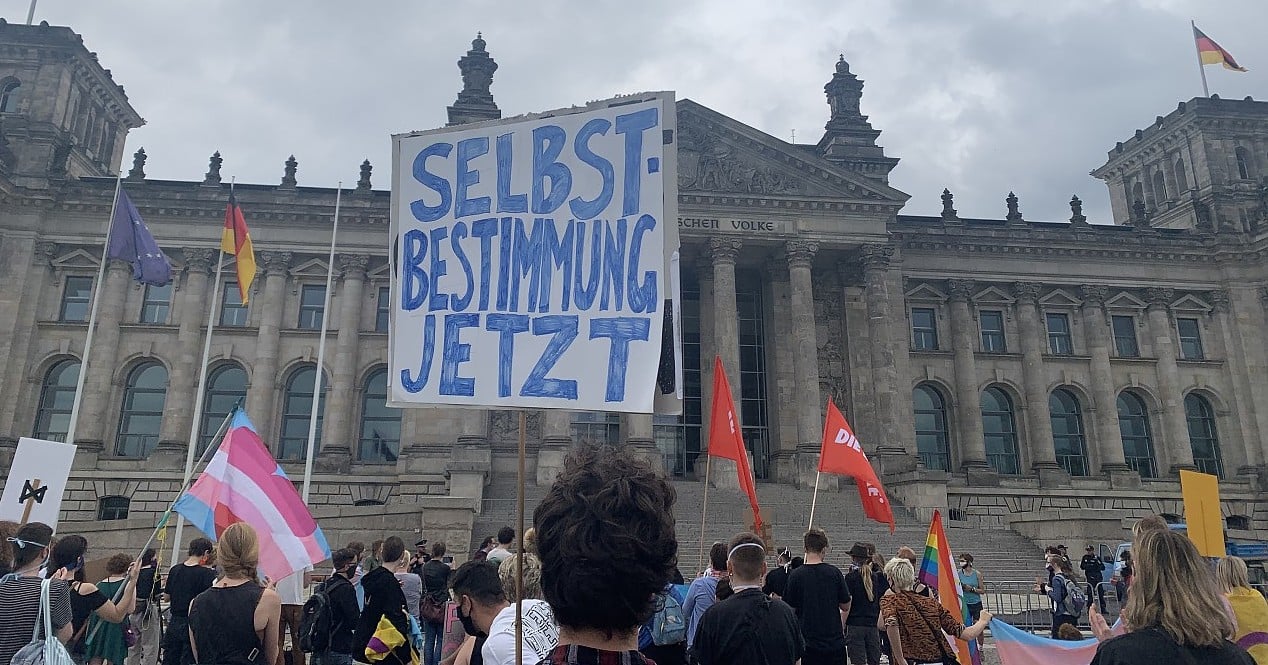
Hundreds of people in Brandenburg have had their gender marker changed in recent years, according to figures from the Federal Statistical Office. In 2024 — the year the Self-Determination Law regarding gender markers (SBGG) came into effect — a total of 299 people in Brandenburg changed their gender marker in the birth register. By comparison, last year the federal statistics office counted 478 people.
The option to change the gender marker has existed since November 1, 2024. From that date forward, transgender, intersex, and nonbinary individuals can alter their gender marker and their first names through a simple declaration at the civil registry office. Applications for this change had already been possible since August 1, 2024.
The majority of entries in Brandenburg involved declarations that changed a female gender marker to a male one. Nearly 160 of these changes occurred in the early months of 2024. In 2025, another 235 entries were added. Last year, 125 people moved from “male” to “female.” In addition, gender markers shifted from “divers” and “und specified” to “male, female, diverse or unspecified.” Since December 2018, the German civil registry offices have provided four options for gender markers: male, female, unspecified, and diverse.
“In the first weeks and months after the law took effect, there were regular questions about the eligible given names as well as the procedure for filing and submitting the declaration,” reported a spokesperson for the state capital Potsdam. “Nowadays, most interested individuals no longer need counseling. In Potsdam, since November 1, 2024, 227 people have actually submitted such a declaration.”
In Frankfurt (Oder), the numbers are markedly lower. By the end of July 2026, in these two years, 27 declarations had been submitted — noted by a city administration spokesperson, referring to residents who live in Frankfurt (Oder). There are also follow-up registrations for residents of Frankfurt who no longer live in the city.