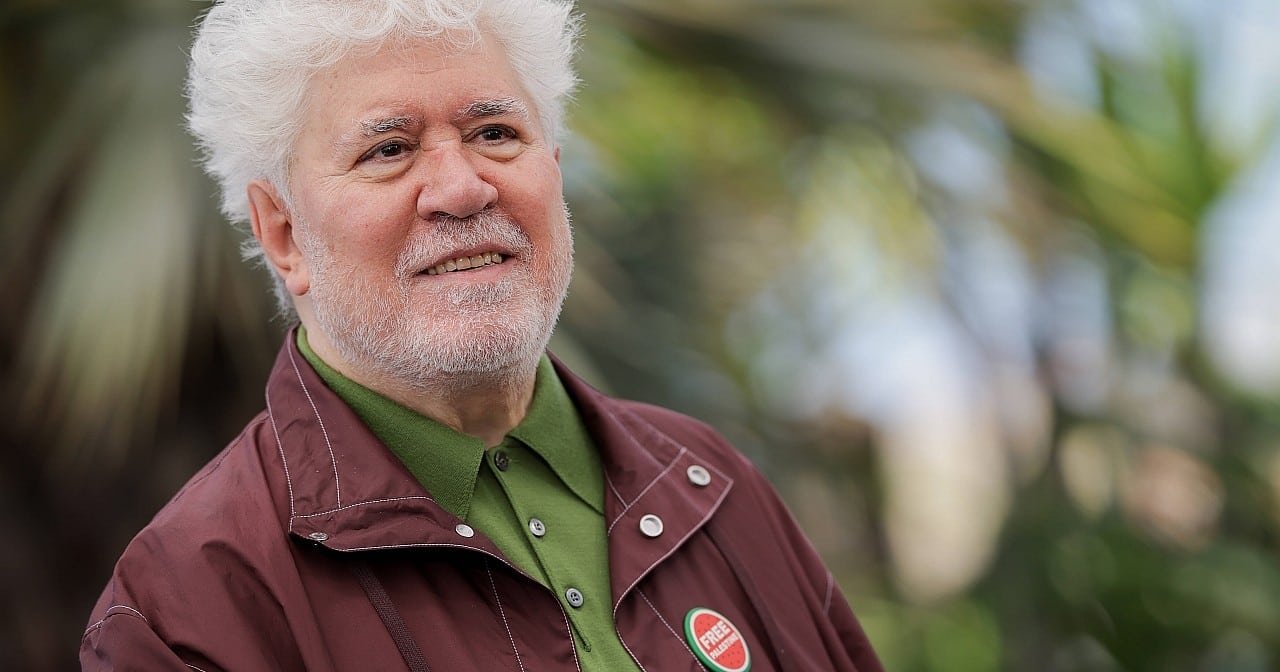
In Cannes, the moment has arrived for early stock-taking. What are the big trends in this competition, what signals for cinema emerge from the Croisette — and, above all, is this a good festival year?
After the majority of the 22 works in the running for the Palme d’Or has premiered, one thing is clear: many films are indeed worth seeing, some are elegantly staged, almost all are superbly acted — truly standout moments, however, remain extraordinarily scarce this year.
In light of current political and social challenges, technological upheavals, and the general sense of overwhelm, Cannes this year feels oddly self-satisfied. Instead of sharp contemporary diagnoses, we’re often confronted with hermetic, self-referential storytelling that circles around itself or around the crises of its own creators.
The Eternal Crisis of the Artist: “Bitter Fest”
Cinema as navel-gazing, alas, also applies to Pedro Almodóvar’s new film “Bitter Fest.” After “Pain and Glory,” the Spanish elder statesman returns once again to autobiographically tinged ground and tells of filmmakers who turn their friends, partners, and traumas into art until it’s not entirely clear where life ends and self-mythology begins.
At the center is initially Elsa (Bárbara Lennie), an exhausted “cult” director with psychosomatic migraines, a lucrative marketing gig, and a handsome younger partner (Patrick Criado) who is really a firefighter and sometimes works as a stripper.
From this, Almodóvar crafts a multi-layered meta-narrative about an older director (Leonardo Sbaraglia) who is, in turn, writing this story—and who becomes entangled in a series of conflicts that orbit around whether he is exploiting the lives of the people around him.
Direct link | In theaters from July 30, 2026: German trailer for “Bitter Fest”
All of this carries the unmistakable Almodóvarian charm: scenes unfold with blazing colors, drenched in melodramatic longing and light-footed humor — a telenovela-esque exagération colliding with elegant artificiality. Yet this time, “Bitter Fest” surprisingly offers little that’s genuinely compelling about art, pain, and inspiration.
Perhaps the film’s most significant flaw is that its small formal games and reflections on creativity feel already weighty enough to stand as a substantial competition entry, which they do not quite justify.
“Léa Forever” and Other Paths to Healing: “Another Day”
By contrast, “Another Day” (original title: “Garance”) from French director Jeanne Herry feels markedly more alive, and it stands out as one of the most empathetic and humanly engaging competition entries this year.
Over several years, the film follows actress Garance (Adèle Exarchopoulos), who, despite years of alcohol dependency, manages daily life with astonishing routine — yet gradually loses hold of her own life.
Jeanne Herry is less interested in the classic crashes of addiction drama than in the quiet mechanics of denial: the excuses when she almost misses a show, and the shame after blackouts that leads to more drinking.
“Another Day” is almost programmatic in its title: as Garance drifts between theater rehearsals, bars, and clubs toward the next drink, whole years slip by around her, relationships end, new friendships form, jobs vanish, and she moves into new apartments — often perceiving it all through a veil.
The real emotional center emerges through an unexpectedly tender relationship with the reserved set designer Pauline (Sara Giraudeau), who meets Garance with nearly radical patience. Pauline does not seek to save or control Garance — and that becomes a kind of stability that may be the most essential prerequisite for healing.
Coinciding with this healing motif, one of Cannes’ loveliest moments in recent days also happened around lead actress Adèle Exarchopoulos. The actress, who shared the screen with Léa Seydoux in the Palme d’Or winner “Blue Is the Warmest Colour” (2013) and whose breakout was overshadowed by reports of difficult filming and the post-premiere press conference, arrived on the Croisette wearing a T-shirt bearing Seydoux’s face with the inscription “Léa Forever.”
Later, at the premiere of “Another Day,” the two actresses shared a long embrace. Léa Seydoux is this year’s Cannes regular as well, appearing in two competition films: Marie Kreutzer’s “Gentle Monster” and Arthur Harari’s “The Unknown.”
The queer community needs a strong journalistic voice — especially now! Do your part to support the work of TheColu.mn.
The Queer Crowd-Pleaser That Doed Cannes Some Good: “Club Kid”
The standout queer highlight of the recent days, however, was “Club Kid,” a film that wasn’t in competition but appeared in the Un Certain Regard sidebar. Jordan Firstman’s tender debut unfolds in queer New York and, as the title suggests, centers on a party promoter who spends a decade of his life in a perpetual haze of drugs, sex, and nightclub revelry.
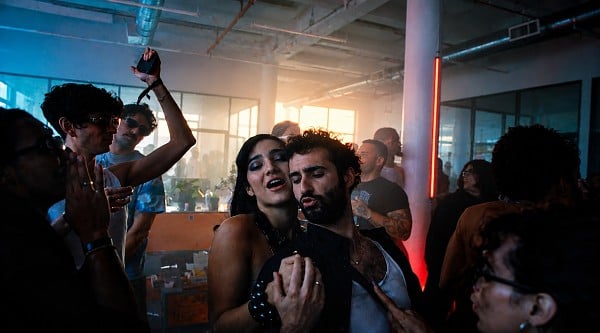
Not every development lands perfectly—some twists feel a touch too conveniently contrived—but the film exudes such warmth and harbors a hopeful core that it’s hard to resist its charm. And because Firstman roots his queer characters in humanity rather than tragedy, “Club Kid” radiates a warmth that many competition films have lacked. It’s no surprise the film has become one of the festival’s breakout sellers: in a bidding war involving Netflix, Mubi, and Searchlight, A24 secured worldwide rights.
In the remaining days, the potential crown jewels of the competition still to come are Ira Sachs’ “The Man I Love,” Lukas Dhont’s “Coward,” and “La Bola Negra,” all of which provoke curiosity. Who knows — perhaps these very films will rescue what has thus far been a rather restrained festival year from its own quiet, measured pace.