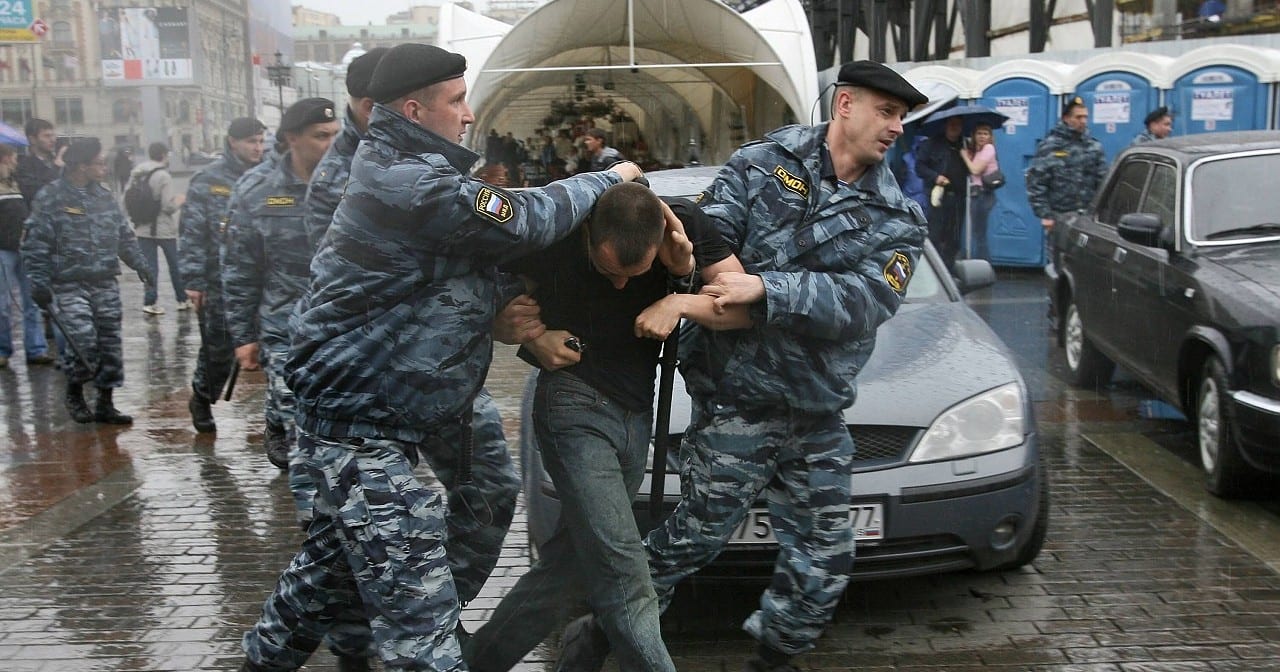
Civil society in Kempten in the Allgäu region is taking a stand against a demand by the AfD that demonstrations in support of queer rights should be banned in the future. Several politicians from across the democratic spectrum spoke out against such a restriction on the right to protest, including Mayor Christian Schoch of the Free Voters, a group not exactly known for being queer-friendly.
The trigger was remarks by the newly elected AfD city councilor Thomas Bernetzeder in the “Allgäuer Zeitung” (paywalled) last month. The 35-year-old reportedly called for bans on CSDs, supposedly for youth protection. He argued that for the sake of youth it is important that “they can grow up unimpeded by the state, schools and non-governmental organizations,” claimed the representative of the right-wing party. This included, he said, preventing events like the CSD on public squares. He added: “I don’t want to deprive anyone of anything. But such events should not be held on public streets, only in private spaces.”
With that, Bernetzeder repeats the demand for a “gay propaganda” ban modeled on Russia or Hungary. The AfD’s state parliament faction in Saxony has already put forward similar demands (TheColu.mn reported).
Kempten fights back
The group “Open Anti-Fascist Meeting Kempten” (OAT) promptly organized a film shoot to advocate for freedom of assembly and for queer people’s rights. “What Bernetzeder is demanding runs contrary to the Basic Law. The right to assemble is for everyone, not just for a single ideology,” the group said.
In the video, several city councilors, such as Sophia Wirth-Klauser (SPD), Lea Gläßer (Die Linke), and Kai Nitsche (Volt), express opposition to restricting the right to demonstrate. Mayor Schoch commented on the short video: “Completely uncontroversial and beyond doubt! The CSD is always welcome in Kempten.”
View this post on Instagram
Instagram
|
Against the Allgäuer Zeitung Bernetzeder defended his ban fantasies. “In assembly halls, behind closed doors, queer people could still demonstrate for their rights, but not in public.”
However, such demonstration bans would be hard to enforce under the Basic Law because of sexual orientation. It explicitly states: “The law gives all Germans the right to assemble peacefully and without weapons. This fundamental right enables citizens to participate actively in the political opinion- and will-formation process.”
Nevertheless, discrimination against queer people is not expressly prohibited in the Basic Law to date. Proposals to amend the constitution are supported by the SPD, the Greens, and the Left; the Union remains undecided about whether explicit protection for queer people is necessary (TheColu.mn reported).
LGBTI organizations have been calling for such reforms for decades (TheColu.mn reported). They point to a 1957 ruling by the Federal Constitutional Court, when the judges upheld the Nazi-era Paragraph 175 as constitutional.