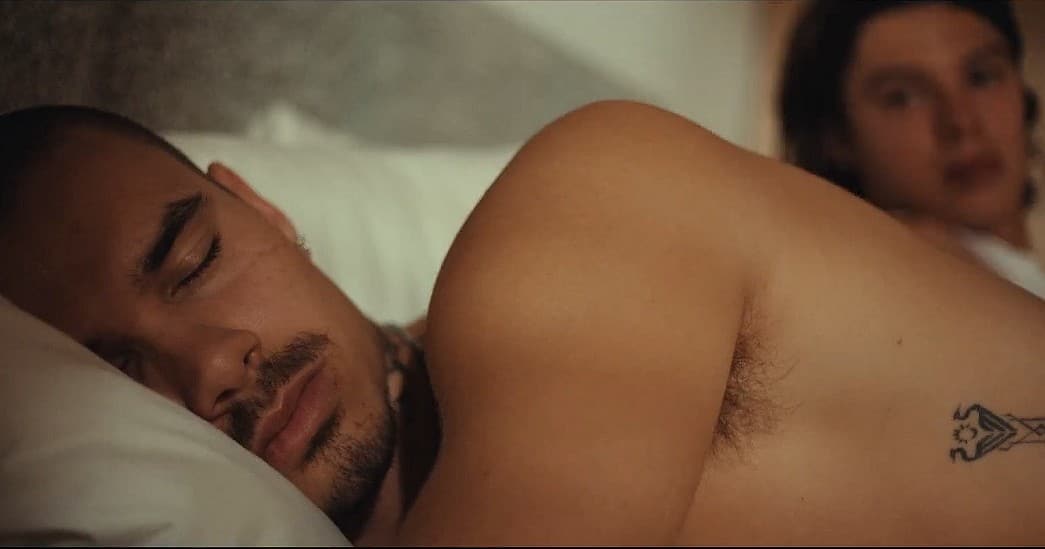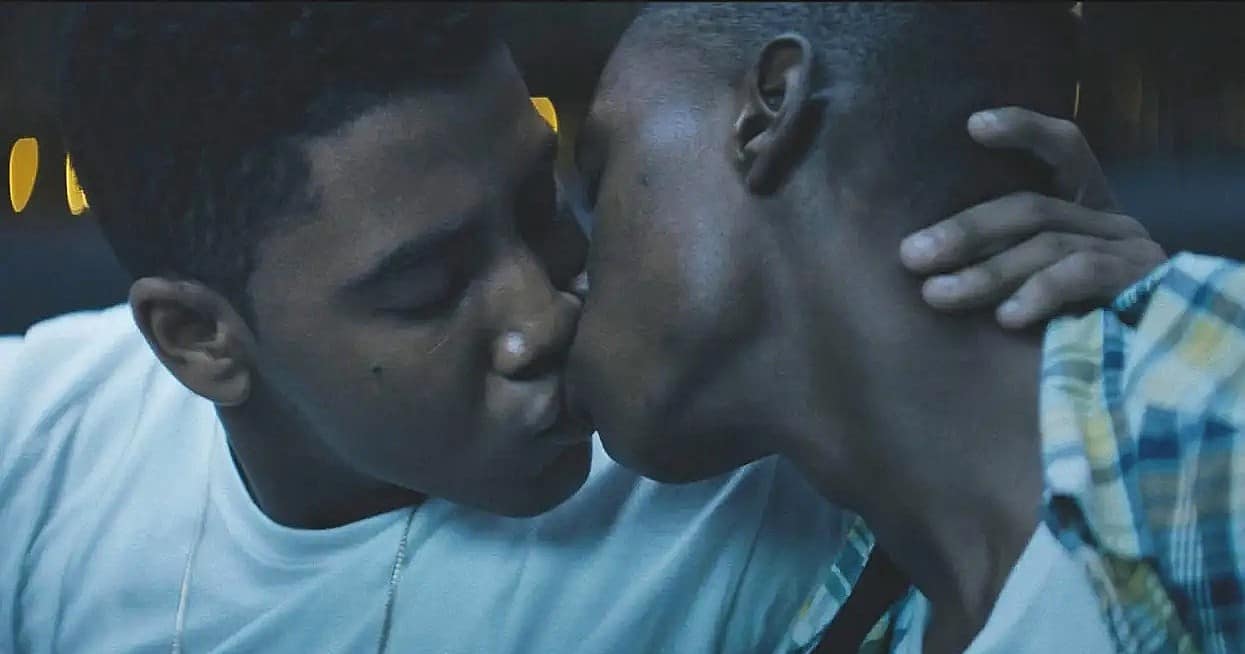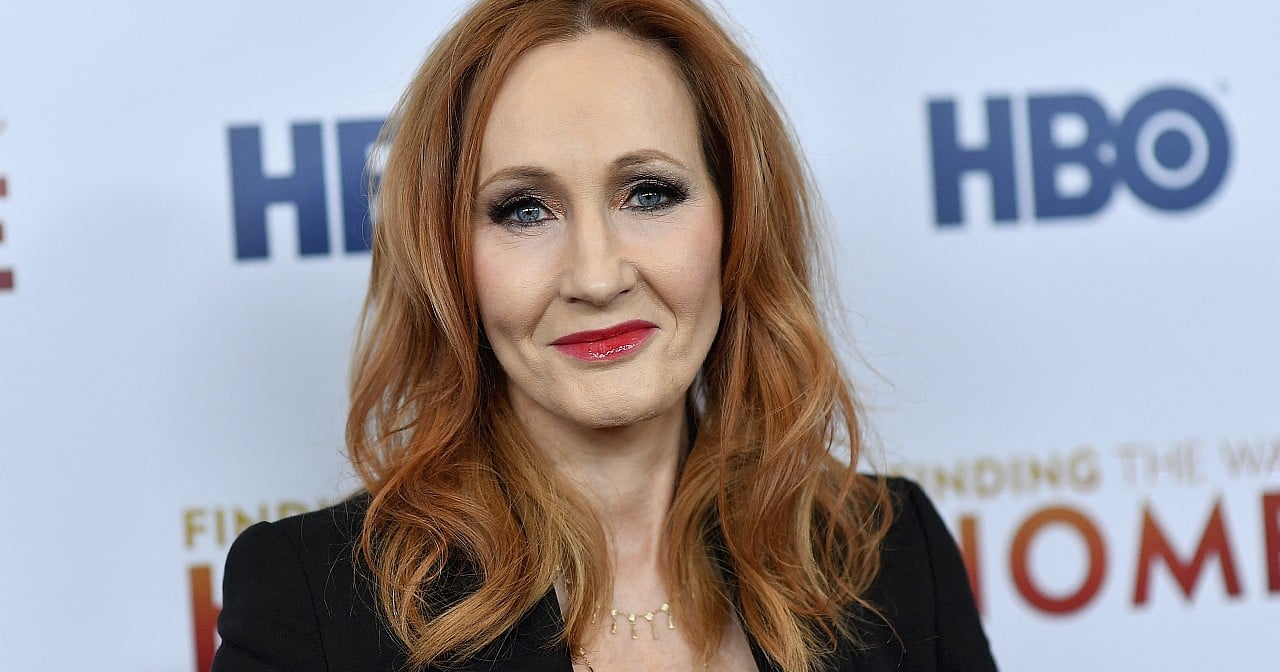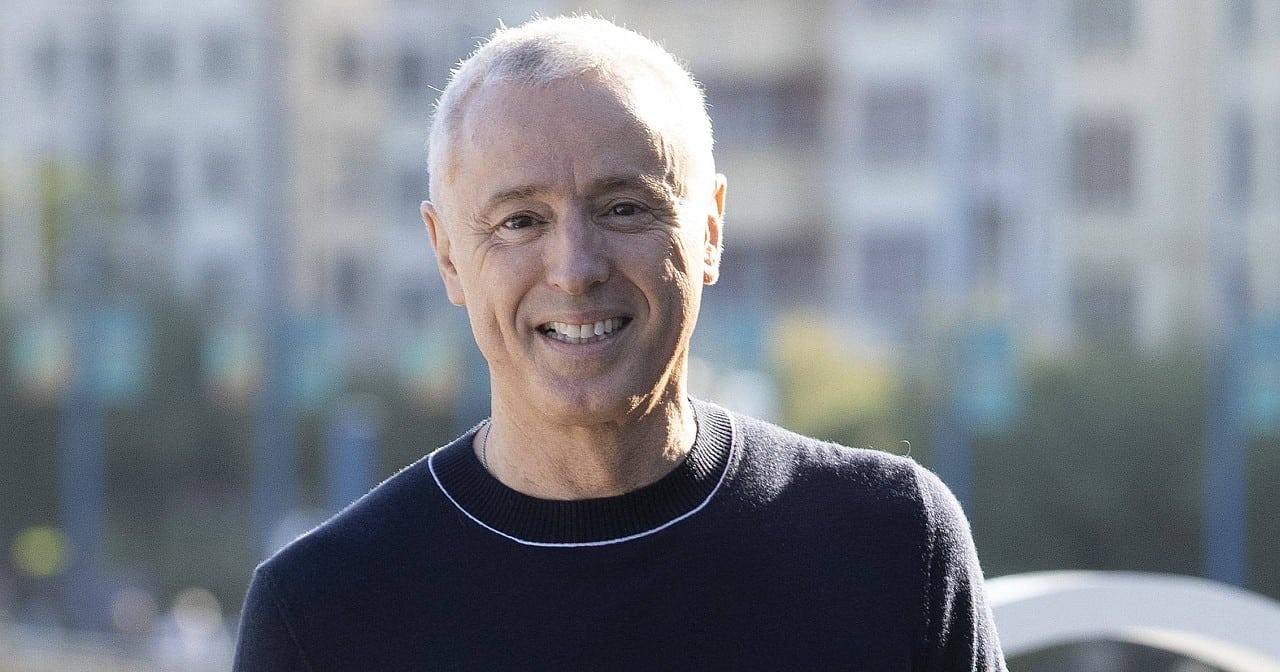
Robin Campillo, born in 1962, has long been one of the leading directors in queer French cinema. His film “Eastern Boys — End Station Paris” was awarded at the Venice Film Festival in 2013 and received multiple César nominations. Four years later, “120 BPM” drew attention at Cannes. In that film, Campillo drew on his experiences as an AIDS activist in the 1990s; he received the Grand Prix of the Jury at Cannes and the César for Best Film.
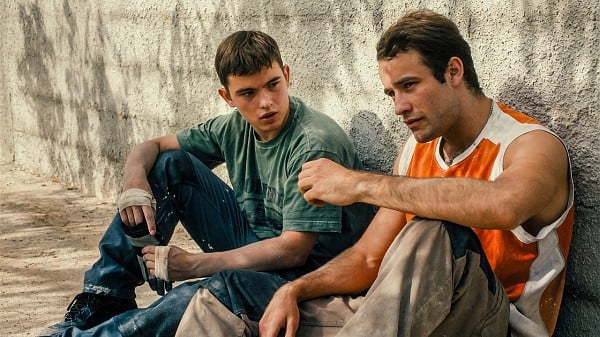
In his new drama “Enzo,” which screened during the March Queer Film Night and opens in theaters on April 2, he now tells the story of a teenager who, to the astonishment of his wealthy parents, begins working as a construction mason and there develops feelings for his Ukrainian coworker Vlad (film review by Fabian Schäfer). We met Campillo in Cannes last year for an interview.
Mr. Campillo, your new film “Enzo” was originally a project of your close friend Laurent Cantet, who unfortunately passed away, so you took over directing. Can you share a bit more about the film’s sad origin story?
Laurent, with whom I had been friends for a long time and who had often collaborated with me in writing and editing his films, had carried the idea for “Enzo” for quite a while. Four years ago he finally sat down and, together with our friend Gilles Marchand, drafted an initial twenty-page screenplay. I was thrilled and encouraged him to make the film. When he fell ill with cancer, we decided to revive our old partnership or even intensify it. I contributed to the script, helped with casting and preparation, wanted to be on set, and later in editing as well. Just to ensure someone was always there if Laurent wasn’t feeling well or was tired. That arrangement was also a condition of the insurance, to prevent a production stoppage. Yet in the end he died much sooner than feared.
The queer community needs a strong journalistic voice — especially now! Contribute to support TheColu.mn’s work.
Rather than mourning, you got to work…
Bringing Laurent’s story to life was, of course, a form of grieving. Besides, it would have broken my heart to let this project die after him. Just the thought of having to cancel the actors. Especially the two inexperienced amateur leads who were so excited to start filming. I would have considered it a catastrophe to abandon “Enzo” and, therefore, Laurent’s legacy.
Does the film look different now that it’s directed by a gay man like you, compared with how it might have looked if your straight friend Cantet had helmed it?
It was always clear that I wouldn’t try to imitate Cantet’s style or anything like that. Of course I claimed the story he originally conceived. I’m not sure how much that relates to the fact that my sexual orientation is different from his. If you watch his short film Jeu de plage, you’ll see how adept he was at staging sensuality and desire beyond a heterosexual gaze.
How easy do you find it to stage desire? Especially in a story like “Enzo,” which, compared to your film “120 BPM,” isn’t sexually explicit?
I simply focused a lot on placing the audience inside the thoughts and experiences of our 16-year-old protagonist. The lead actor, a young heterosexual swimmer named Eloy Pohu, had no reservations, which helped a lot. Just as the collaboration with our Intimacy Coordinator helped. Ultimately, the most important things were the looks and the small moments: the sight of construction workers with bare chests, or a moment when a hand first touches another. What could be more sensual? Also, it’s a misconception that lust and sensuality are easier to convey through explicit sex scenes. That was the case with “120 BPM” in a different way, because I first had to strip the actors of all the posed poses and positions they had learned from modern porn, which would have been utterly foreign to young gay men’s everyday encounters in the early ’90s.
Direct link | Official German trailer for the film
|
Is it true that you and Laurent Cantet disagreed about the title character’s sexual identity?
That’s correct. Laurent saw Enzo as a modern young man who is fluid and follows his desires, regardless of gender. I, however, wondered whether he is more in search of his identity and might discover that he is gay. But we agreed that the story isn’t about a coming-out. For Enzo’s family, queerness isn’t a problem so much as the fact that he is still a minor. Ultimately, my conversations with Laurent on this topic were a perfect example that film characters really have a life of their own, and that even we who bring them to life don’t always know or fully understand what’s going on inside them.
Enzo. Drama. France, Belgium, Italy 2025. Director: Robin Campillo. Cast: Eloy Pohu, Pierfrancesco Favino, Élodie Bouchez, Maksym Slivinskyi, Nathan Japy, Vladyslav Holyk, Malou Khebizi, Philippe Petit. Running time: 102 minutes. Language: French-Ukrainian original version with German subtitles. Rating: FSK 16. Distributor: Salzgeber. Theatrical release: April 2, 2026


Enzo
8 Images