In Turkey, prosecutions against queer activists and their supporters are on the rise. On Wednesday, the first day of hearings took place before a criminal court in Izmir against eleven individuals accused of distributing “obscene” materials and, as a related crime, violating the associations statute. They face up to three years in prison.
The defendants were former members of the board and the supervisory board of the Genç LGBTI+ Association, a group for queer youth. They are charged with previously distributing several illustrations on Facebook and Instagram that depicted kissing figures, including three with partial nudity and a drawing showing four people together.
In a related case, on December 11, 2025, a civil court of first instance ruled that five of the images published between 2019 and 2022 were “obscene” and “incited and induced” people in society to engage in lesbian, gay, bisexual, transgender, or transvestite or transsexual behavior. The court held that the association did not align with “the moral values of society” or with Article 41 of the constitution, which establishes the family as the foundation of Turkish society. Accordingly, the court ordered the dissolution of the association. The association appealed.
“Our Existence Put on Trial”
“I stand here proudly as part of the LGBTQ+ movement, continuing its fight without committing a crime,” one of the defendants said, according to kaos.gl, at the first hearing where the defense spoke. “I believe this is a symbolic trial against the LGBTQ+ movement. Here, it is not our actions that are being judged, but our very existence.”
One attorney added that checks on queer organizations by the interior ministry—seen as targeted harassment—had led to the case, even though the local prosecutor’s office, on the complaint, did not view the illustrations as criminal. Amnesty International had issued an Urgent Action on the case, describing the “absurd charges” as “part of a coordinated strategy to harass LGBTQ+ organizations and their supporters.” The trial is set to resume on October 14.
Gay Singer Faces Prison Time
Recently, prosecutions against queer activists in Turkey have intensified, with more people being charged for participating in banned Pride demonstrations. In Ankara, the chair of the organization 17 May was also accused of alleged violations of the associations law and morality for a book about intersex people and for an exhibition catalog, facing up to three years in prison. As part of a broader crackdown on the opposition, the editor-in-chief of the queer magazine kaos.gl was briefly detained and is not allowed to leave the country during the ongoing case (TheColu.mn reported).
The case against the popular gay singer Mabel Matiz drew major headlines: last September, the Ministry of Family placed his song “Perperisan” on an incipient index, while the Interior Ministry announced investigations into alleged violations of Article 226 of the Turkish Penal Code, which criminalizes the distribution or publication of “obscene” content (TheColu.mn reported). At the end of March, the second hearing took place, with the next date scheduled for April 30. The indictment calls for a prison term of six months to three years.
Direct link
|
Threat of an Antiquated Legislation Package
The mounting prosecutions may be only the beginning: the government is once again pursuing a paused legislative package that could criminalize queer people (TheColu.mn reported). Those performing same-sex engagement or wedding ceremonies could be punished with roughly 18 months to four years in prison. A very openly worded “propaganda” law could be used directly against queer people, especially trans individuals: anyone who engages in “views and behaviors” that conflict with the gender assigned at birth and with public morality, or that “encourages, praises, or promotes” them, could be sentenced to one to three years in prison. Further regulations would also make legal and medical transitions more difficult.
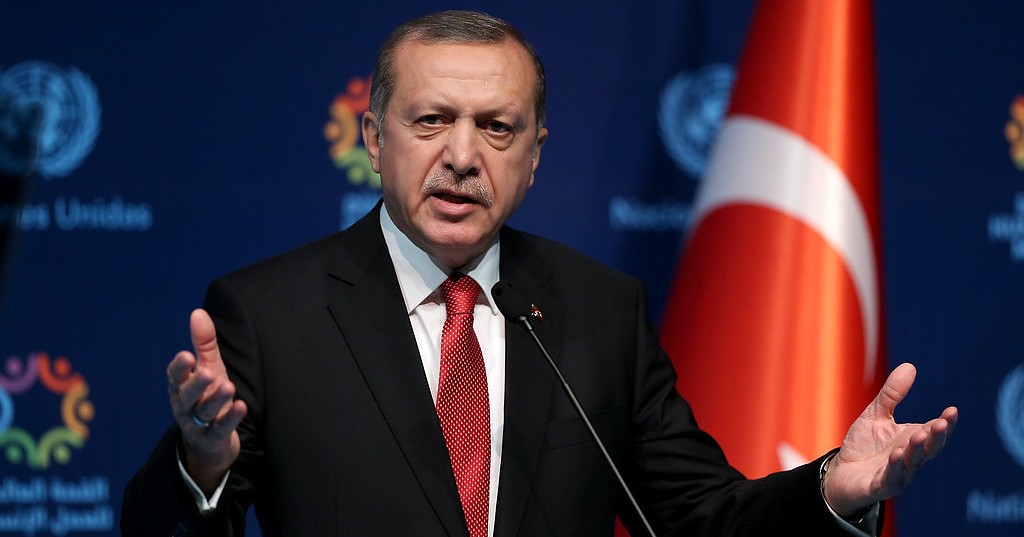
President Recep Tayyip Erdoğan framed this proposal as part of the so-called “Year of the Family,” a rhetoric he has since stretched into a “decade.” For about a decade, the president has increasingly leaned into anti-queer sentiment. In 2015, the once widely attended Istanbul Pride was banned for the first time. The ban, repeatedly imposed by governors appointed by the central government, has often been enforced with heavy police deployment, arrests, water cannons, and rubber bullets against the resilient community. Prides in other cities, at universities, and queer cultural events have been banned on multiple occasions. (cw)