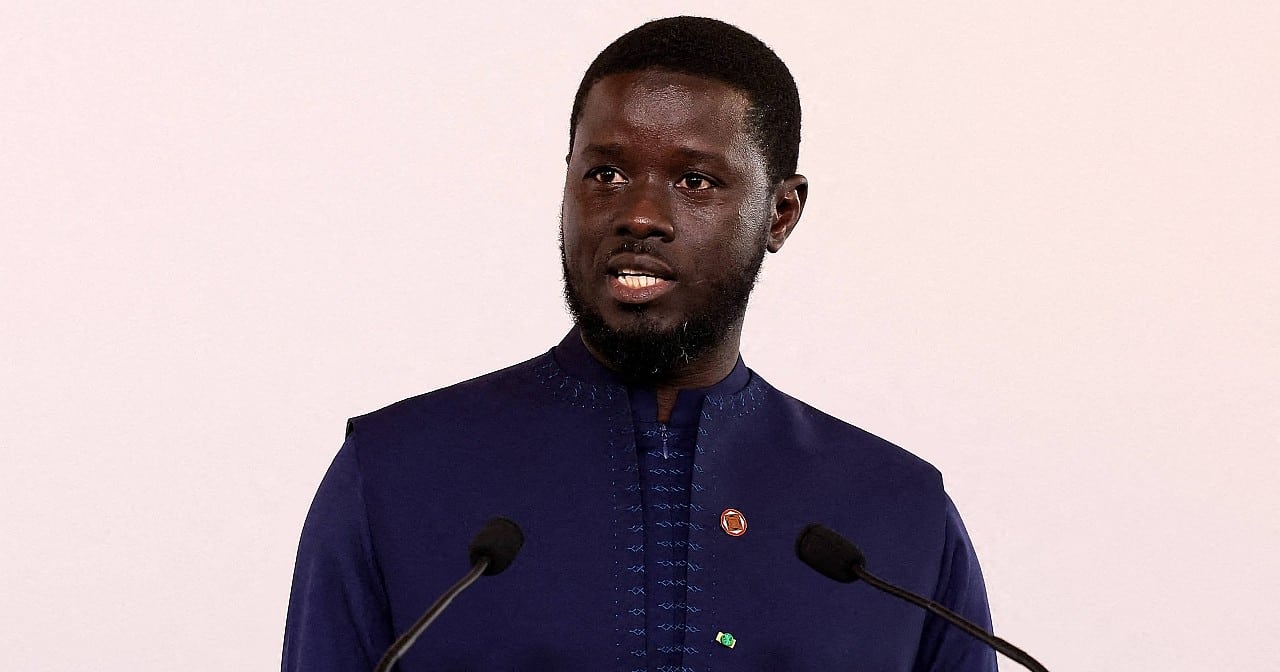
In West Africa, Senegal has enacted a law that imposes significantly harsher penalties for homosexuality. As published in the Official Journal on Tuesday, President Bassirou Diomaye Faye signed the law, which doubles the maximum punishment for same-sex relationships. It provides a prison term of five to ten years for homosexual couples engaging in “unnatural acts.” Previously the penalty ranged from one to five years in prison.
Under the new provision, those convicted of allegedly promoting or funding same-sex relationships could face three to seven years behind bars.
UN High Commissioner for Human Rights: “deeply troubling”
The law was condemned by a number of human rights organizations. UN High Commissioner for Human Rights Volker Türk described Senegal’s tightened legal regime as “deeply troubling” and “in violation of the inalienable human rights.”
Homosexuality and bisexuality are highly stigmatized in the predominantly Muslim country. In surveys, more than 90 percent of respondents have voiced opposition to same-sex relationships.
The issue has gained renewed public salience after several investigations in recent weeks. In early February, security forces arrested about a dozen men, some of them prominent, on suspicion of homosexual relations. The names of those arrested are often made public, and social media has turned into a pastime of outing others. Shortly thereafter, police reported the dismantling of an international child-abuse network in Dakar. In parts of the public sphere and on social media, both cases were frequently conflated.
Senegal is a “safe country of origin”
The West African coastal nation, home to a little over 18 million people, is regarded as one of the most stable democracies on the continent. President Bassirou Diomaye Faye and Prime Minister Ousmane Sonko rose to power two years ago with a broad mandate for political renewal and economic reforms. Pressure on the government has since grown, driven by high national debt and student protests, during which a student died.
Despite decades of persecution of homosexuals, Germany has still granted Senegal the designation of a “safe country of origin.” Refugees are therefore able to be returned to the country with relatively little screening. In France, however, Senegal was removed from the list of safe origin states, in part due to concerns about the persecution of homosexual people.
Worldwide, about 65 countries criminalize same-sex relationships, with more than half of them located in Africa. In many African nations, recognizing the rights of queer people is framed as a harmful import from the West. The relevant criminal laws, however, often trace back to the colonial era. (cw/AFP)