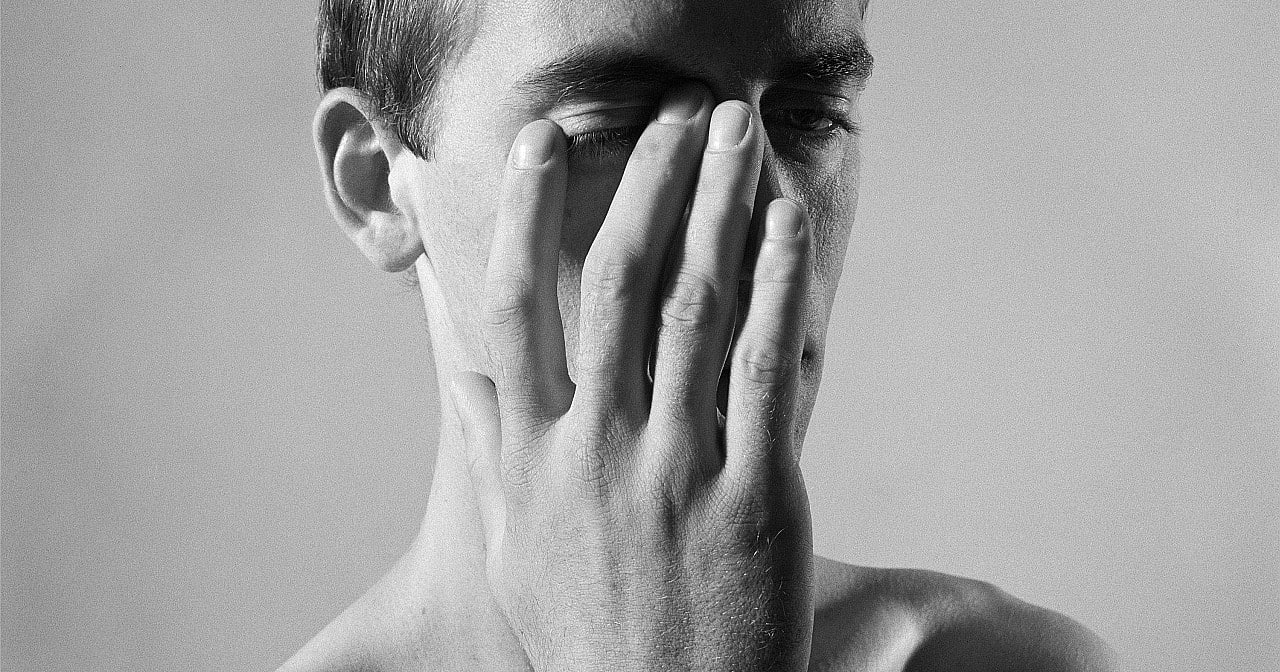
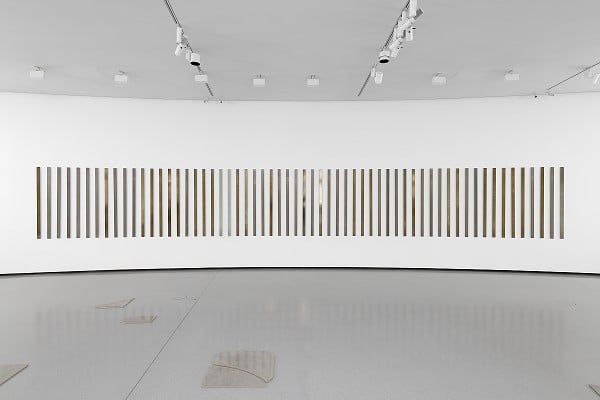
So much Peter Hujar has never been shown before—from Bonn to Berlin. The Bundeskunsthalle and the Martin Gropius Bau present, in a joint endeavor, two large-scale exhibitions devoted to Peter Hujar’s photography. In Berlin, Hujar’s photographs are paired with works by American artist Liz Deschenes under the ambiguous, hard-to-translate title “Persistance of Vision.” There, minimalist sculptures, monochrome color and gray mirror surfaces meet black-and-white photographs and imagery defined by concreteness and intensity. Abstract in dialogue with the concrete.
Now 120 photographs are on display in Berlin, and—as word has it—many of them are being shown here for the first time. The hanging is strictly grid-like and laid out in generous, clear structures—either in series or in blocks of images—ensuring easy access to the photographs and also, in some galleries, echoing the geometric rigor of Deschenes’ sculptural works so that visitors can engage with these interplays. Yet the presentation also includes a historical nod to the last, life-time exhibition organized in 1986 at the Gracie Mansion Gallery in New York.
Almost all familiar faces — and yet visitors still like to come back
To a queer audience, Hujar hardly needs introduction or elaboration as a photographer. His nudes and the often slack, sometimes aroused bodies, the casual display of bare skin, the slender bodies perched on chairs or woven together in audacious embraces—these are all familiar. Aside from a lot of déjà vu, there isn’t much new to gain. Perhaps the photos taken on the New York piers—places of gay cruising—offer the only new angle. Almost all familiar faces—and yet visitors still like to come back.
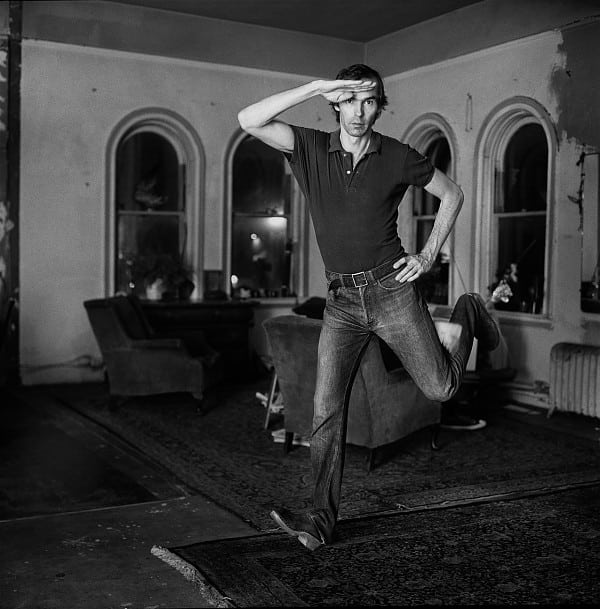
And of course we know his many portraits—the writer William S. Burroughs, Susan Sontag, the singer Peggy Lee, the painter and sculptor Paul Thek, the writer David Wojnarowicz, and many, many others. Not to mention that Hujar frequently also portrayed himself.
The queer community documented
In this way, Hujar captured New York City’s queer, intellectual, and artistic circles of the 1970s and 1980s. He also documented their losses as AIDS cast its horror across the community. That, too, is captured photographically (though less present in the Berlin show). Death and mortality drew the photographer long before that. His first photobook, published in 1976, is titled Life and Death and includes, among other things, images from the Capuchin tombs in Palermo with their disturbingly preserved mummies.
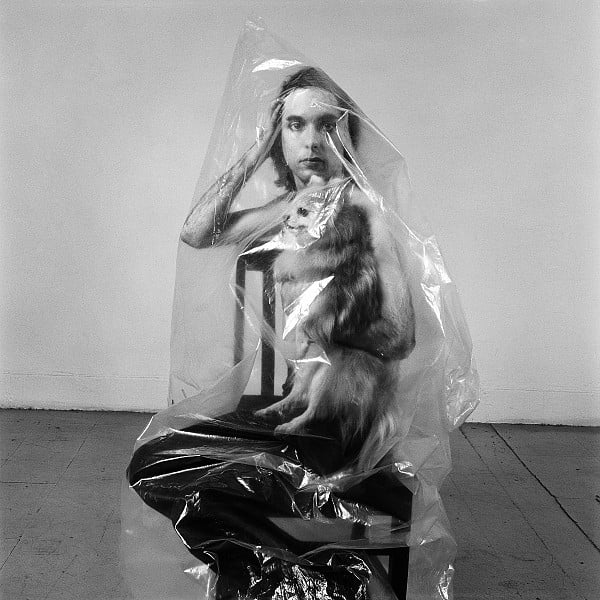
It took a long time for Hujar and his body of work to receive the recognition they deserve. In life, he stood largely in the shadow of Robert Mapplethorpe, whose markedly different aesthetic set his work apart. Mapplethorpe’s figures exuded a sexualized physicality, but, however explicit, they were packaged with a strangely sterile formal perfection. My sense is that Mapplethorpe’s floral photography occasionally reads more erotically than the sex scenes in his work. This is no accident. Mapplethorpe’s stark, steel-like forms contrast with Hujar’s emphasis on emotion. The intensity of Hujar’s relationships with his subjects is repeatedly evident in his photographs. Even if one cannot call his compositions broadly thrilling, they convey a palpable tension—felt, yet difficult to define—emanating from the imagery.
The photographer’s lesser-known tastes
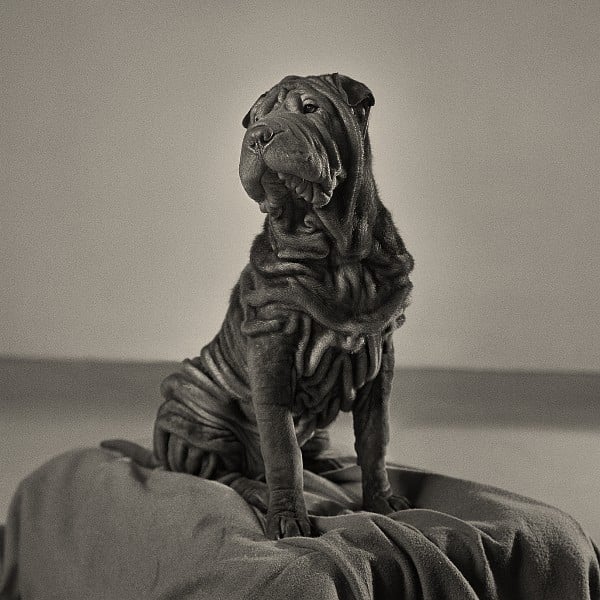
But beware: even though Hujar’s gay, queer world may feel familiar and intimate, it’s worth turning the lens toward the photographer’s lesser-known interests. The Berlin exhibition provides just that: early New York shots carrying a nearly mystical atmosphere or scenes by the Hudson River with their moving water. Even his animal photographs—sheep, cows, dogs—have a peculiar appeal in their own right.
What one might not see anymore is how long Hujar earned his living in fashion photography. When he finally quit that line of work, his life became financially precarious, marked by tough periods. Yet he remained a constant in New York’s nightlife and art scene. It’s worth noting that a masterclass with the great Richard Avedon in 1967 marked a turning point in his artistic career, helping to establish him as one of the era’s leading society photographers.
Interplays between abstraction and concreteness
And because I spoke earlier of the interplays between abstraction and concreteness, here’s a note not to miss: two rooms in particular are especially well-suited for noticing these relationships. Hujar’s Hudson River surface studies are presented in dialogue with Deschenes’ arched black Claude-Glass works, which, when viewed in passing, reflect changing images. In another room, the large gray-metallic, matte mirrors form a counterpoint to photographs of late-1970s New York by night—magical architectural giants and the glowing chasms between them.
Anyone who wants to meet a very versatile photographer—Peter Hujar—and, alongside him, Liz Deschenes, an idiosyncratic artist with a minimalist
aesthetic that teaches the sensibility of seeing, should absolutely consider this exhibition. It is highly recommended, and the venue itself is endlessly fascinating. The show runs through June 28, 2026, at the Martin Gropius Bau.