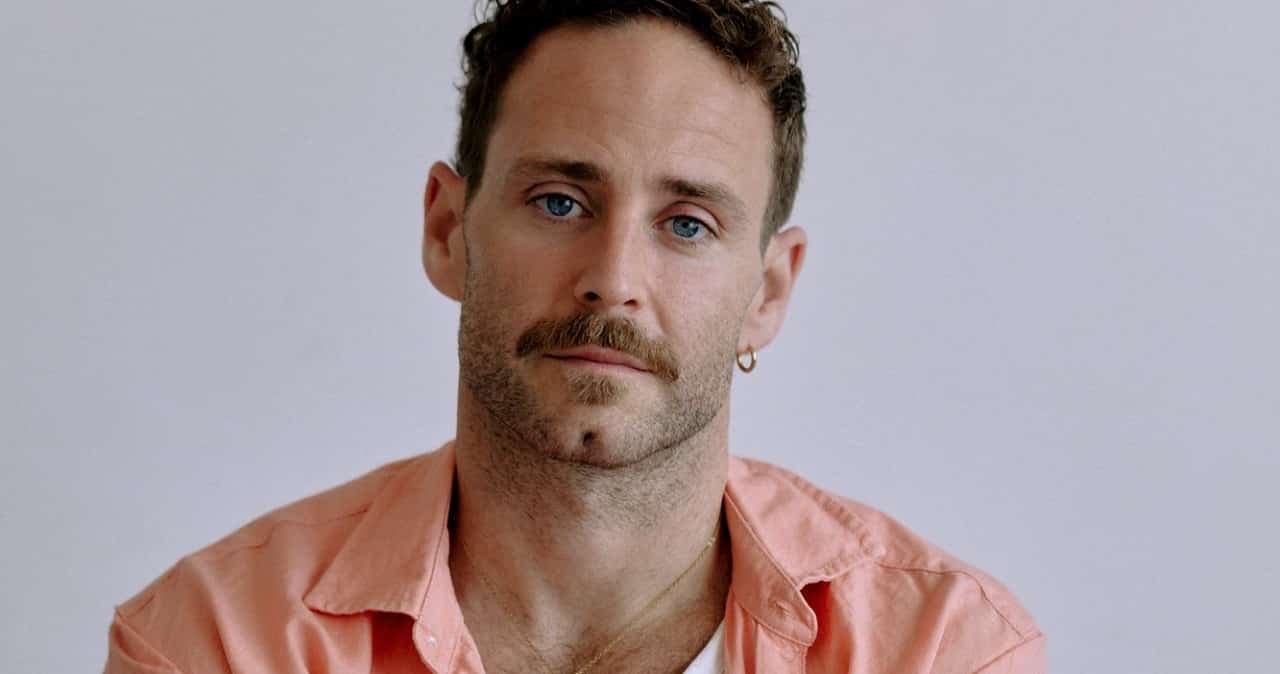
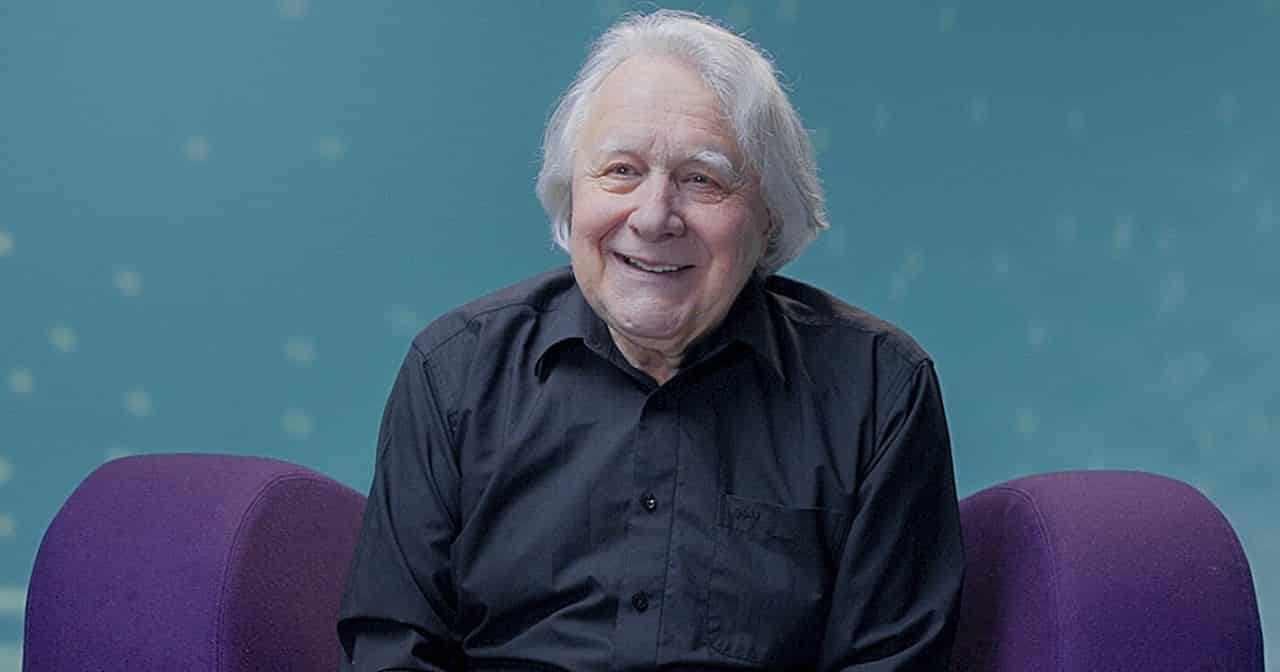
Robert Ulmer fled Munich in the late 1980s to Berlin’s gay scene, where he has been politically active ever since. He served, among other roles, as the spokesperson for the nationwide Basic Income network. As a member of The Left party, he is active in the state working group on queer issues and in the spokespersons’ council of the Federal Working Group (BAG) on Unconditional Basic Income.
The federal government says that abolishing citizen’s income is necessary to make Germany competitive again. Is Germany, with these decisions, now fit for the future?
The scapegoating of the poor was wrong and inhumane even under Chancellor Gerhard Schröder, and it does not become smarter through the unimaginative repetition by Linnemann and Merz. For a stable and successful economy, we need qualified and motivated skilled workers. Threatening people with poverty, driving them into a race to the bottom, and pushing them into lousy low-wage jobs: this path may be popular with authoritarian personalities, but economically it is certainly the wrong path.
The former Greens leader Ricarda Lang said in her last party conference speech that vilifying the poor is right-wing extremist ideology, similar to racism or queer-hostility. Has she exaggerated?
No, Ricarda Lang has not exaggerated. What I fault her for is hypocrisy, because it was the Greens who helped botch the Hartz reforms in the red-green Schröder government. Moreover, she is right: the AfD presents itself as a party for the little guy and at the same time wages hostility toward the poor.
The then-FDP chief Lindner said after the first Fridays-for-Future demonstrations that on important topics it’s better to listen to experts… On the topic of poverty and citizen’s income, the experts from the Scientific Advisory Board of the Federal Ministry of Agriculture under the Grand Coalition in Merkel’s last government concluded that the standard rates of the citizen’s income are not enough for people to eat properly, adequately, andhealthfully, and that their health is endangered as a result. In the BR show “Münchner Runde,” a social worker said shortly after the start of mega-inflation in food that doctors had already told her about malnutrition, because people simply cannot afford enough food. The UN Human Rights Council has, in recent years, dealt formally with the growing social injustice in Germany several times. Why doesn’t politics listen to the experts?
Lindner has not shown a particular interest in climate experts either. Even worse: Merz and the other powerful players in the world are pursuing an aggressively anti-ecological policy: After us the flood, or rather: beside us the flood. Because here in the North, the wealthiest ten percent of the world’s population, with their consumption habits, drive ecological catastrophes like climate change and species extinction. Yet the damage will fall most severely elsewhere, on the non-contributors, especially in the Global South. And when people in their countries can no longer grow food and head toward regions where they might at least survive, they will be turned away at the borders of the remaining prosperous regions—the United States and Fortress Europe. That is not fair.
On the topic of poverty in Germany: The standard rates were already too low before the inflation. A life in dignity was not possible—for example, being able to spontaneously invite someone for a coffee. Now food costs are twice as high as just a few years ago. The standard rates have only been raised minimally. Poverty has been significantly worsened. The policy is, of course, aware of the experts’ positions. In rich Germany, the elimination of poverty would be possible immediately. But there remains a hard resolve not to abolish poverty. Poverty is not a natural event but an inhumane decision for which the actors are responsible. These are the key people in politics as well as their equally anti-social voters who applaud this hardness. Poverty has always meant roughly ten years less of life expectancy: because you’re poor, you have to die earlier. With intensified poverty today, that won’t get better. The triumphant will to poverty kills people.
Is the issue of poverty perceived adequately among queers by the community as a whole and by those not affected in the scene? How does solidarity fare? Older gay men and queers who were still persecuted under Paragraph 175, or queers who have faced violence, exclusion, and trauma, often cannot participate in the labor market. CDU General Secretary Linnemann has repeatedly said he would like to do much more for sick, traumatized, and disabled unemployed people…
There is disappointment here: Queers and gay men are not more solidary than other contemporaries. In our milieus, all mindsets, beliefs, and worldviews are represented, up to the worst authoritarian bourgeois attitudes. The experience of exclusion and discrimination does not automatically make us better people. The club and party scene likes to present itself as inclusive and mindful, wants to break down walls and open borders, but if you can’t afford the club, the party, the festival, or the sauna, you’re simply left out. This difference is even more pronounced in homophobic regions elsewhere. When the public and families threaten a queer life with violence, indeed with death, homosexual experiences are possible mainly in very expensive niches.
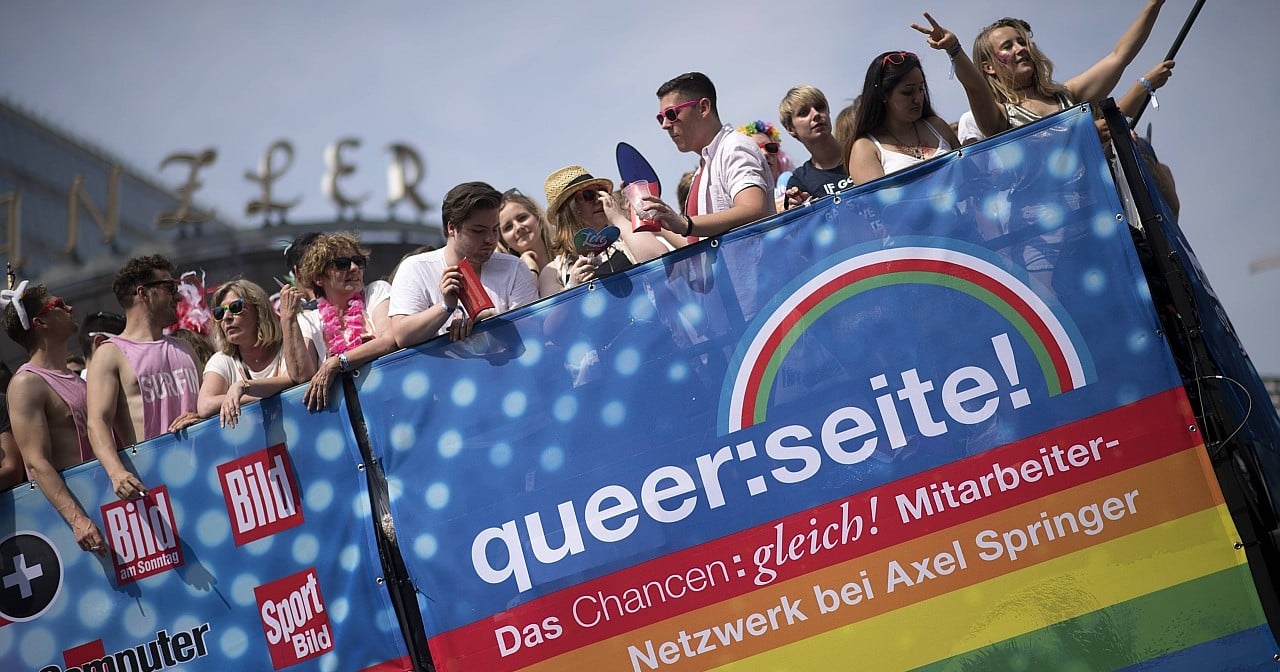
The various queer and feminist emancipation movements of the last decades are a beautiful and far from finished success story. They’re especially visible during the summer Pride months with the many CSD marches, carrying educational Rainbow-Flag symbolism of the diverse emancipation goals. What’s missing is a social flag: the scandalization of poverty-driven exclusion.
In what ways could queers be especially affected by the current decisions—for example, young queers in burdensome coming-of-age lifecycles, transgender people with trauma?
First of all: yes, exactly, that’s how it is. Queers are particularly affected, with young queers in burdensome coming-of-age life phases, and transgender people with trauma.
Imagine you’re in the middle of a dramatic life situation, everything changing, but you haven’t yet formed the friendships you need—friendships that would stabilize and empower you. And you’re far from ready to confidently and proudly come out with your issues. And now you’re being coerced by the job center into a job—“we’ll make you an offer…”—where you won’t like anyone at first, you won’t be able to trust anyone. And if you refuse, you’re sanctioned and lose your already meager citizen’s income. After all, you’re young and new and told not to make a fuss. This illustrates why anxiety disorders are on the rise.
And there’s this: queer people know how vital safe, affordable housing is. We experience disproportionately high levels of domestic violence and discrimination in public spaces. An affordable room, even better an affordable apartment in a big city, is essential. Trans people, in particular, face an increased risk of becoming homeless. Across the EU, 20 percent of queers have been homeless or faced housing insecurity at least once in their lives. This is not improving under the current anti-social government policy.
The Green Party leader Franziska Brandtner did say there’s more room to save on citizen’s income in administration. The administrative costs alone amount to seven billion euros per year, according to her. What’s your take?
Well, administration and bureaucracy often sound negative. I would look at it more closely. If there’s a legal entitlement to a social benefit, then the granting of that entitlement must be properly processed, managed, in other words.
But there’s some truth to it, and a lot of tedious and harassing bureaucracy could be eliminated: with an unconditional basic income, the so-called UBI. A legal entitlement would exist for every person, without means testing; there would be no obligation to work or provide any other service, and the amount would have to be high enough, guaranteed at a truly poverty-proof level. Otherwise the pressure to take lousy jobs would continue to exist in practice.
The Left has, since this year, also become broadly fashionable in society, like leather jackets since the penultimate autumn/winter season. In polls, your party even overtook the Greens for the first time since 2017, and a parliamentary reporter on Phoenix noted that since the big electoral victory, MPs from other parties have started paying closer attention to the Left’s speeches because they want to know what people are really concerned about. Do you think there’s more to come?
Without the leather jacket: as an activist for unconditional basic income, I’ve come out. A side note: those with more authoritarian mindsets tend to regard the basic income as something improper. Too queer? Maybe framing the BGE as a queer demand helps?
Now, about The Left. In 2022, three years ago, we held a member vote on unconditional basic income and won clearly: 56 to 38 percent. Only afterward did the Wagenknecht faction leave, who were united against UBI, and since 2024 the number of members has doubled due to new entrants, predominantly young people actively opposing the rightward shift. So the majority in favor of basic income likely now stands even more decisively than three years ago. The financing concept involves a significant redistribution from rich to poor, with the aim of eradicating poverty. That aligns well with The Left. Now it’s about energizing our party establishment a bit more for the BGE so we can really score points. It would be a clear stance against the unsocial policy of impoverishment. Unlike twenty years ago, basic income is now widely known and—despite Hamburg’s citizen-initiative setback—becoming increasingly popular.
So, to your question: yes, there is more to come from The Left if we make the basic income our demand. It is for everyone! It stands as a counter-model to the fascist exclusion trend. It would be wonderful if we could fully embody in the Berlin election campaign a “For All” spirit with full-hearted, collective commitment.