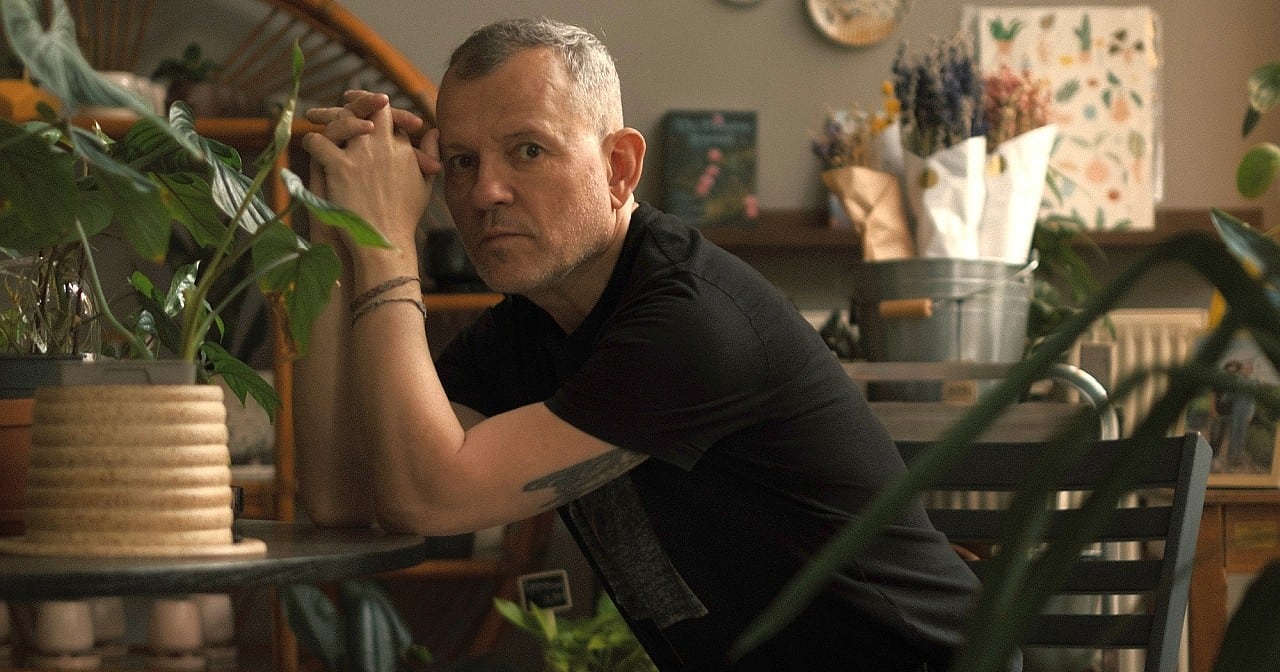
A Turkish writer travels back to his hometown of Istanbul to trace the homophobic murder of a young military officer. With “The Darkest Night of a Long Winter” (Amazon affiliate link) Barbaros Altuğ delivers an intense and concise novel that paints a dark picture of Turkey and its treatment of LGBTI rights (TheColu.mn’s book review).
We speak with Altuğ about the possibility of a fresh start, his own experiences with state violence, and the journalistic responsibility of queer newsrooms to make migrant LGBTI stories visible and keep them from being forgotten.
Warum wurde Thomas Manns Novelle “Der Tod in Venedig”, die im Roman ausführlich zitiert wird, zur Inspiration?
Because, in my view, there exists an unwritten, untold history of gay literature — not only in Germany but worldwide. Many classic authors carry gay undertones, even in Turkish literature. Thomas Mann obviously belongs to that circle.
He and his family lived during a time when the Nazis were in power. He likely wrestled with inner conflicts connected to that period. I love Thomas Mann and therefore wanted to read “Death in Venice” from a homosexual perspective — from my own perspective.
At the same time, I wanted to connect this with the theme I wanted to tackle: homophobia. Why can’t one accept one’s own homosexuality? Because one is confronted with homophobia in one’s own country, in one’s own society. I wanted to read the text with regard to homophobia in Turkey as well.
The protagonist Güneş lives in Berlin and tells the story from a diasporic perspective. How autobiographical is the novel for you?
Very much. The writer in the novel is in his fifties, living in exile, is homosexual, and has had past conflicts with his homeland. That basically mirrors my own experience.
And your experiences with the shifting between Berlin and Istanbul?
Yes. I had been thinking for years about writing this book. But it takes time to face oneself in the mirror and to write through a narrator who isn’t overly emotional.
We don’t get close to the main character — is that the narrative intention?
Yes, otherwise it would have simply become an autobiographical and very emotional novella. That’s not what I wanted, because to me this book is about homophobia. I had to write it now because homophobia is increasing not only in Turkey but worldwide. Just today I published a piece about it: yesterday, 42 people were arrested again (Editor’s note: other sources report 45 arrests). Seven transgender people are in prison after police raids — simply because they are trans.
I wanted to write the book now because it was urgent.
Were there real-life inspirations behind the murder case of the namesake Güneş and for the character Amir, the handsome one?
I read about this years ago in the news: a very young, attractive officer of the Turkish army disappeared. His family looked for clues about his whereabouts. When my friends and I read about it, we immediately discussed it — because we know that a homophobic murder could be behind it.
A week later the man was found dead. His face had been deformed with stones. Only then did we understand what had happened. His family never accepted it. They claimed there were rumors, but they weren’t true. That’s the basis for the character.
Amir, however, is not a real person. But I do know seriously endangered migrants in Germany. When I meet young Syrian migrants, they often start speaking Turkish with me. They tell me they waited in Turkey — for a visa or for other reasons. I know that they often carry stories of waiting and living in between.
You depict Istanbul as very dark in your book, yet the main character remains connected to the city. How would you describe this relationship?
When I was here earlier, sipping my first coffee, I exchanged WhatsApp messages with friends in Istanbul. One of them told me I wouldn’t recognize Istanbul today. He hardly leaves the house because the atmosphere feels so bleak. People can’t do or say anything. Everyone waits to be arrested. Even if they say something, their statements cannot appear freely in the press. They feel like they’re in a trap. The older folks especially have lost hope.
I don’t want to talk about a hopeless future, because Turkey is a good and very young country. To live, you need hope in your country. I hope something will change.
After 25 years of Erdoğan’s Islamist-fascist rule, the social foundations have been shaken. Much of what we achieved in 50 years for LGBTI rights has been lost. Even during the military coups, one could hardly have imagined what is happening today.
What I describe about Turkey corresponds to reality. This applies to women, leftists, and homosexuals alike. Equality appears to be accepted only for heterosexual Muslim men. They are regarded in society as superior.
I also aim to criticize the facade — at the beginning and the end of the novel. On the surface everything seems fine, but underneath it rots away.
The main character says at the end that Berlin feels more like a home. Why?
If you’re homosexual, Berlin gives you hope despite everything. And even if the political system here no longer works as it used to, it still functions. You can vote and cast your ballot. The person you vote for won’t be jailed. If you vote for someone like Elif Eralp, she won’t be arrested because there are democratic forces and institutions that still function.
There are things we can still rely on: the system is established, and nobody wants to fundamentally change it.
A few years ago, there was talk of changing Turkish laws to explicitly criminalize homosexuality. There were many reactions from the EU and others, so the government eventually said it wouldn’t do that.
Today, however, they implement this policy without a corresponding law. That means there are practically no legal boundaries left. They can do whatever they want.
Because of the political situation in Europe and worldwide, European countries had to work with Erdoğan. We see this. Even German politicians travel to Turkey and say nothing about Erdoğan. That means all of these conditions have been accepted.
Toward the end of the novel you link the earthquake in Turkey to the possibility of a fresh start. Do you think Istanbul and Turkey can undergo such a new beginning, even though so much is described as decaying?
I want to keep believing. In Turkey’s history there are moments when everything suddenly changes. So I hope there will be such a moment this time as well.
The people are very unhappy and have not trusted Erdoğan and his government for years. In the beginning they trusted him and voted for him. Today he no longer even receives the votes he needs by democratic means. That means something is bound to change.
The people in Turkey are known for sparking revolutions. Nearly 100 years ago, after the 1920 revolution, they founded the Turkish Republic. At that time the country was among the most progressive in Europe. Women gained equal rights earlier there than in many European countries. The constitution was ahead of its time. I believe the people can do it again.
And when I say the people of Turkey, I’m not just talking about ethnic Turks. We must accord equal rights to everyone. I even believe that minorities in Turkey form the majority. When you consider LGBTI people, Kurds, Armenians, Jews, women, and leftists together, you can see how large this segment of society is. Those who belong to the opposition end up in prison. All opposition mayors who won against Erdoğan are now behind bars.
But we are more than 50 percent of the Turkish population. That means we can win this struggle.
The act of storytelling and memory gives both you as the author and the main character hope. How did you experience giving a voice to the murdered and disappeared and preserving their stories from oblivion as you wrote?
When I read from the book in front of an audience, I become very emotional. It’s hard to recall how friends of mine were murdered. Facing one’s own past, you cannot stay numb, because much of this book has happened to me personally.
When I moved to Germany, in the early years I woke up often at night, walked to the door, and felt as if someone was standing in front of it — the police or others trying to come in. That actually happened to me in Turkey. I was accused just for being homosexual. I was attacked and jailed. It’s not easy to talk about such things.
The writing process is different because you write alone. You can cry and become emotional. Moreover, you don’t publish a text immediately after writing. There are editors, readers, a publisher, and a translation. This allows you to develop a certain distance from the text over time. It becomes something that extends beyond your own writing.
Perhaps it is also about grief and solidarity: about sharing these feelings with others rather than staying alone with them. If readers engage with your book and share in your story, personal grief and trauma can become something collective. You don’t have to stay alone with it anymore.
It’s important to connect with others through literature and writing. As a child, I wasn’t alone only through literature. I read, and I found myself in it. In Turkey no one handed me James Baldwin — though he did live there for a time — and it was never discussed that he was gay.
I found myself in the library. Thanks to literature, I grew as a homosexual. To avoid feeling alone, you have to share your world and build your own human family through literature, art, and science.
In some chapters there is a narrative “we.” Who do you mean by that?
The “we” is queer. When I speak about queers, I always mean this “we.” Because I believe we fight for something. Our rights weren’t handed to us — we had to win them.
We as queer people should know that those in power can take these rights away again. The struggle is therefore inevitable and ongoing. We must continue fighting to keep our rights. At the same time, the entire queer generation and population worldwide should understand that we must stand together.
Of course there are differences — even within the political right there are queer people.
Güneş, who fell victim to homophobic violence, himself belonged to the Turkish military: We can’t simply lump all queer people together.
I don’t think so either. But women in Turkey are particularly united. They fight together against this oppressive government, even though they differ greatly among themselves.
When we unite as queer people to fight for our rights, we can still be diverse in other ways. It doesn’t matter. What matters is that we understand the danger is always there and never fully disappears.
Let me also compliment you on the brevity of the book: despite its few pages, it gripped me incredibly and left a strong impression.
That’s exactly what I aim for. I began as a poet. My poems appeared in some good literary journals. Later I started writing stories, and I won my first prize for my short stories.
When I decided to write novels, I wanted to weave all that poetry into them — starting with my first novel. I don’t believe thick books automatically reach readers better. That is the essence of poetry: you must believe in what you write.
That also works very well in the German translation.
My translator Johannes Neuner really dives into the text and rewrites it. He doesn’t translate word for word. That’s why he won one of the most important translation prizes with his first translation.
I admire his work: he works on a text for months, sometimes six or eight months. During that time he hardly talks to anyone. He basically retreats into his own cave and rewrites the book from scratch.
And I think it’s healthy to work with the same translator for ten years. It’s like a long marriage.
What can we, as a queer community, do to support queer people in Turkey who face oppression? What responsibility do we have for one another as a marginalized group?
We have to look and listen. There is a Turkish LGBTI community, and it isn’t small. People protest in front of the Turkish embassy and at other locations. These protests are happening all across Germany. They continue. I believe people in Germany should support this community.
The press should attend these protests, speak with the people, listen to them, and try to carry their voices forward. Many of them may not be able to return to Turkey after such protests. If they protest despite that danger, despite the possibility of not being able to go home, the world must hear what they have to say and what is happening in Turkey.
The mainstream media often turn a blind eye to LGBTI topics for a variety of reasons. Especially queer media in Germany should show more interest in what is happening there. Many queer people from Turkey have come to Germany and, above all, to Berlin, because of oppression.
That’s why we should engage more deeply with their situation. Many of them are very young and still hopeful. They believe things can change in Turkey. We should interview them and ask what is happening and how they assess the situation.
But what follows from this? What would be a next step beyond simply raising awareness?
First, we need to make visible that there is a queer minority from Turkey in Berlin. This community remains barely visible.
When people in Germany hear about Turkey for the first time, they might think of so-called guest workers, political refugees, and other forms of migration. But they rarely speak about queer people from Turkey.
As a queer community, we should ensure these people are seen. It’s about thousands of people. This matters. Perhaps it will also change how people in Germany think about Turkish identity.
So we must supplement the image of Turkish migrants with the experience of oppression faced by queer people?
Yes, even here in Germany. A very good friend of mine was kissed by his partner in a taxi in Berlin. The taxi driver realized he was Turkish and began to beat them. They had to go to the hospital; one of them had a broken nose. The driver said that as a Turkish man, you’re not allowed to kiss in his taxi.
We must protect each other. But we should not only think of Germans or those who can defend themselves through their fame or money. We must stand up for all LGBTI people. But first we must make them visible.
It’s the same with people from Syria. The topic is hardly discussed there either. Syria has a brutal Islamist government. Under Assad, the government wasn’t Islamist, but it also pressured queer people. And now we know what happened there.
If we don’t make these people visible, they remain outsiders even within migrant communities. Syrian migrants may not want to see queer Syrians as a visible community. Turkish migrants may not want queer people from Turkey to be perceived as their own group.
At the same time, within the German LGBTI community, they also face racist prejudices.
Prejudices against Muslims intersect with prejudices against queer people. If you are both Muslim and queer, you can quickly become invisible. That is the central problem: in these countries, queer people are not heard and not seen. And here we reproduce this pattern if we also leave them unseen.
We must finally acknowledge that there is a queer Turkish community. I’m talking about thousands of LGBTI people. Protests happen almost every week somewhere in Germany. It is our responsibility to take these people seriously. I always say: They are our families. If we do not protect them, they may come after us next.
That is also one of the most striking messages I took from your book: we must speak up loudly about what is happening and listen to one another.
Yes. You all have a responsibility. All queer people in the world carry this responsibility — and so do our Allies.
Barbaros Altuğ: The Darkest Night of a Long Winter. Novel. Translated from Turkish by Johannes Neuner. 104 pages. Orlanda Verlag. Leipzig 2026. Paperback: €19 (ISBN 978-3-949545-97-9). E-Book: €14.99