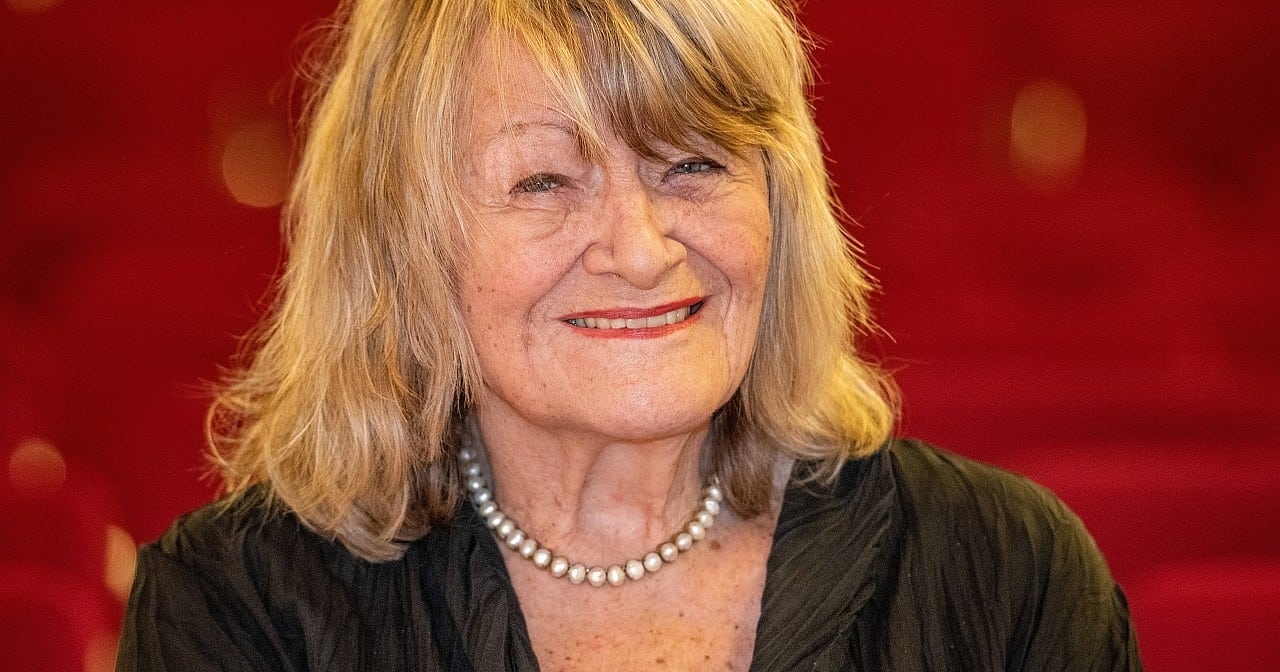
Alice Schwarzer (83) is shutting down her feminist magazine Emma after half a century. The December 8 issue will be the last, the feminist activist told reporters in Cologne. Economic reasons are not the decisive factor. “Sure, our circulation is declining. But our revenues still cover the expenses,” Schwarzer said in a statement. “No, we are leaving because we think: enough is enough.”
Emma has held its ground across three generations and has spoken out against many absurdities in the name of feminism. “So: we are exhausted now,” she adds.
“Emma” should be a counterweight to male media
Schwarzer is widely regarded as Germany’s best-known feminist. The magazine she founded, Emma, first appeared on January 26, 1977. She describes the motivation today this way: “It was the misogyny of the so‑called ‘male media’ we feminists have long called out that led me to the conclusion that we journalists needed our own magazine, our own voice.”
Since the start of the war in Ukraine in 2022, Schwarzer has repeatedly called for swift peace negotiations with Russia, sometimes alongside politician Sahra Wagenknecht. Critics argue that she loses track of who is the aggressor and who is the attacked in this war. In 2024 she conceded that her stance on the Ukraine crisis had consequences for Emma’s subscriber base. She noted that while the peace course earned significant reader support in 2023, “but at least one in five subscribers canceled their subscription in protest. That should hurt—and it does. Why would readers abandon a magazine that lives on subscriptions?” She insists she will not be intimidated by that.
Transphobic publications
In recent years the magazine has faced criticism for transphobic content. In 2022 Emma denied that transgender politician Tessa Ganserer is a woman. In the same year Schwarzer and Emma editor Chantal Louis published a TERF collection titled Transsexualität – Was ist eine Frau? Schwarzer rejected the planned self-determination law and spoke of a “trans‑fashion.” That same year, the ZDF Magazin Royale also scrutinized transphobic reporting.
Schwarzer responded with indignation, stating that she has never attacked transgender people. “What I do criticize is the new trans ideology that demands the right to change a person’s legal gender from age 14, as well as dangerous hormone treatments and surgeries for everyone.” She argued that it must be possible to hold such views without being excluded from public discourse.
In Emma’s most recent issue, long-time editor Annika Ross claimed that an increasing number of homosexuals supposedly “don’t care for Pride” anymore. Much of the piece criticized the idea that Pride events should also defend the rights of transgender people.
Schwarzer never let go of the magazine
From time to time there was talk about handing Emma’s leadership to younger editors. In 2008, journalist Lisa Ortgies indeed took over as editor-in-chief, but a short time later a rift emerged, and Schwarzer took the helm again. In the penultimate Emma issue dated October 27, Schwarzer says she had, over the years, indeed tried to recruit “colleagues in our spirit,” including potential editors. Some journalists might have been suitable, but they preferred other media. The reason given: “The external wind didn’t blow as harshly there.”
In the early days, Emma’s newsroom was located at Kolpingplatz in downtown Cologne. On Weiberfastnacht (Women’s Carnival), the entire editorial team would march to the Alter Markt to celebrate. Later the newsroom moved to the medieval Bayenturm in the Rhine harbor area. Schwarzer worked here beneath a portrait of French philosopher and feminist icon Simone de Beauvoir, who had helped illuminate her path in the 1960s.
Today, Schwarzer argues, it’s often hard to imagine what women endured then and how hard-won their freedoms were. It’s easy to forget how free women were in those years: “These were years of upheaval, of audacity! We did not only fight; we celebrated and danced. And we had few constraints. We did not have Instagram and we didn’t get Botox. It’s hard to convey that.”
In 2017 Schwarzer still looked to Emma’s future with optimism at the magazine’s 40th anniversary. She told reporters that feminist topics are once again in demand. “In the 1990s people believed we had already achieved everything. And now we see: that’s not how it works.”
Emma goes into eternity
Schwarzer now emphasizes that Emma helped shape Germany over six decades. Two of the magazine’s most enduring issues—child sexual abuse and Islamism—were topics Emma covered early, beginning in 1978 and 1979, well before many other outlets. “Emma stepped in long before others on a number of topics—such as marriage splitting, breast cancer, or female genital mutilation—and helped bring attention to them.”
Most recently Emma was described as the “world’s last remaining professional audience magazine in feminist hands at a kiosk.” A small consolation is that Emma’s archive—consisting of boxes, correspondence, and campaigns—will be fully integrated into the German Literature Archive in Marbach and will be made accessible to interested researchers. In this sense, Emma will ultimately fade into eternity.