Four years ago, British director Georgia Oakley made waves with her debut feature, “Blue Jean,” a story about a lesbian physical-education teacher in the late 1980s that earned recognition at the Venice Film Festival and was nominated for a BAFTA.
With her follow-up, she has taken on a considerably bigger project — a new film adaptation of Jane Austen’s Sense and Sensibility. In advance of the film’s theatrical release on October 15, we spoke to Oakley via video call from Mallorca, where she spends most of the year living with her wife, her stepdaughter, and her dogs.
Ms. Oakley, Jane Austen’s works are widely regarded as the epitome of heterosexual romance. As a lesbian filmmaker, did you also sense queer undercurrents in them?
I hadn’t even started on Sense and Sensibility when someone told me, “You know that’s Austen’s queerest novel, right?” That didn’t slip past me, partly because I’d previously read a wonderful literary essay called “Jane Austen and the Masturbating Girl.” It argued that Marianne Dashwood is essentially an early version of a queer character. Everything she embodies and expresses in terms of emotion and passion undermines the era’s prevailing image of women. She doesn’t fit into any of the boxes assigned to her, is far less definable or binary than what was permissible for women at the time.
That, in my view, amounts to an inherent queerness in a broader sense — just as, by the way, with Austen’s own life, since she never married and always lived with her sister. Challenging the status quo is, to me, queer, and all of that is part of my enthusiasm for Sense and Sensibility, even if it plays a more secondary role in the film.
Seems like you’re pretty fond of Austen!
Yes, I’ve long been captivated by her writing. Not only for her language and themes, but also for how her works have been revisited and reinterpreted over time without ever losing their appeal. As someone who studied English literature, it was a dream to tackle one of her stories. And I love the tale of the two sisters in Sense and Sensibility. So I simply couldn’t pass up the chance to throw my hat into the ring for a new adaptation.
How do you account for the undiminished enthusiasm with which Austen’s novels are still consumed, including by yourself?
I’ve always found Austen’s work incredibly subversive. Her language and stories are often deemed light, witty, and romantic, yet the topics she tackles are inherently political and critique the social conditions of her time.
“Sense and Sensibility” is a perfect example, as it deals with the place of women in society, inheritance laws, and the institution of marriage.
Hasn’t that been told, even cinematically, in a certain way?
When I reread Diana Reid’s screenplay for Sense and Sensibility, and then the novel as well, I sensed a version of this story I hadn’t seen before. There were things to discover and elements that could undercut the traditional expectations of an Austen film.
In many adaptations I often feel — unlike in the books themselves — that I’m kept at arm’s length. It’s as if the humanity of the characters is obscured by the plot or by a certain visual approach. I was determined to change that.
Direct link | Official German trailer
|
Your focus also centers less on the romantic pairings, even though you of course didn’t skip them…
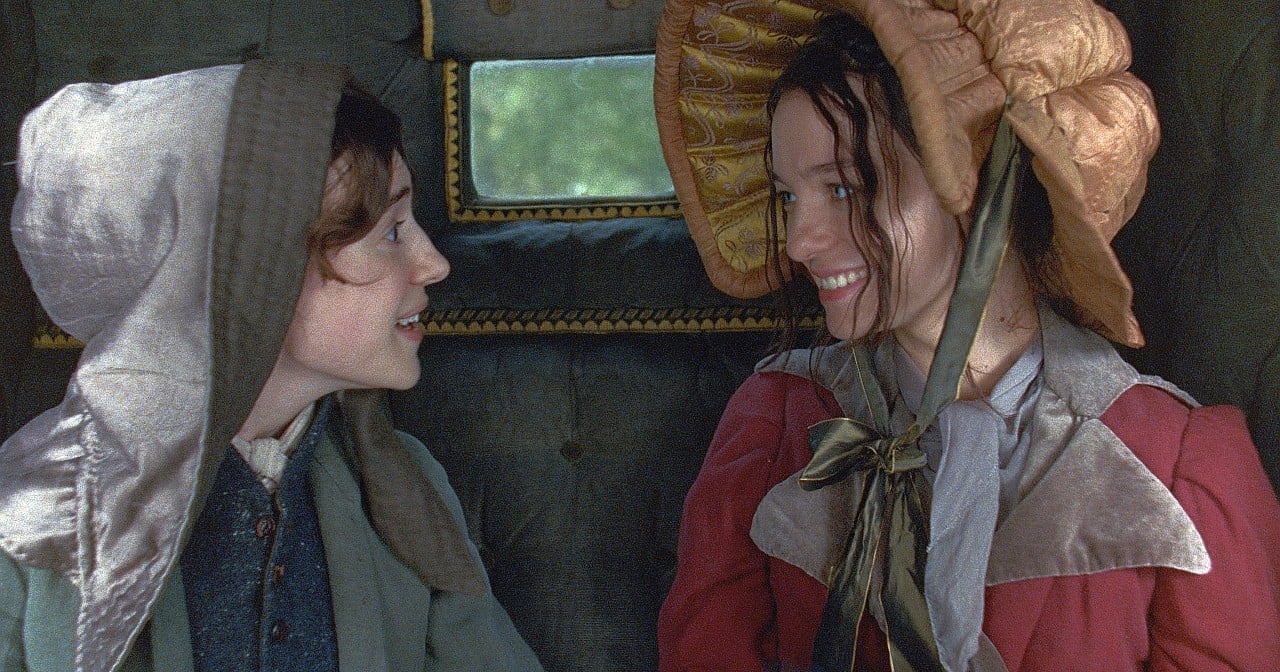
That’s right, and I think that was the first thing I latched onto when I read the script. The core is clearly the two sisters, which completely aligned with my reading of the text. The relationship between Elinor and Marianne is what sets this novel apart from other Austen stories.
As Diana put it in her script, the narrative follows a classic rom-com arc. Only the two characters who fall in love are the sisters, who are separated and eventually reunite. I found that thrilling. The men are certainly more than decorative, but the heart of the story is the relationship between Elinor and Marianne, the film’s most complex couple dynamic. That’s why it was the hardest to find the right ending for the movie.
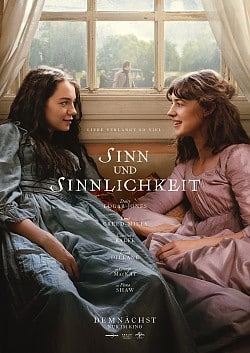
Sense and Sensibility. Drama: United Kingdom, USA 2026. Director: Georgia Oakley. Cast: Daisy Edgar-Jones, Esmé Creed-Miles, Caitríona Balfe, Frank Dillane, George MacKay, Fiona Shaw, Stacy Martin, Tom Brooke. Runtime: 132 minutes. Language: German dub. Rating: 6 and up. Distributor: Universal Pictures International Germany. Theatrical release: October 15, 2026