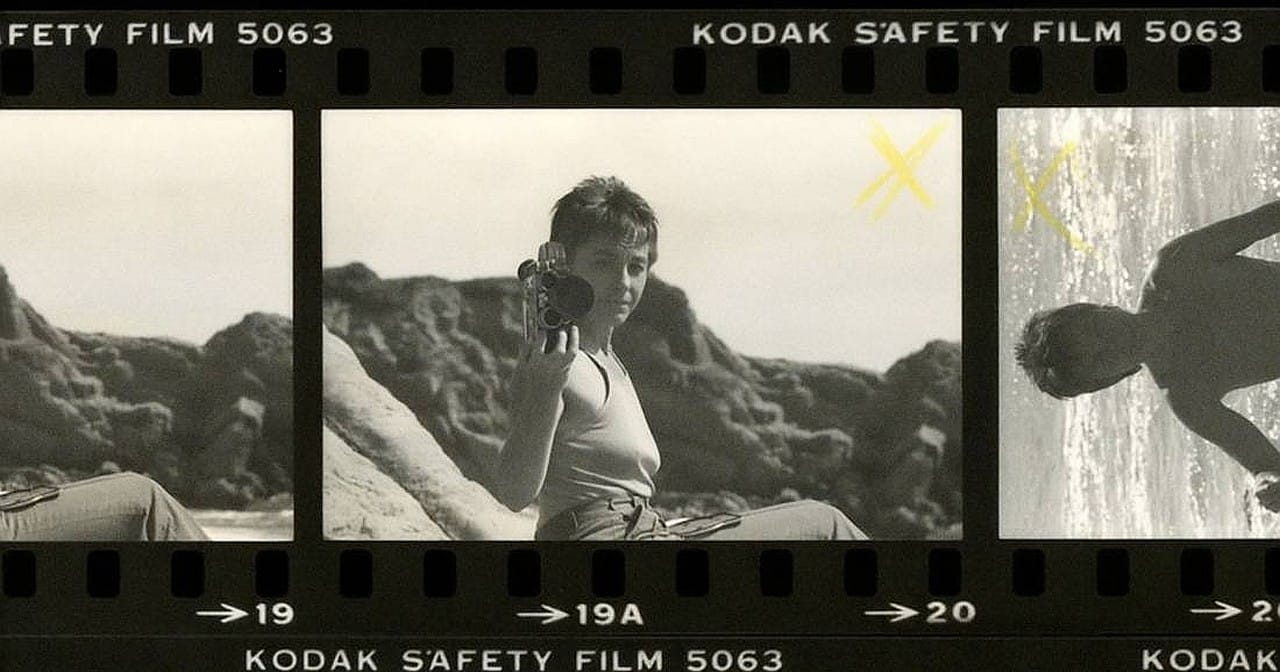
Barbara Hammer remains one of the absolute pioneers of both experimental and queer cinema, yet outside insider circles the late filmmaker—who passed away in 2019—still hasn’t received the recognition she truly deserved.
This is changing now, not least thanks to her younger colleague Brydie O’Connor. After a number of short films, the queer-identified New Yorker presents her first feature-length documentary, Barbara Forever, and with it not only a captivating, artistically ambitious portrait of Hammer but also a fitting tribute to her life’s work (film review by Fabian Schäfer). Barbara Forever is currently playing in select cinemas.
We spoke with O’Connor during the Berlinale, where the film won the Teddy Award, for an interview.
Ms. O’Connor, do you still remember when you first became aware of Barbara Hammer and her films?
I first encountered Barbara’s work while I was studying. I majored in history, but I also pursued Queer Cinema on the side, which honestly was my main focus. That’s when I came across Barbara’s films and even wrote my bachelor’s thesis on her early work from the 1970s. There were a few films online, but most were alarmingly unavailable. Not even through the university library system, and not in galleries or museums.
Was it at that moment that the idea of centering Hammer in one of your films occurred to you?
Together with Florrie, I initially started working on a short film that looks at Barbara’s legacy through her love story. In this process I located and digitized vast amounts of material, both video and audio recordings. That’s what sparked the idea to make a proper feature documentary about Barbara. And to make one in which she herself ultimately becomes the narrator. After all, there is no better expert to speak about her work than Barbara herself.
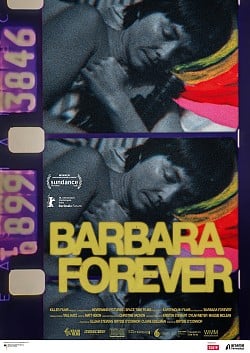
The conventional route of letting Hammer’s collaborators and experts in queer filmmaking speak about her work wasn’t an option?
No, such a traditional approach wouldn’t fit Barbara’s visionary, experimental oeuvre. And I also had so much compelling archival material that I couldn’t imagine anyone else talking about her work with the same depth. I spent a lot of time thinking and trying things out, but in the end there are actually only two other people who bring real presence to the film besides her: her widow Florrie, of course, and the trans director Joey Carducci, who was mentored by her and who worked closely with her.
Hammer was never mainstream, and she didn’t want to be. But that’s not the only reason she still receives far less attention than many of her male peers, is it?
Barbara spoke quite plainly about how male-dominated and heterosexist not only the film industry but even the world of experimental film has long been. She faced adversity from misogyny and homophobia, and she often challenged matters that others considered provocative. It was never about making things easy or chasing easy success. Instead, she relentlessly gave voice to her own perspective and pushed, with ferocity, her foot in every open door to carve out space and visibility for her work. She, meanwhile, walked a line between avant-garde cinema and queer cinema, never neatly fitting into either box, which only made it harder for audiences to categorize her work.
Direct link | English-language original trailer for the film
|
Recently, Hammer’s films have shown up repeatedly on the streaming service MUBI, and her name is more present than it has been in a long time. Are younger generations discovering this singular artist for themselves?
That’s what I’m hoping for. Because from my own experience I know what a revelatory experience it can be to encounter her work. I didn’t make Barbara Forever only for people who already have a connection to Barbara Hammer; I wanted this film to help others discover the woman and her films for themselves. The conversations I’ve had with a wide range of people at premieres and festivals—Sundance and Berlin, both of which have long been pivotal venues for Hammer’s work—have convinced me that her films have not only a past but also a future.
Barbara Forever. Documentary. USA 2026. Director: Brydie O’Connor. Run time: 102 minutes. Language: English original version with German subtitles. Rating: 12. Distributor: Arsenal Filminstitut. Theatrical release: October 8, 2026